What is a frit on a chromatography column?
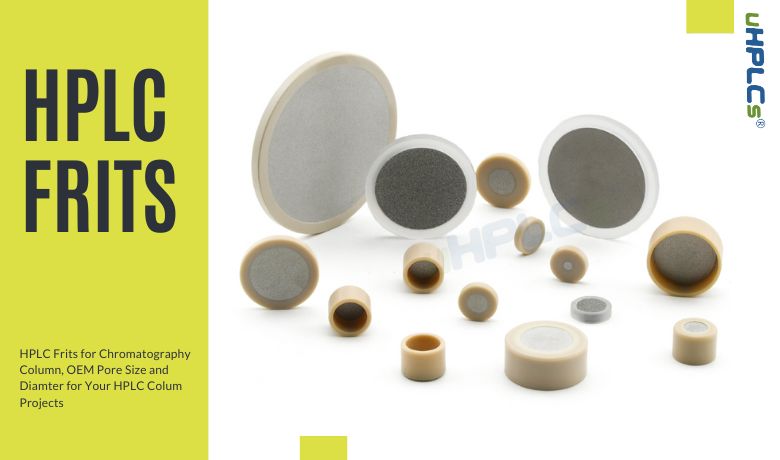
A frit is a porous filter installed at the inlet and outlet of an HPLC or chromatography column.
Its main function is to retain the packing material, ensure uniform flow distribution, and protect the packed bed during operation.
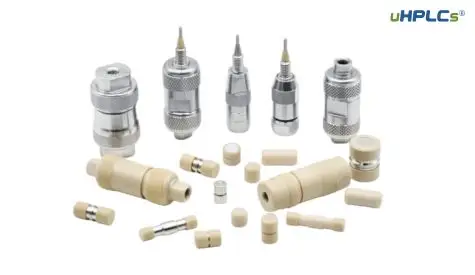
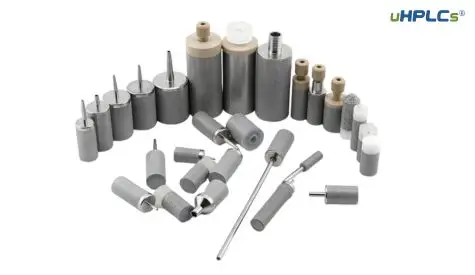
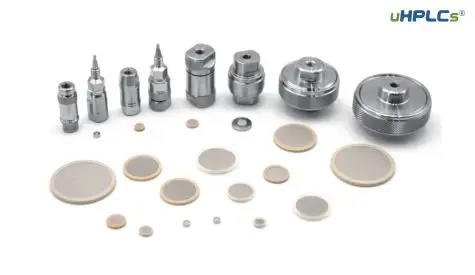
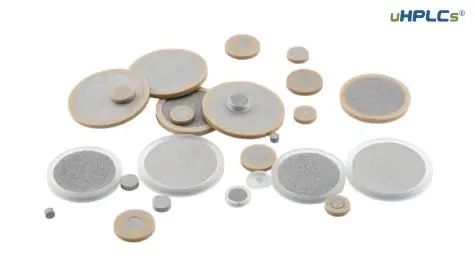
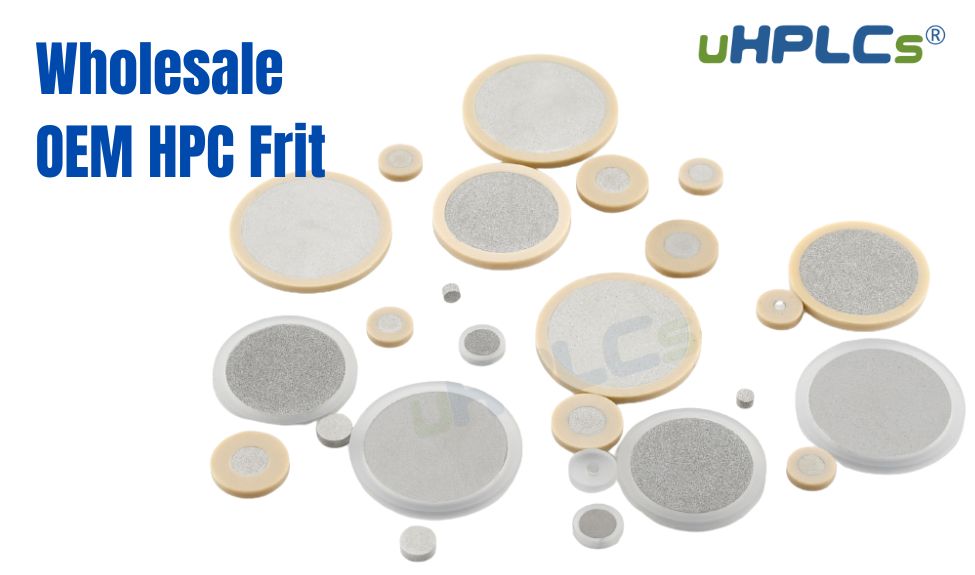
Frits are typically made from 316L stainless steel or PEEK, and come in various diameters, pore sizes, and geometries depending on the column format.
For complete specifications of available pore sizes, materials, diameters, and OEM options, you may also visit our 👉 HPLC Frits Product Page
Why is a frit important?
In chromatography, particularly in High-Performance Liquid Chromatography (HPLC) systems, a frit plays several critical roles that contribute to the column’s overall efficiency and performance:
Retention of the Stationary Phase: The frit acts as a barrier that holds the stationary phase (the packing material) securely within the column. Without a frit, the column packing could be disturbed or washed out, leading to uneven flow, loss of resolution, and potentially damaging downstream equipment.
Uniform Flow: The frit allows for an even and consistent flow of the mobile phase across the column’s cross-section. This helps maintain a uniform interaction between the analytes in the mobile phase and the stationary phase, leading to reproducible chromatographic separations.
Prevention of Blockages: The frit’s porous structure prevents fine particles from the stationary phase or any particulate contaminants from leaving the column and traveling downstream. This is essential as these particles could block fine capillaries, valves, or even the detector, leading to system failures or inconsistent results.
Protection of Column Integrity: By holding the packing material in place, the frit ensures that the stationary phase remains evenly distributed throughout the column. This prevents the formation of channels or voids, which can lead to peak tailing, band broadening, and a loss of efficiency.
Consistent Results: With the frit ensuring that the stationary phase is undisturbed and that there is uniform flow, chromatographers can achieve consistent and reliable results. This is crucial in analytical applications where repeatability and precision are paramount.
In essence, while the frit might appear to be a simple component, its role is pivotal in ensuring that chromatography columns function optimally, delivering reliable and accurate results.
What Does a Frit Do in HPLC? (Core Functions)
A frit performs several important roles inside a chromatography column:
✔ 1. Retains the stationary phase (packing material)
Prevents silica or polymer particles from escaping the column.
✔ 2. Ensures uniform flow distribution
Turns laminar flow into a uniform radial distribution before entering the bed.
✔ 3. Protects the bed from high-pressure impact
Reduces turbulence and inlet shock that can disturb the packing surface.
✔ 4. Prevents particulate contamination
Stops foreign particles from entering the bed and causing pressure spikes.
✔ 5. Maintains stable chromatographic performance
Better flow → better peak shape → higher efficiency.
If you’re looking for frits for analytical, semi-prep, or preparative applications, refer to our
👉 HPLC Frit Selection Guide for recommended pore sizes and materials.
Where is the frit in HPLC?
In an HPLC (High-Performance Liquid Chromatography) column, the frits are typically located at both ends of the column:
Inlet Frit (Top of the Column): Positioned at the entrance of the column, the inlet frit serves several purposes. Firstly, it distributes the mobile phase evenly across the column’s cross-section as it enters. This ensures uniform flow through the stationary phase, promoting efficient interactions between the analyte and the stationary phase. Additionally, the inlet frit prevents any larger particulate contaminants that might be in the mobile phase from entering and potentially disturbing the packed column.
Outlet Frit (Bottom of the Column): Located at the exit of the column, the primary function of the outlet frit is to retain the stationary phase within the column, preventing it from being washed out by the mobile phase’s flow. At the same time, it allows the mobile phase and the analytes to pass through, moving towards the detector.
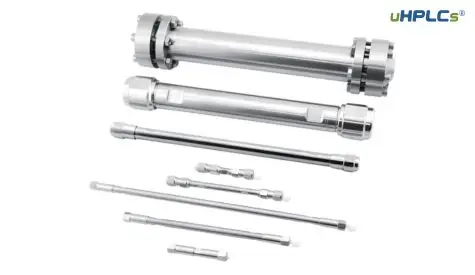
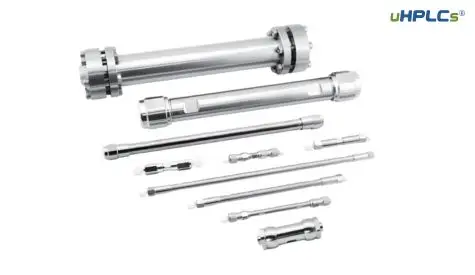
Normally, you can find HPLC Frit as folloing HPLC Columns :
Frits are installed at:
- Column inlet (top frit)
- Column outlet (bottom frit)
- Inline filter assemblies
- Guard columns
- Semi-prep & prep frit housings
The inlet frit receives the most stress and is the most prone to clogging.
In essence, in a typical HPLC column, there are two frits: one at the top to ensure even distribution of the mobile phase and to act as a filter for the incoming mobile phase, and one at the bottom to hold the stationary phase in place and prevent its egress from the column. Both frits play a pivotal role in ensuring the consistent and optimal performance of the chromatographic system.
Types of Frits Used in HPLC Columns
Frits in HPLC can be classified based on various parameters:
Frits vary in design depending on their purpose:
1. Standard Disc Frits
The most common type—used in 2.1 mm, 3.0 mm, 4.6 mm analytical columns.
2. Frit Caps (Integrated Design)
Frit + support ring combined, often used in OEM column assemblies.
3. Large-Diameter Prep Frits
Used in 10 mm, 21.2 mm, 30 mm, and 50 mm preparative columns.
4. PEEK Frits
Used for biocompatible separations or metal-sensitive compounds.
You can see all frit types, sizes, and material options at our
👉 HPLC Frits Overview Page.
Frit Materials: Stainless Steel vs PEEK
| Property | 316L Stainless Steel | PEEK |
|---|---|---|
| Pressure Tolerance | Very High (Up to UHPLC) | Medium |
| Chemical Resistance | Excellent for organic solvents | Best for aqueous & bio samples |
| Biocompatibility | Metal ions may interact | Fully inert |
| Typical Use | Analytical, UHPLC, Prep | Bio-columns, ICP/MS-sensitive samples |
For compatibility tables across Agilent, Waters, Shimadzu, and Thermo columns, see our:
👉 HPLC Frit Brand Compatibility Guide.
Common Frit Pore Sizes and Their Uses
| Pore Size | Recommended For | Column Type |
|---|---|---|
| 0.2–0.5 µm | Sub-2 µm particles | UPLC |
| 2 µm | Most 3–5 µm fillers | Analytical |
| 5–20 µm | Larger particle fillers | Semi-prep |
| 10–40 µm | Large ID columns | Prep / DAC |
More details available here:
👉 Complete Frit Specification Table.
For Different Purpuse, there are some for options :
Based on Material:
Stainless Steel Frits: Commonly used due to their durability and resistance to high pressure. They’re often used in standard analytical columns.
Polyethylene and PTFE Frits: These are resistant to a wide range of chemicals and are often used in biochromatography and columns designed for corrosive solvents.
Titanium Frits: Used in biocompatible columns where metal leaching from stainless steel might be a concern.
Based on Pore Size:
–Large Pore Frits (e.g., 10 µm): Suitable for preparative chromatography or columns packed with larger particles.
-Medium Pore Frits (e.g., 5 µm): Often used for standard analytical columns packed with 10 µm or 5 µm particles.
-Small Pore Frits (e.g., 2 µm or 0.5 µm): Ideal for columns packed with sub-2 µm particles, like UHPLC columns.
Based on Position:
–Inlet Frits: Positioned at the top of the column to distribute the mobile phase and act as a preliminary filter.
–Outlet Frits: Positioned at the bottom of the column to hold the stationary phase in place and prevent its exit from the column.
Based on Geometry and Construction:
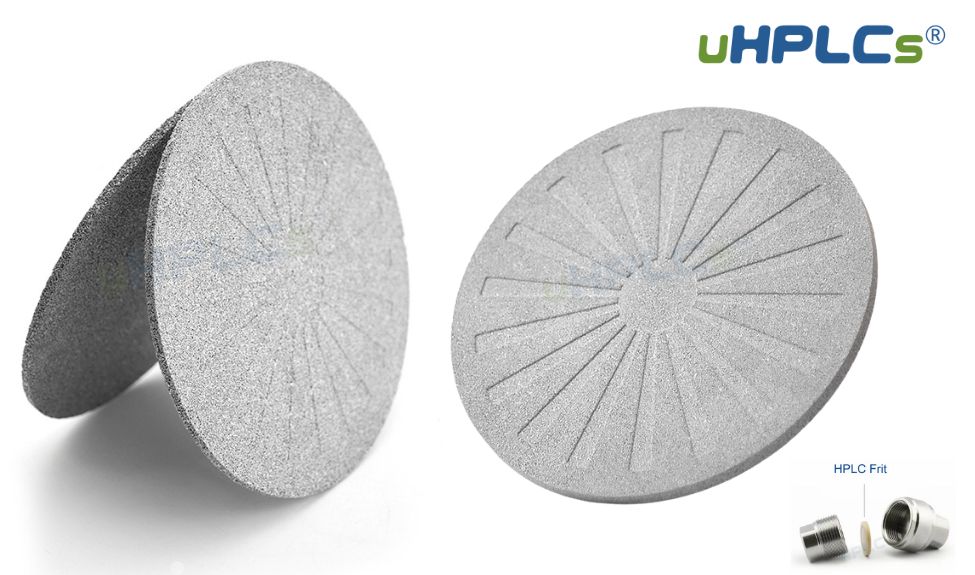
–Slotted Frits: These have specific slots or channels to allow for flow, often used in larger diameter preparative columns.
–Disc or Flat Frits: These are the typical frits seen in most analytical HPLC columns.
-Conical Frits: These have a conical shape, which can aid in distributing the mobile phase more uniformly.
Based on Replaceability:
–Fixed Frits: These are permanently attached to the column and cannot be replaced without replacing the entire column.
-Replaceable Frits: These can be changed when they become clogged or damaged, extending the column’s life.
Selecting the right type of frit for an HPLC application is crucial. The choice is influenced by the nature of the samples and solvents, the column’s particle size, the pressure limits of the system, and specific analytical or preparative requirements.
How do you clean an HPLC column frit?
Cleaning the frit in an HPLC column is essential for maintaining optimal column performance and preventing system issues. Here are steps and considerations for cleaning an HPLC column frit:
Backflushing:
- One of the simplest methods to clean a frit is to reverse the flow direction (backflush) in the column. This can dislodge trapped particles from the frit and potentially restore its performance.
- However, before backflushing, always check the manufacturer’s guidelines to ensure the column is designed to tolerate reverse flow. Not all columns are suitable for backflushing.
Soaking:
- Remove the column from the HPLC system and cap the ends to prevent drying out.
- Soak the frit in a solvent that can dissolve the contaminants. Common solvents include methanol, isopropanol, or a mixture of solvents. The choice of solvent will depend on the nature of the blockage.
Ultrasonic Cleaning:
- This involves placing the column in an ultrasonic bath filled with a suitable solvent. The ultrasonic vibrations can help dislodge particles trapped in the frit.
- However, use this method with caution, as extended exposure or high intensities might damage the frit or the column packing.
Increase Flow Rate:
- By increasing the mobile phase’s flow rate, you can generate a higher pressure that might help push out the trapped particles.
- Always ensure that the flow rate and resulting pressure do not exceed the column’s specifications.
Use Specialized Cleaning Solutions:
- Some manufacturers offer specific cleaning solutions designed to remove certain contaminants. If the nature of the blockage is known, one can use these solutions to clean the frit.
Replacement:
- If all cleaning methods fail, and the frit remains clogged, consider replacing it. Many modern HPLC columns come with replaceable frits.
Post-Cleaning Steps:
- After cleaning the frit, always re-equilibrate the column with your mobile phase before using it for separations.
- Perform a test run to ensure the column pressure is back to normal and that the chromatographic performance is restored.
Note: It’s essential to know the nature of the blockage or contamination for effective cleaning. Also, always follow the manufacturer’s guidelines and recommendations when cleaning HPLC columns and frits to avoid damage and maintain the longevity of the column.
Why Do Frits Clog? (Most Common Reasons)
- Sample particulates not filtered
- Mobile phase contaminants
- Degraded buffer salts
- Packing fines pushed outward
- Microbubble formation under high pressure
A clogged frit often causes:
✔ pressure increase
✔ peak broadening
✔ tailing
✔ retention time shift
If you need replacement frits for any column size, see the product list here:
👉 HPLC Frits – OEM & Replacement Series.
How to Choose the Right Frit for Your Column
In shorter, we have to consider 4 elements as following:
1. Match frit diameter to the column ID
(2.1 mm column → 2.1 mm frit)
2. Choose pore size based on particle size
(3–5 µm particles → 2 µm frit)
3. Select the right material
(PEEK for bio; SS for high pressure)
4. Consider geometry
(Disc / Cap / Large Prep / DAC)
For full selection parameters, refer to our 👉 HPLC Frit Selection Guide.
or You can check details as following :
Selecting the right frit for your chromatography system is critical for achieving optimal performance and consistent results.
Here are some factors to consider and steps to guide your decision-making:
1.Column Particle Size:
The frit’s pore size should be smaller than the smallest particle in your column to ensure it retains the stationary phase effectively.
For instance, for a column packed with 5 µm particles, you might choose a frit with a pore size of 2 µm.
2.Mobile Phase and Solvent Compatibility:
Ensure the frit material is chemically compatible with your mobile phase and solvents.
For example, if you’re using corrosive solvents, consider using frits made from inert materials like PTFE or polyethylene.
3.Pressure Considerations:
Frits should be able to handle the pressures generated in your chromatographic system.
HPLC systems, especially UHPLC, can operate at high pressures, and the frit should be durable enough
to withstand these conditions.
4.System Volume and Flow Rate:
Consider the column diameter and desired flow rate. Large preparative columns may benefit from slotted frits that
allow for higher flow rates, while standard analytical columns might use disc or flat frits.
5.Analytical vs. Preparative Chromatography:
Preparative chromatography, which focuses on purifying larger sample quantities, might have different frit requirements
than analytical chromatography. The former might prefer larger pore sizes or specialized designs that cater to higher flow rates and sample loads.
6.Replaceability:
If you often deal with samples that might lead to frit clogging, consider using columns with replaceable frits.
This can prolong column life and save costs in the long run.
7.Sample Matrix:
If your samples have a lot of particulates or are from biological sources, consider a frit that can be easily cleaned or replaced.
This ensures that the column performance doesn’t degrade rapidly over time.
8.Column Geometry and Design:
Some columns have specific designs that require particular frit geometries, like conical frits, to ensure uniform flow
and distribution of the mobile phase.
9.Manufacturer’s Recommendations:
Column manufacturers often provide recommendations for frits that are best suited for their columns.
It’s a good idea to refer to these guidelines, especially when unsure.
10.Budget Considerations:
While it’s vital to get a quality frit for consistent performance, it’s also important to consider the cost,
especially if you’re equipping multiple columns or systems.
In conclusion, choosing the right frit for your chromatography system involves a balance of technical requirements and practical considerations.
Always prioritize performance and compatibility while also keeping an eye on maintainability and cost-effectiveness.
Frits are essential components that protect the packing bed, maintain flow uniformity, and ensure consistent chromatographic performance.
Choosing the right frit improves peak shape, extends column life, and stabilizes system pressure.
To explore the full range of HPLC frit materials, pore sizes, diameters, and OEM options, visit:
👉 HPLC Frits – Stainless Steel & PEEK Frit Series https://uhplcs.com/hplc-frit/
Don’t compromise on quality. Partner with us and experience the difference that precision engineering can bring to your chromatography.
📩 Reach out to our experts today at [email protected] and let’s embark on a journey to chromatographic excellence together!