
Can’t Get Enough?
Get More Information and Quotation
for Our HPLC Column Hardware Today !
for Our HPLC Column Hardware Today !
Subscribe for exclusive offers and updates on new arrivals
Home » Analytical Method Development & Validation
for Method Development & Validation

Fully aligned with ICH Q2(R2), Q14, USP, EP, and FDA guidelines.
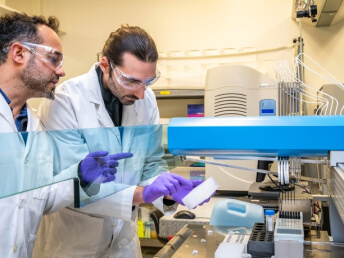
ISO 17025 / GLP certified lab with experienced scientists.
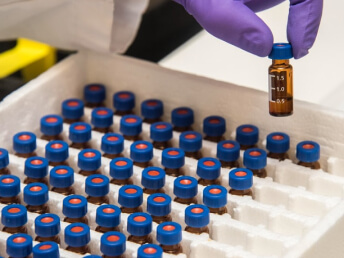
1,000+ validated methods supporting global submissions.
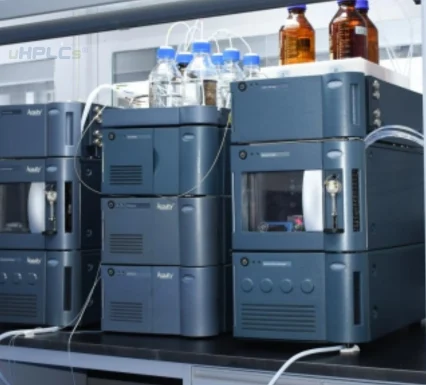
Optimized workflows to save time and reduce approval delays.
| Your Challenge | Our Solution |
|---|---|
| 1. Delayed approvals due to non-compliant methods | Risk-based Q14 approach to ensure regulatory readiness and fewer reviewer questions |
| 2. Methods not robust or transferable | Lifecycle-based development with robustness and transfer packages |
| 3. High communication and project management burden | Dedicated project manager + transparent milestone tracking |
| 4. Lack of internal expertise or resources | End-to-end service from concept to submission-ready reports |
Comprehensive solutions to support every stage of analytical method lifecycle:
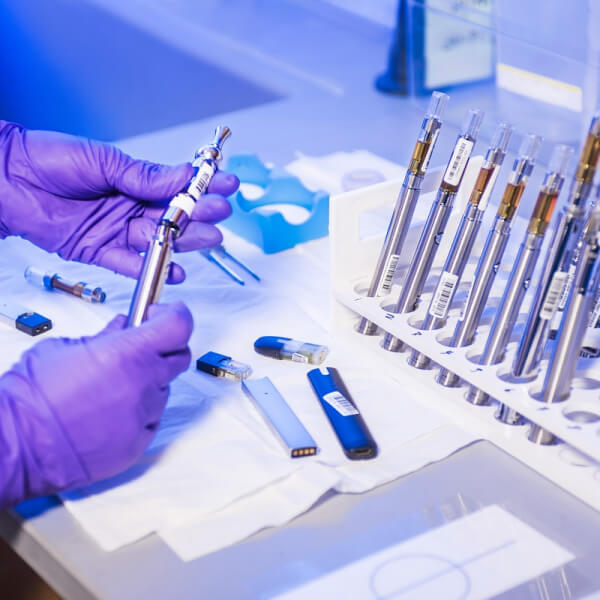
End-to-end analytical method solutions, including development (HPLC, UPLC, GC, LC-MS/MS), full ICH Q2(R2) validation, stability-indicating methods, impurity profiling, dissolution testing, cleaning validation, method transfer, and bioanalytical validation.
Define scope and regulatory needs.
Identify critical parameters and control strategies.
Select technologies and optimize conditions.
Conduct validation per ICH standards.
Deliver regulatory-ready documents and training.
Comprehensive solutions for APIs, intermediates, impurities, peptides, biomolecules, and bioanalytical methods.
Assay / Content Determination Impurity / Related Substance Testing Stability-Indicating Methods / Shelf-Life Testing
Limit Test for Trace Impurities Genotoxic Impurities (e.g., mutagenic compounds) Elemental Impurities
HPLC / UPLC / GC / GC-MS Chromatography-Mass Spectrometry Coupling (LC-MS/MS, GC-MS) Non-Chromatographic Methods (e.g., UV, IR, Titration, Direct MS Methods)
High-Resolution Mass Spectrometry (HRMS) / MSn Nuclear Magnetic Resonance (NMR) / Spectroscopic Techniques Degradation Product & Metabolite Identification
Peptide Quantification / Purity / Peptide Mapping Protein Content / Binding Assays / Degradation Analysis Quantification of Peptides & Proteins in Biological Samples (e.g., serum, urine)
Equipment Residue Detection Manufacturing Process Cleaning Validation Quantification of Residual Solvents & Cleaning Agents
Cross-Laboratory / Cross-Equipment Method Transfer Method Comparison & Difference Analysis Recipient Training & SOP Implementation
Quantitative Analysis of Plasma, Serum, or Urine Samples LC-MS/MS Bioanalytical Method Validation Antibody & Biologic Molecule Testing
Analytical Method Development refers to the systematic process of designing and optimizing analytical procedures to accurately identify, quantify, and characterize compounds in a given sample. This includes selecting appropriate techniques (e.g., HPLC, LC-MS, GC-MS), optimizing chromatographic conditions, and ensuring reproducibility.
Its importance lies in ensuring data reliability, regulatory compliance, and product quality. In industries such as pharmaceuticals, chemicals, and food safety, a poorly developed method can lead to inaccurate results, regulatory rejection, or even product recalls.
A robust method ensures:
Ultimately, analytical method development forms the foundation for all subsequent testing, validation, and quality control processes.
Analytical Method Validation is the process of proving that a developed analytical method is suitable for its intended purpose. It ensures that the method consistently produces reliable and accurate results under defined conditions.
According to ICH Q2(R1/R2) guidelines, key validation parameters include:
Validation ensures that the method is fit-for-purpose, especially for regulatory submissions, stability studies, and routine QC testing.
Analytical method development typically follows a structured workflow:
A well-developed method balances performance, efficiency, and cost-effectiveness, ensuring it can be reliably used in routine analysis.
The timeline depends on the complexity of the sample and the analytical requirements, for our lab:
Validation typically adds 1–3 weeks, depending on the number of parameters and regulatory requirements.
Factors influencing the timeline include:
An experienced laboratory can significantly shorten development cycles through advanced instrumentation and prior method knowledge.
Several technical challenges may arise during method development:
These challenges are typically addressed by:
Overcoming these challenges requires deep expertise in analytical chemistry and instrumentation, especially for complex or unknown samples.
Method validation is required in several scenarios, including:
Additionally, partial validation or re-validation may be required when:
Validation ensures that the method remains reliable, compliant, and suitable for its intended application.
These three processes are often confused but serve different purposes:
Verification is typically used when adopting a compendial method (USP, EP, etc.), while validation is required for newly developed or modified methods.
Together, these processes ensure accuracy, consistency, and regulatory compliance across laboratories.
Regulatory compliance is achieved by aligning with internationally recognized guidelines, including:
Key practices include:
A compliant method not only ensures successful regulatory approval but also reduces the risk of audit findings and product delays.
“A pharmaceutical client reduced their regulatory review time by 30% using our stability-indicating method development and Q2R2-compliant validation process.”



Stay in touch with us to get latest news and special offers.
WhatsApp us
Subscribe for exclusive offers and updates on new arrivals