
Complex & Non-Routine Analytical Solutions
For unique testing challenges when standard methods are not enough
uHPLCs (HIPSOUL) designs custom analytical strategies for unknown impurities, product failures, complex mixtures, and samples that need method development beyond routine or pharmacopeial procedures.
What is non-routine analytical testing?
Non-routine analytical testing is customized laboratory analysis for problems that cannot be closed with a standard QC method. It is typically needed when an unexpected peak appears, no pharmacopeial method fits the sample, a product fails or degrades without a clear cause, or a multi-component mixture needs separation and identification before a decision can be made.
At uHPLCs, non-routine work usually combines chromatography with techniques such as LC-MS/MS, GC-MS, and complementary spectroscopy, after the sample matrix and the decision you need are defined. Related support also sits under analytical services and analytical CRO services.
Content reviewed by the uHPLCs analytical laboratory team. Last reviewed: 9 November 2026. For laboratory capability and contact details, see About uHPLCs.

When routine testing is not enough
Use this page when the question is investigational, not a standard release assay.
| Your challenge | Typical non-routine approach |
|---|---|
| Unknown or unexpected impurities | Separate the peak, then use LC-MS and complementary techniques to characterize the unknown before any structure claim is made. |
| No existing standard method | Feasibility review, pilot conditions, and documented method development for the agreed matrix and decision. |
| Product failure or degradation | Map likely pathways, compare stressed versus control samples, and identify actionable analytical findings. |
| Complex mixture or multi-component system | Combine separation, detection, and complex matrix strategy before quantification. |
| Confidential or IP-sensitive samples | NDA discussion first, then controlled sample intake and restricted project communication. |
Core non-routine services
One service map for investigation, method work, and specialized studies — without repeating the same offer in multiple sections.
Impurity and unknown identification
Investigate unexpected HPLC peaks, contaminants, and related substances with chromatography plus LC-MS when the project requires it.

Custom method development
Design and document non-compendial methods for novel materials or formulations, including transfer and validation support when agreed.
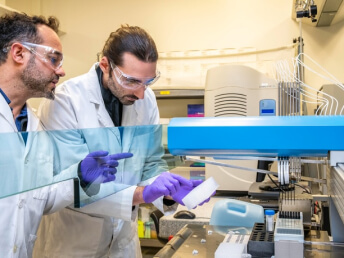
Failure and root-cause analysis
Compare failed, retained, and control samples to identify degradation, contamination, or material incompatibility signals.
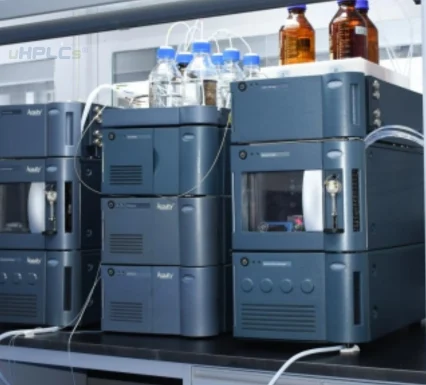
Complex mixture characterization
Separate, identify, and quantify multi-component systems when a single routine method is not selective enough.
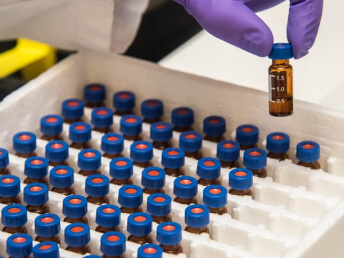
Degradation product studies
Study forced-degradation or stability-related peaks to support formulation and quality decisions.

Comparative and formulation studies
Compare prototypes, competitors, or formulation variants for R&D decisions.
Scope, techniques, and boundaries
Clear limits help buyers and AI systems cite this page accurately.
Techniques commonly discussed
What this service is not
- Not a promise that every unknown can be fully identified
- Not a substitute for a completed regulatory dossier package unless the proposal says so
- Not automatic ISO, GMP, GLP, FDA, or EMA certification of your product
- Not a routine high-volume QC release lane for every sample type
Evidence you should prepare
- Sample type, matrix, and approximate amount available
- Existing chromatograms, method notes, or pharmacopeial references
- The decision you need: identify, quantify, compare, or develop a method
- Any confidentiality, timing, or reporting format constraints
Project process
A short path from inquiry to report, with confidentiality reviewed before sensitive details are exchanged.
-
1. Discovery and NDA
Clarify the analytical question and discuss a confidentiality agreement before proprietary details are shared.
-
2. Feasibility and scope
Select candidate techniques and define what success looks like for this sample.
-
3. Proposal and timeline
Receive an itemized plan, quotation, and milestone dates for the agreed scope.
-
4. Sample intake
Log samples with chain-of-custody documentation and storage conditions.
-
5. Analysis and testing
Run the agreed multi-technique plan and share progress notes when milestones require them.
-
6. Report and consultation
Deliver the report package and review findings, limits, and next experimental options.
Representative project patterns
These cards describe common starting questions. They are technical examples, not named customer case studies, and they do not report measured percentage outcomes.

Unknown peak during HPLC testing
Challenge: an unexpected peak appears during development or QC. Approach: improve the separation, then use LC-MS and complementary data if identification is required. Result type: a documented identification package or a clear statement of what remains unknown.

Material or product failure review
Challenge: field or storage failure without an obvious cause. Approach: compare failed and control samples with chromatography and, when needed, surface or volatile analysis. Result type: ranked hypotheses and recommended follow-up tests.
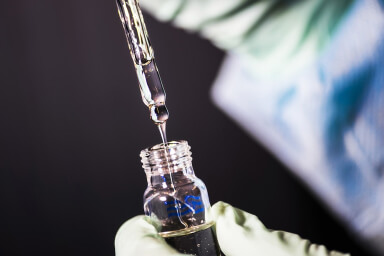
Complex mixture characterization
Challenge: several components cannot be resolved by a routine method. Approach: redesign the separation and detection path for the matrix. Result type: component list with analytical evidence suitable for R&D or filing discussion.
Why teams use uHPLCs for non-routine work
Chromatography manufacturing experience plus analytical project support in one organization.
Multi-technique planning
Projects start from the decision you need, then map HPLC, LC-MS/MS, GC-MS, or complementary tools only when justified.
Method-first communication
Scope, assumptions, and reporting limits are written before instruments are booked.
Confidential intake
NDA discussion and controlled sample handling for IP-sensitive materials.
Connected service path
Move from investigation into ongoing CRO support or purification discussion when the next step is clear.
Frequently asked questions
What is non-routine analytical testing, and when should I consider it?
Non-routine analytical testing is customized laboratory work for problems that standard or pharmacopeial methods cannot answer. Consider it when you see unknown peaks, have no existing method, need failure or degradation investigation, or require multi-technique characterization of a complex mixture.
How do you protect the confidentiality of my samples and data?
A confidentiality agreement can be discussed before sensitive details are shared. Samples are logged with chain-of-custody tracking, and project data access is restricted to the assigned team. Exact controls are confirmed in the project agreement.
What types of industries do you serve?
Projects are commonly discussed for pharmaceuticals, biotech, medical devices, specialty chemicals and polymers, electronics materials, food and beverage, and industrial or environmental samples. Acceptance depends on the matrix, the analytical question, and whether a suitable technique is available.
What is the typical turnaround time for non-routine projects?
Timing depends on sample complexity, whether method development is required, and the agreed reporting scope. A date is confirmed only after feasibility review. Simple investigations may fit within about one to two weeks after sample receipt; custom method development usually needs a longer schedule.
How do you handle projects where no standard testing method exists?
The team reviews the material and the decision you need, proposes candidate techniques such as LC-MS/MS, GC-MS, or complementary spectroscopy, runs limited pilot work when justified, and documents a method package for the agreed scope. Not every novel sample can be solved with the available instruments.
Can you provide reports suitable for regulatory submissions like FDA or EMA?
Reports can be prepared with chromatograms, spectra, interpretation, and method notes for the agreed scope. Whether a package is suitable for a specific FDA, EMA, or ICH submission depends on the dossier requirements and is confirmed during proposal review. This page does not promise a regulatory approval outcome.
How are projects priced, and what factors affect cost?
Price depends on the number of techniques, sample preparation difficulty, validation and reporting depth, and whether expedited timing is requested. An itemized quotation is provided before work begins.
How do I get started with a non-routine analytical project?
Share a brief description of the challenge, sample type, and decision you need through the contact form or email. After feasibility review you receive a proposed scope, timeline, and quotation. Sample submission and analysis begin only after the plan is agreed.
Start a non-routine project review
Tell us the sample type, the unexpected result or missing method, and the decision you need. The laboratory team will review feasibility before any quotation is finalized.