
High-Performance Liquid Chromatography (HPLC) delivers reliable separation and quantification across pharmaceuticals, biological samples, natural products, food safety, and countless industries. However, analytical columns—the core of your separation performance—often face contamination and premature degradation.
This is where an HPLC guard column becomes essential. Acting as a protective barrier before the analytical column, the guard column traps particulates, adsorbs strongly retained chemicals, and minimizes damage caused by demanding sample matrices.
In this guide, we explore why guard columns are indispensable, how they work, where they excel, and how to select and maintain the right one for your workflow.
What Is an HPLC Guard Column and Why Is It Essential?
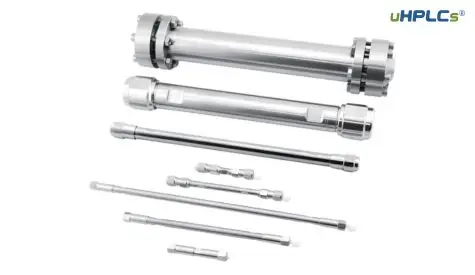
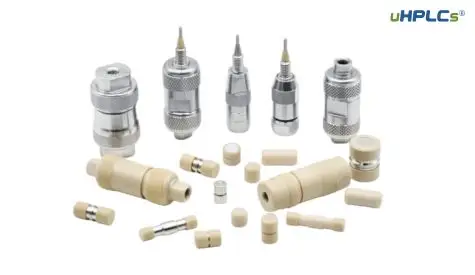
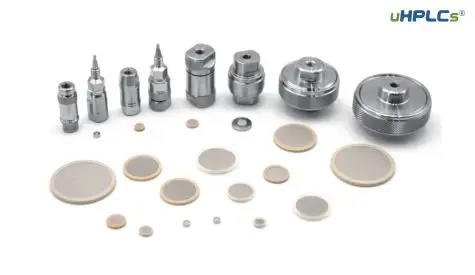
A guard column is a short, replaceable column installed upstream of the analytical column. It contains similar packing material—such as C18, C8, CN, silica, phenyl, or amino—ensuring minimal disturbance to chromatographic selectivity.
Its function is simple yet crucial:
- -Intercept particulates that would otherwise clog the frit or packing bed.
- -Adsorb strongly retained chemical contaminants that degrade column performance.
- -Prevent irreversible fouling of expensive analytical columns.
- -Extend column lifetime and reduce maintenance downtime.
In demanding workflows, a guard column acts as a sacrificial protector—absorbing all the “damage” so the analytical column stays clean, efficient, and stable.
II. Core Benefits of Using an HPLC Guard Column
1. Intercept Physical Contaminants Effectively
Even well-filtered samples still contain risks:
- -Undissolved particles
- -Natural product precipitates
- -Gasket or septum fragments
- -Aggregated proteins
- -Micro-crystals formed during extraction
- -Particles from pump seals or injector wear
Physical debris directly contributes to:
- -Increasing backpressure
- -Clogging of the column inlet frit
- -Void formation
- -Severe peak tailing or loss of efficiency
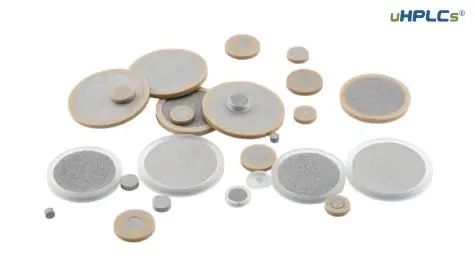
Guard columns with high-capacity frits and matched packing stop these contaminants before they reach the main column.
Modern direct-connect designs also minimize extra-column dead volume, which improves peak symmetry and reproducibility.
2. Adsorb Chemical Contaminants That Are Hard to Remove
Certain compounds bind strongly to stationary phases and are difficult to elute:
- -Proteins from biological fluids
- -Lipids from food extracts
- -Chlorophyll and pigments from TCM / herbal samples
- -High-molecular-weight polymer residues
- -Strong acids/bases
- -Metal ions and reactive species
These substances cause:
- -Retention time drift
- -Selectivity changes
- -Reduced plate count
- -Permanent column contamination
Guard columns act as a chemical “filter,” capturing these contaminants and preventing irreversible fouling of the analytical column.
3. Enhance Column Lifetime and Reduce Operating Costs
Analytical columns—especially sub-2 μm UPLC columns—are expensive and sensitive.
A guard column:
- -Extends analytical column life by 3–10×
- -Reduces maintenance frequency
- -Prevents unplanned downtime
- -Ensures consistent, predictable performance
Replacing a low-cost guard cartridge is far more economical than replacing a full analytical column. For laboratories with high sample throughput, the savings are substantial.
III. Typical Applications: Where Guard Columns Deliver Maximum Value
Guard columns shine in real-world workflows where sample matrices are complex or unpredictable. Here are the most common high-risk applications:
1. Traditional Chinese Medicine & Natural Product Analysis
These samples contain:
-
- Insoluble plant fibers
-
- Pigments
-
- Precipitates during dilution
-
- Essential oils and waxes
Problems: Rapid backpressure increase, severe fouling.
Guard Column Solution: Intercepts precipitates and adsorbs pigments, ensuring stable chromatographic performance.
2. Biological Sample Testing
Biological matrices contain:
-
- Proteins
-
- Peptides
-
- Lipids
-
- Polysaccharides
Problems: Protein adsorption, peak distortion.
Guard Column Solution: Adsorbs biomolecules that would otherwise cause irreversible column contamination.
3. Gradient Elution Methods
Increasing organic content tends to release retained contaminants.
Problem: Impurities accumulate and elute unpredictably, causing ghost peaks.
Guard Column Solution: Captures retained species before they reach the main column.
4. High-Salt Mobile Phase Systems
Buffers such as phosphate, ammonium acetate, or carbonate can precipitate.
Problem: Salt crystallization destroys frits and silica.
Guard Column Solution: Prevents salt particles from entering the analytical column.
5. Food, Environmental, and Polymer Analysis
These industries frequently encounter:
-
- Oils
-
- Surfactants
-
- High-molecular-weight compounds
-
- Environmental pollutants
-
- Plasticizers
A guard column stabilizes long-term reproducibility in these challenging tests.
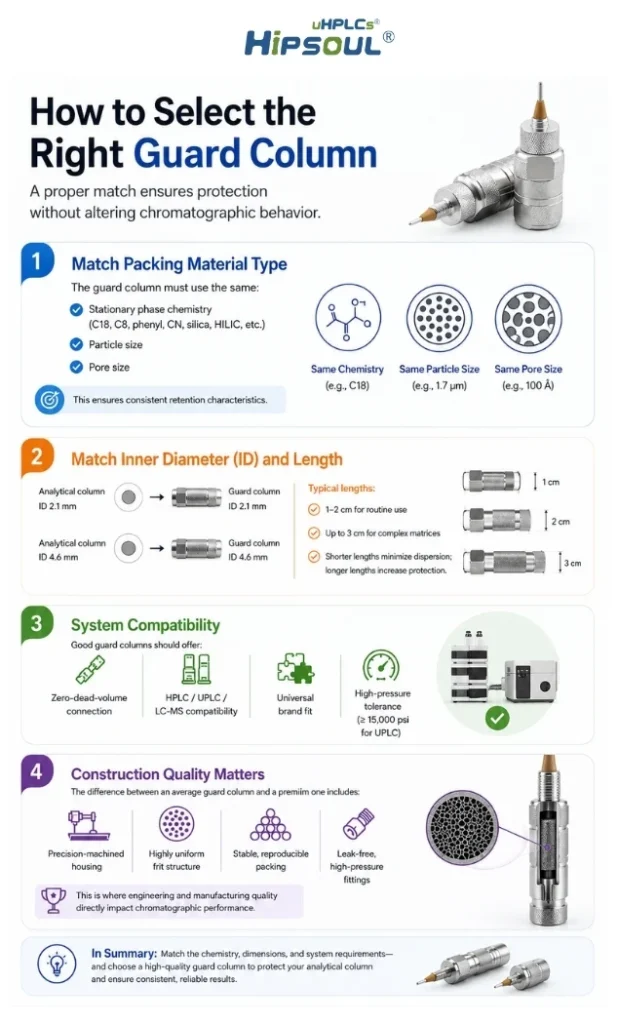
IV. How to Select the Right Guard Column
A proper match ensures protection without altering chromatographic behavior.
1. Match Packing Material Type
The guard column must use the same:
- *Stationary phase chemistry (C18, C8, phenyl, CN, silica, HILIC, etc.)
- *Particle size
- *Pore size
This ensures consistent retention characteristics.
2. Match Inner Diameter (ID) and Length
Analytical column ID 2.1 mm → guard column ID 2.1 mm
Analytical column ID 4.6 mm → guard column ID 4.6 mm
Typical lengths:
- *1–2 cm for routine use
- *Up to 3 cm for complex matrices
- *Shorter lengths minimize dispersion; longer lengths increase protection.
3. System Compatibility
Good guard columns should offer:
- *Zero-dead-volume connection
- *HPLC / UPLC / LC-MS compatibility
- *Universal brand fit
- *High-pressure tolerance (≥ 15,000 psi for UPLC)
4. Construction Quality Matters
The difference between an average guard column and a premium one includes:
- *Precision-machined housing
- *Highly uniform frit structure
- *Stable, reproducible packing
- *Leak-free, high-pressure fittings
This is where engineering and manufacturing quality directly impact chromatographic performance
V. Maintenance, Cleaning, and Replacement Strategy
1. When to Replace a Guard Column
Replace immediately if:
- *Backpressure rises by >10%
- *Plate number decreases >10%
- *Resolution decreases >10%
- *Ghost peaks or baseline noise increases
These are clear signs of contamination.
2. Proper Cleaning Method
Recommended cleaning:
- *Backflush using methanol:water = 20:80
- *Follow with pure methanol
- *This removes both hydrophilic and organic contaminants.
- *Avoid forward flushing, which may push contaminants into the analytical column.
3. Installation Tips
- *Follow flow direction marking
- *Ensure tight sealing to prevent dead volume
- *Use tool-free quick-connect designs when possible
- *Correct installation preserves chromatographic integrity.
VI. Advanced Advantages of Modern Guard Column Designs
1. Dual Purification Technology
Captures:
- *Particles ≥0.5 μm
- *Strongly retained chemical species
- *This dual mechanism significantly reduces fouling.
2. Zero-Backpressure Architecture
High-quality guard columns are engineered to:
- *Maintain optimal flow
- *Avoid peak broadening
- *Improve sensitivity
- *Ideal for LC-MS workflows.
3. Wide Specification Range
ID from 2.1 mm to 50 mm
Suitable for:
- *Analytical HPLC
- *Preparative chromatography
- *Fraction purification
4. Cost Efficiency via Replaceable Cartridge Design
Only the cartridge is replaced—housing remains.
This cuts consumable cost dramatically.
5. uHPLCs: Engineering You Can Trust
As a manufacturer specializing in high-precision filtration and chromatography components, HENGKO provides:
- *Factory-direct pricing
- *Customized guard column packing and dimensions
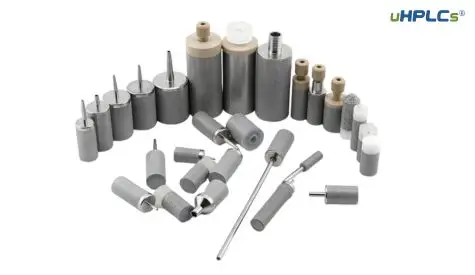
- *Ultra-uniform sintered metal frits
- *Strong global supply capability
- *Technical support in 30+ countries
- *High-pressure–resistant, zero-dead-volume designs
Our engineering expertise ensures unmatched stability and reliability.
VII. Conclusion
A guard column is more than protection—it is a performance stabilizer, cost saver, and workflow safeguard.
By preventing particle intrusion, adsorbing contaminants, and extending analytical column lifetime, it ensures:
- *Stable retention
- *Better peak shape
- *Lower maintenance
- *Higher method reproducibility
- *Reduced total cost of ownership
For any lab handling challenging matrices or high-throughput testing, a guard column is not optional—it is mandatory.
Ready to Protect Your HPLC System?
If you need high-performance guard columns engineered for demanding applications, we provides:
- *Custom-packed guard columns
- *High-purity frit technology
- *Full compatibility with major HPLC/UPLC brands
- *Rapid delivery and global support
Contact us at [email protected] today to get expert recommendations or request customized guard column solutions tailored to your workflow.