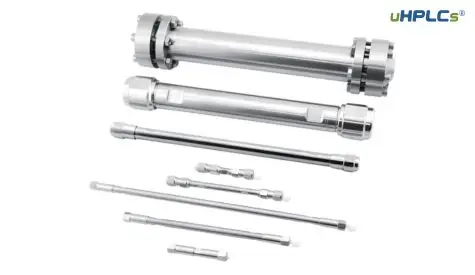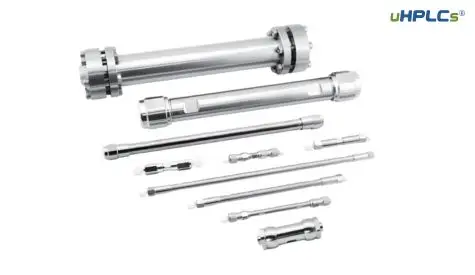
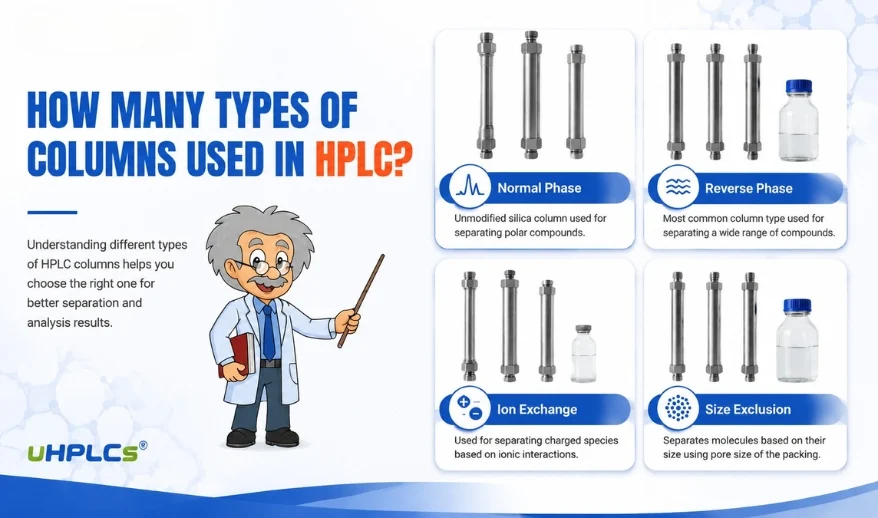
High-performance liquid chromatography (HPLC) columns are selected according to the analyte’s polarity, charge, molecular size, and specific chemical interactions. Choosing the right column chemistry is one of the most important steps in achieving reliable separation, suitable resolution, and repeatable analytical results.
In this guide
HPLC Column Chemistry: The Main Separation Modes
Most HPLC separations use one of four core mechanisms: polarity, hydrophobicity, ionic interaction, or molecular size. Affinity and chiral chromatography provide more specialized selectivity for biomolecules and enantiomers.
1. Normal-Phase HPLC Columns
Normal-phase chromatography uses a polar stationary phase and a relatively non-polar mobile phase. Polar analytes interact more strongly with the stationary phase and are generally retained longer, while less polar compounds elute earlier.
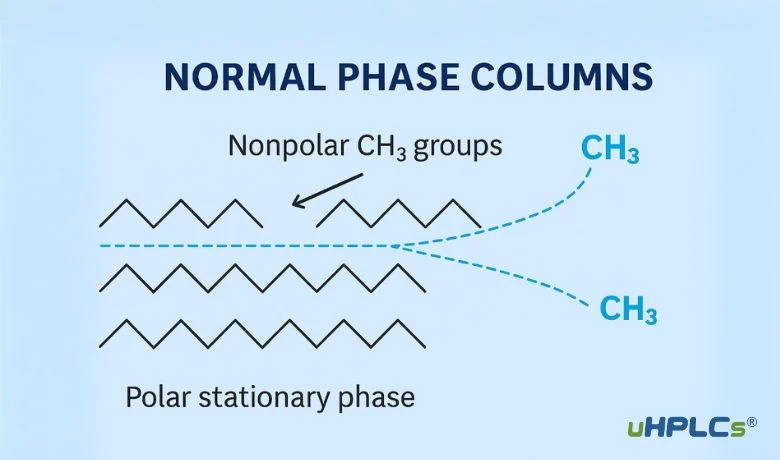
Typical stationary phases: silica, amino, cyano, and diol.
Typical mobile phases: hexane, heptane, ethyl acetate, isopropanol, and related solvent mixtures.
Common applications
- Separation of compounds with different polarities
- Lipid, hydrocarbon, and isomer analysis
- Preparative separations using suitable solvent systems
- Some chiral separations when used with a chiral stationary phase
Key considerations
Normal-phase retention can be sensitive to water content and solvent composition. Consistent mobile-phase preparation and careful column equilibration are important for reproducible results.
2. Reversed-Phase HPLC Columns
Reversed-phase chromatography is the most widely used HPLC mode. It uses a non-polar bonded stationary phase with a relatively polar mobile phase. More hydrophobic compounds generally interact more strongly with the stationary phase and elute later.
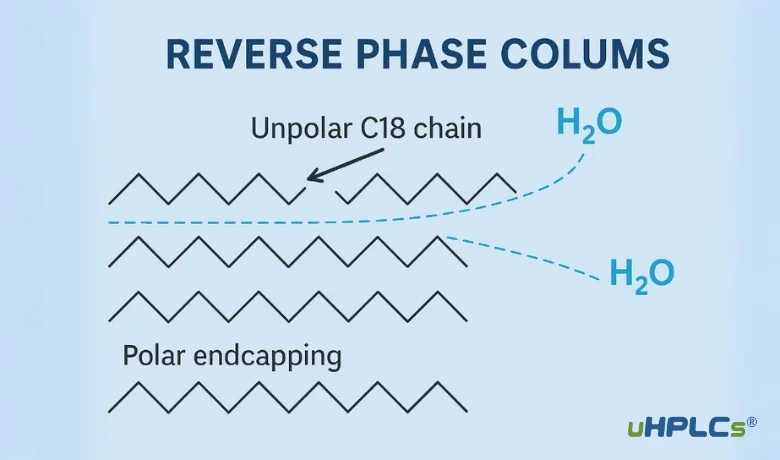
Typical stationary phases: C18, C8, C4, phenyl, PFP, and other bonded phases.
Typical mobile phases: water or buffer combined with acetonitrile or methanol.
Common applications
- Pharmaceutical analysis and impurity profiling
- Food, environmental, and chemical analysis
- Peptide and protein separations with suitable pore size and chemistry
- Routine analytical and preparative HPLC
Key considerations
Column selectivity depends on bonded-phase chemistry, carbon load, end-capping, pore size, particle size, pH range, and mobile-phase conditions. C18 is a common starting point, but C8, phenyl, PFP, or polar-embedded phases may provide better selectivity for specific analytes.
| Property | Normal Phase | Reversed Phase |
|---|---|---|
| Stationary phase | Polar | Non-polar or moderately hydrophobic |
| Mobile phase | Relatively non-polar | Water/buffer with organic solvent |
| Main interaction | Polar adsorption | Hydrophobic interaction |
| Typical phases | Silica, amino, cyano, diol | C18, C8, C4, phenyl, PFP |
3. Ion-Exchange HPLC Columns
Ion-exchange chromatography separates compounds according to their charge and ionic interactions with a charged stationary phase. Retention is controlled by analyte charge, stationary-phase functionality, mobile-phase pH, ionic strength, and salt concentration.
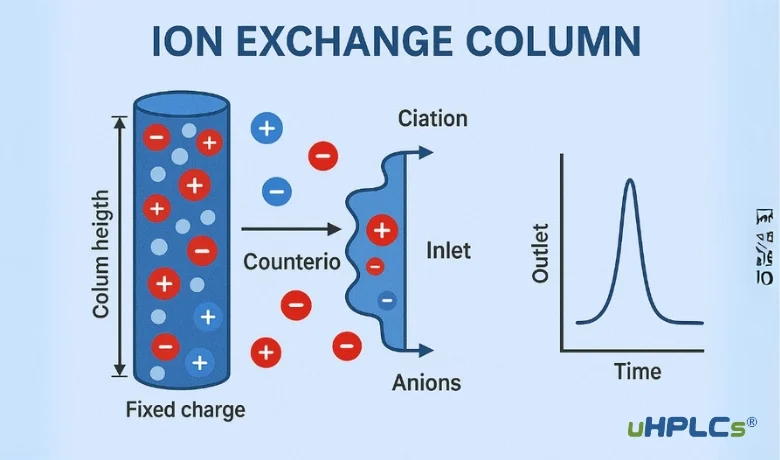
Cation-exchange columns: retain positively charged analytes.
Anion-exchange columns: retain negatively charged analytes.
Common applications
- Inorganic ions and organic acids or bases
- Amino acids, peptides, proteins, and biomolecules
- Charge-variant analysis and biomolecule purification
- Water and environmental analysis
Key considerations
The analyte must carry an appropriate charge under the selected pH conditions. Buffer type, pH, and salt gradient should be optimized carefully to balance retention, selectivity, and recovery.
4. Size-Exclusion HPLC Columns
Size-exclusion chromatography (SEC) separates molecules according to their hydrodynamic size. Large molecules are excluded from more of the stationary-phase pore volume and therefore elute earlier. Smaller molecules enter more pores and elute later.
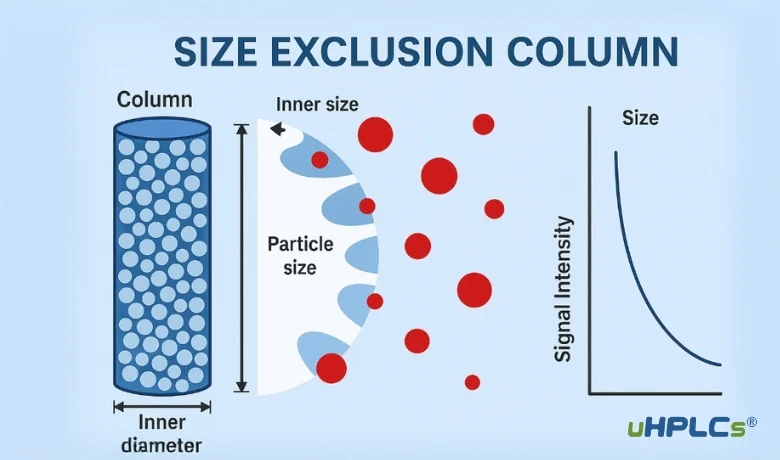
Typical stationary phases: porous silica, polymeric media, agarose, and dextran-based materials.
Related modes: aqueous SEC for biomolecules and GPC for many organic-soluble polymers.
Common applications
- Protein aggregate and fragment analysis
- Molecular-weight distribution studies
- Biomolecule desalting and purification
- Polymer characterization
Key considerations
Select a pore size and fractionation range that match the target molecules. SEC should minimize unwanted ionic or hydrophobic interactions; mobile-phase composition is often adjusted to reduce secondary interactions.
5. Affinity Chromatography Columns
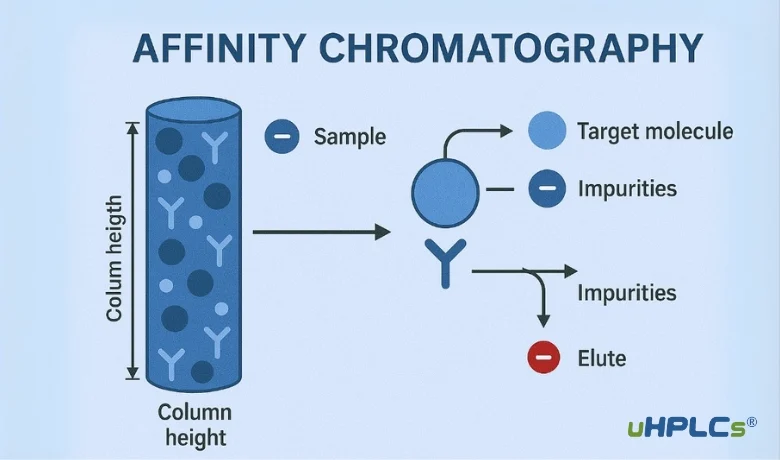
Affinity chromatography relies on a highly specific interaction between an immobilized ligand and a target molecule. The target binds selectively while non-binding components are washed away, after which the target is eluted by changing pH, ionic strength, or competitive ligand conditions.
Common applications
- Antibody and recombinant-protein purification
- Enzyme, receptor, and nucleic-acid isolation
- Biopharmaceutical process development and quality control
6. Chiral HPLC Columns
Chiral HPLC columns are designed to separate enantiomers. Their stationary phase contains a chiral selector that forms different transient interactions with each enantiomer, producing different retention times.
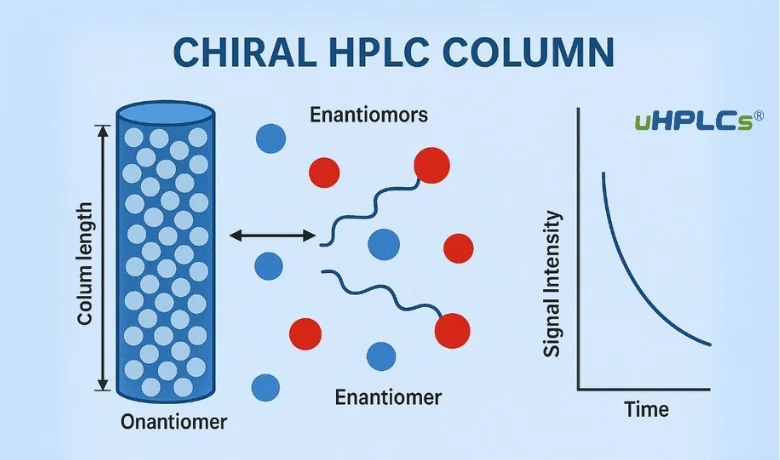
Common selectors: polysaccharide derivatives, protein-based phases, cyclodextrins, and other chiral selectors.
Common applications
- Enantiomeric purity testing
- Pharmaceutical development and quality control
- Chiral method development and preparative isolation
How to Choose the Right HPLC Column
A practical column-selection process starts with the analyte and the analytical goal. Consider the following factors before selecting column chemistry and dimensions.
| Analyte or Goal | Recommended Starting Mode | Important Variables |
|---|---|---|
| Small organic molecules | Reversed phase | C18/C8/phenyl/PFP, pH, organic solvent, gradient |
| Highly polar compounds | Normal phase, HILIC, or ion exchange | Polarity, ionization, water content, buffer |
| Charged analytes | Ion exchange | pH, ionic strength, exchanger type |
| Proteins or polymers by size | SEC/GPC | Pore size, fractionation range, secondary interactions |
| Enantiomers | Chiral chromatography | Selector type, mobile phase, temperature |
| Highly selective biomolecule capture | Affinity chromatography | Ligand specificity, binding and elution conditions |
Additional column parameters
- Column length: longer columns can increase efficiency and resolution but also increase pressure and run time.
- Internal diameter: affects sample capacity, solvent consumption, and instrument compatibility.
- Particle size: smaller particles generally improve efficiency but require higher operating pressure.
- Pore size: should match analyte size, especially for peptides, proteins, and polymers.
- pH and temperature limits: must remain within the column manufacturer’s specified operating range.
Practical starting point
For many small-molecule analytical methods, a reversed-phase C18 column is a practical first choice. If selectivity is insufficient, evaluate alternative chemistries such as C8, phenyl, PFP, polar-embedded, HILIC, ion exchange, or another mode based on the analyte’s properties.
Conclusion
HPLC columns should be selected according to the dominant separation mechanism required by the sample. Reversed-phase columns are widely used for routine small-molecule analysis, while normal-phase, ion-exchange, size-exclusion, affinity, and chiral columns provide different selectivity for specialized analytical and preparative applications.
The best column is not simply the most common one. It is the column whose chemistry, dimensions, pore structure, and operating range match the analyte, mobile phase, instrument, and analytical objective.
Frequently Asked Questions
Which HPLC column is used most often?
Reversed-phase columns, especially C18 columns, are the most common starting point for many small-molecule HPLC methods because they are compatible with aqueous mobile phases and offer broad applicability.
What is the difference between C18 and C8 columns?
C18 phases are generally more hydrophobic and often provide stronger retention than C8 phases. C8 may be useful when retention on C18 is excessive or when shorter run times are required.
When should I use an ion-exchange column?
Use ion exchange when analytes are charged under the selected pH conditions and separation depends primarily on ionic interactions rather than hydrophobicity or size.
How do particle size and column length affect performance?
Smaller particles and longer columns can improve efficiency and resolution, but they also increase backpressure and may lengthen analysis time. The instrument pressure limit must be considered.
Can one HPLC column separate every type of compound?
No. Column chemistry must match the analyte and separation goal. Alternative phases or separation modes may be required when a standard reversed-phase method does not provide sufficient retention or selectivity.
|
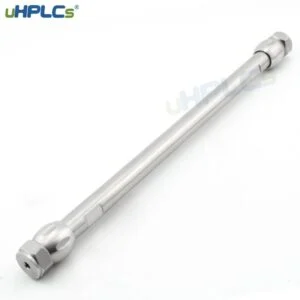
OEM HPLC Columns and Custom Column HardwareuHPLCs provides HPLC column hardware, empty columns, guard columns, inline filters, fittings, tubing, and customized chromatography components for laboratories, chromatography brands, and instrument manufacturers. Available support includes custom dimensions, material and connection options, private labeling, packaging, and OEM/ODM development according to project requirements. |