
HPLC Method Development: A Practical Guide to Building Robust and Reproducible Methods
Developing a reliable HPLC method involves much more than adjusting flow rate, gradient slope, temperature, or injection volume. A robust method begins with a clearly defined analytical objective and is built through appropriate column selection, mobile-phase design, controlled parameter optimization, and consistent sample preparation.
This guide explains a practical HPLC method-development workflow, common causes of unstable retention and poor peak shape, and the steps analysts can take to create methods that remain reproducible during routine laboratory use.
In This Article
1. Why HPLC methods become unstable
2. How to define the analytical objective
3. How to select an appropriate HPLC column
4. How to design the mobile phase
5. How to optimize parameters systematically
6. Why sample preparation and filtration matter
7. How to design a method for routine operation
8. Frequently asked questions
Key Takeaways
✓ A robust HPLC method starts with a clearly defined analytical objective.
✓ Stationary-phase selectivity often has a greater influence on separation than small adjustments to flow rate or temperature.
✓ Sample-solvent mismatch can cause peak splitting, fronting, broadening, and inconsistent early-eluting peaks.
✓ Changing several parameters at the same time makes it difficult to understand cause-and-effect relationships.
✓ Sample preparation, filtration, and column protection should be included in the original method design.
✓ A routine QC method should prioritize reproducibility and robustness rather than a visually perfect but fragile chromatogram.
Why HPLC Methods Become Unstable
High-Performance Liquid Chromatography is one of the most widely used analytical techniques in pharmaceutical, environmental, food, chemical, and research laboratories.
Many analysts are familiar with operating an HPLC instrument and adjusting common parameters such as flow rate, gradient slope, column temperature, detection wavelength, and injection volume.
However, unstable retention times, poor peak shape, inconsistent resolution, increasing backpressure, and weak reproducibility are still common during method development and routine analysis.
In many cases, these problems are not caused by one incorrect instrument setting. They result from weaknesses in the original method-development strategy, such as:
- An unclear analytical objective
- A poorly matched stationary phase
- Insufficient control of mobile-phase pH or composition
- Sample-solvent incompatibility
- Inconsistent sample preparation
- Inadequate system equilibration
- Simultaneous adjustment of too many variables
- Failure to design for routine laboratory conditions
A robust HPLC method is not created through endless troubleshooting. It is designed systematically so that the separation remains stable when normal laboratory variations occur.
1. Start With the End: Define the Analytical Objective
Before selecting a column, preparing a buffer, or programming a gradient, the most important step is defining exactly what the method must achieve.
Many development projects become unnecessarily complicated because the analytical goal is unclear or several different objectives are combined into one method.
Questions to Answer Before Development Begins
- Is the method intended for identification or quantitative determination?
- Is the target a main component, a related substance, or a trace impurity?
- What concentration range must be measured?
- What compounds must be separated from each other?
- Is analysis speed more important than maximum resolution?
- Will the method be used for research, method screening, release testing, or routine QC?
- Which detector will be used?
- What system-pressure and solvent limitations apply?
- What level of robustness and transferability is required?
Different Objectives Require Different Method Designs
| Method Objective | Main Priority | Typical Design Consideration |
|---|---|---|
| Fast Screening | Short run time and broad applicability | Minor resolution loss may be acceptable if target peaks remain identifiable |
| Assay Method | Accuracy, precision, and reproducibility | Stable retention and reliable quantitative integration |
| Impurity Method | Selectivity and low-level detection | Separation of the main compound from related substances and degradants |
| Routine QC | Robustness and long-term stability | Tolerance to normal variation between analysts, days, instruments, and reagent lots |
Trying to create one method that is simultaneously the fastest, most sensitive, most selective, and simplest method often produces unnecessary compromises. Define which performance characteristics are essential before optimization begins.
2. Column Selection in HPLC Method Development
Column selection is one of the most influential decisions in HPLC method development. The stationary phase controls selectivity, while the column dimensions and particle characteristics influence efficiency, pressure, analysis time, and system compatibility.
A well-matched column can produce useful selectivity before extensive optimization begins. A poorly matched column may continue to produce co-elution or distorted peaks even after repeated changes to flow rate, temperature, and gradient profile.
Stationary-Phase Selectivity
Reversed-phase C18 columns are widely used because they provide broad applicability, strong hydrophobic retention, and generally predictable chromatographic behavior.
Common advantages of C18 phases include:
- Broad applicability for many small organic compounds
- Compatibility with common water-organic mobile phases
- Useful retention under isocratic and gradient conditions
- Wide commercial availability
- Familiar method-development behavior
However, C18 is not always the best choice. Alternative phases can change selectivity and may resolve compounds that remain co-eluted on a conventional C18 column.
| Stationary Phase | General Selectivity Characteristic | Possible Method-Development Use |
|---|---|---|
| C18 | Strong hydrophobic retention | General-purpose reversed-phase starting point |
| C8 | Lower hydrophobic retention than C18 | Shorter retention or different selectivity for strongly retained compounds |
| Phenyl | Aromatic and pi-related interactions | Separation of aromatic or structurally related compounds |
| PFP | Multiple interaction mechanisms | Alternative selectivity for positional isomers or polarizable analytes |
| Polar-Embedded | Modified reversed-phase and polar interactions | Improved peak shape or altered selectivity for selected polar or basic compounds |
When changing flow rate or temperature does not resolve a critical pair, changing stationary-phase chemistry may be more effective than continuing to optimize the same column.
Column Length, Internal Diameter, and Particle Size
Physical column characteristics influence:
- Separation efficiency
- Resolution
- Analysis time
- Solvent consumption
- System backpressure
- Injection-volume tolerance
- Compatibility with the available HPLC or UHPLC system
Longer columns and smaller particles can increase efficiency, but they may also increase pressure and sensitivity to contamination, sample matrix, and system condition.
The highest-efficiency column is not automatically the most robust option for every routine method.
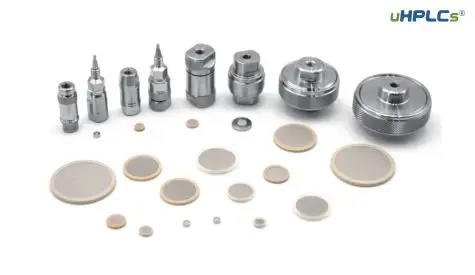
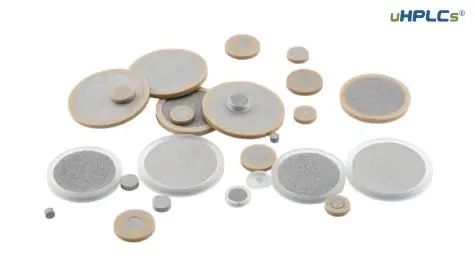
Include Column Protection During Method Development
Column protection may include:
- Sample filtration
- Mobile-phase filtration
- Inline filters
- Guard columns
- Suitable sample cleanup
- Controlled washing and storage procedures
These measures should be considered during development rather than added only after backpressure, peak distortion, or premature column failure occurs.
3. Mobile-Phase Strategy: Solvents Are Active Participants
Mobile-phase selection is not simply a matter of choosing a solvent that dissolves the sample. The mobile phase directly affects analyte ionization, retention, selectivity, peak shape, detector response, system pressure, and method reproducibility.
Isocratic vs. Gradient Elution
| Elution Mode | Main Advantages | Main Considerations |
|---|---|---|
| Isocratic | Simple solvent delivery, stable baseline, straightforward equilibration, good reproducibility | May produce long run times or broad late peaks when sample components have a wide retention range |
| Gradient | Better for complex mixtures, faster elution of strongly retained compounds, wider analytical range | More sensitive to mixing accuracy, dwell volume, equilibration, solvent quality, and system differences |
Isocratic methods are often attractive for routine QC because they are simpler to operate and transfer. Gradient methods are often necessary when the sample contains compounds with widely different retention behavior.
Mobile-Phase pH and Buffer Control
For ionizable analytes, mobile-phase pH can strongly affect retention, selectivity, and peak symmetry.
Important considerations include:
- The pKa values of the target compounds
- The permitted pH range of the column
- Buffer concentration and buffering capacity
- Compatibility with the detector
- Compatibility with mass spectrometry, when applicable
- Reproducibility of buffer preparation
- Possible precipitation when aqueous and organic phases are mixed
Small pH differences can significantly alter the retention of ionizable analytes. Buffer preparation and pH measurement should therefore be controlled and documented consistently.
Sample-Solvent Compatibility
Sample-solvent mismatch is one of the most underestimated causes of poor chromatography.
When the injection solvent is substantially stronger than the initial mobile phase, the following problems may occur:
- Peak fronting
- Peak splitting
- Broad or distorted early peaks
- Reduced efficiency
- Inconsistent retention
- Greater sensitivity to injection volume
Whenever possible, the sample should be dissolved in the initial mobile phase or in a solvent with similar elution strength and compatible composition.
Solvent Quality and System Stability
Solvent-related variables include:
- Solvent purity
- Water quality
- Degassing efficiency
- Mobile-phase filtration
- Mixing accuracy
- Temperature equilibration
- Buffer age and storage
- Microbial or particulate contamination
Controlling these variables improves baseline stability, retention-time reproducibility, and long-term method performance.
4. Parameter Optimization: Control Variables Systematically
One of the most common method-development mistakes is changing several variables at the same time.
If the mobile phase, flow rate, temperature, gradient, and injection volume are changed simultaneously, it becomes difficult to identify which change improved or damaged the separation.
A Practical Optimization Sequence
Step 1: Select an appropriate separation mode and stationary phase.
Step 2: Optimize mobile-phase composition and pH.
Step 3: Optimize the gradient profile or isocratic composition.
Step 4: Adjust flow rate within the system and column limits.
Step 5: Evaluate column temperature.
Step 6: Optimize injection volume and sample concentration.
Step 7: Confirm detection wavelength, integration settings, and system suitability.
Understand Cause and Effect
| Variable | Possible Chromatographic Effect |
|---|---|
| Organic Solvent Percentage | Changes retention and may alter selectivity in reversed-phase separations |
| Mobile-Phase pH | Changes ionization, retention, selectivity, and peak shape for ionizable compounds |
| Flow Rate | Changes analysis time, efficiency, pressure, and sometimes resolution |
| Column Temperature | Changes solvent viscosity, pressure, retention, selectivity, and mass transfer |
| Injection Volume | Excessive volume may cause band broadening, distortion, or solvent-related peak problems |
Keep a structured method-development record. Document each condition, chromatogram, observation, and conclusion so that successful and unsuccessful experiments both contribute to the final method.
5. Sample Preparation: Where Many Methods Quietly Fail
Many problems attributed to the HPLC column or instrument actually originate during sample preparation.
Common sample-preparation weaknesses include:
- Inadequate sample filtration
- Inconsistent extraction time or technique
- Insufficient matrix cleanup
- Excessive particulate load
- Uncontrolled sample-solvent composition
- Incomplete dissolution
- Analyte instability during preparation
- Inconsistent dilution or transfer procedures
These problems may lead to:
- Increasing system backpressure
- Column-head contamination
- Reduced resolution
- Peak-shape deterioration
- Poor recovery
- Inconsistent quantitative results
- Shortened analytical-column lifetime
The Role of Filtration in HPLC Workflows
Particulate contamination is one of the most common causes of pressure increase and premature column degradation.
Effective filtration can help:
- Protect the analytical column
- Reduce blockage of frits and tubing
- Maintain stable system pressure
- Reduce particulate-related baseline disturbance
- Improve long-term reproducibility
- Extend column service life
Filter-material compatibility must be considered. The selected membrane or filtration component should not adsorb the analyte, release extractables, or react with the sample solvent.
Sample Preparation Must Be Reproducible
A chromatographic method cannot compensate for inconsistent sample preparation.
The preparation procedure should clearly define:
- Sample mass or volume
- Extraction solvent
- Extraction time and temperature
- Mixing, shaking, or sonication conditions
- Centrifugation conditions
- Filtration procedure
- Dilution sequence
- Sample stability and permitted storage time
6. Designing Methods for Routine Operation
A method that produces a good chromatogram once during development is not automatically suitable for routine laboratory use.
Routine methods must remain stable across repeated injections, different days, normal temperature variation, reagent lots, analysts, instruments, and column batches.
What Makes an HPLC Method Robust?
A robust method should tolerate small, realistic variations in:
- Flow rate
- Column temperature
- Mobile-phase composition
- Mobile-phase pH
- Gradient timing
- Injection volume
- Detector settings
- Equilibration time
The purpose of robustness evaluation is not to make the method insensitive to every possible change. It is to identify which variables are critical and establish appropriate operating controls.
Prioritize Reproducibility Over Cosmetic Perfection
In a routine QC laboratory, consistent results are often more valuable than a theoretically perfect chromatogram that requires exact, fragile conditions.
A slightly broader peak that remains reproducible across hundreds of injections may be more useful than a very sharp separation that fails after a small temperature or composition change.
The final method should be designed for the laboratory that will actually run it—not only for the development scientist, instrument, and column used during the initial experiments.
System Suitability
Depending on the analytical objective, system-suitability criteria may include:
- Retention-time repeatability
- Peak-area repeatability
- Resolution of a critical pair
- Theoretical plate count
- Peak symmetry or tailing factor
- Signal-to-noise performance
- Blank or carryover acceptance
These criteria should be scientifically connected to the intended use of the method rather than selected only because they are commonly reported.
Common Mistakes in HPLC Method Development
| Common Mistake | Better Approach |
|---|---|
| Selecting a column before defining the analytical goal | Define target compounds, critical pairs, concentration range, and intended use first |
| Adjusting several parameters simultaneously | Change variables systematically and document the effect of each change |
| Ignoring sample-solvent strength | Match the sample solvent as closely as practical to the initial mobile phase |
| Insufficient sample and mobile-phase filtration | Include appropriate filtration and column protection in the method workflow |
| Optimizing only the chromatogram | Evaluate preparation, pressure, equilibration, runtime, transferability, and routine maintenance |
| Ignoring column protection until failure occurs | Evaluate guard columns, inline filters, filtration, and washing procedures during development |
Practical HPLC Method-Development Checklist
✓ Define the analytical objective and intended use.
✓ Identify the target analytes, impurities, and critical separation pairs.
✓ Review analyte polarity, ionization, solubility, and stability.
✓ Select an appropriate stationary phase and column format.
✓ Define mobile-phase solvent, pH, buffer, and additives.
✓ Confirm sample-solvent compatibility with the initial mobile phase.
✓ Optimize variables in a controlled and documented sequence.
✓ Define reproducible sample-preparation and filtration procedures.
✓ Include guard-column or inline-filter requirements when necessary.
✓ Evaluate equilibration, carryover, pressure, and extended-run stability.
✓ Test robustness against small realistic variations.
✓ Establish meaningful system-suitability criteria.
Frequently Asked Questions
What is the first step in HPLC method development?
The first step is defining the analytical objective. Analysts should determine whether the method is intended for identification, quantitative assay, impurity testing, stability analysis, or routine quality control. This objective guides column, mobile-phase, detector, and optimization decisions.
What factors affect separation in HPLC?
Important factors include stationary-phase chemistry, mobile-phase composition, pH, buffer concentration, gradient profile, flow rate, column temperature, sample solvent, injection volume, and analyte concentration.
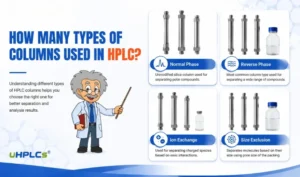
How do you choose the right HPLC column?
Column selection depends on analyte polarity, ionization, molecular structure, sample matrix, required selectivity, separation mode, detector, and system-pressure capability. C18 is a common starting point, but C8, phenyl, PFP, polar-embedded, HILIC, ion-exchange, or size-exclusion phases may provide better selectivity for specific applications.
What is the difference between isocratic and gradient HPLC?
Isocratic methods use a constant mobile-phase composition throughout the analysis. Gradient methods change the mobile-phase composition over time. Isocratic methods are simpler and often highly reproducible, while gradient methods are generally more suitable for complex samples with a wide retention range.
Why do peaks tail in HPLC?
Peak tailing may result from secondary interactions, unsuitable mobile-phase pH, column contamination, active sites, excessive sample loading, system dead volume, or poor sample-solvent compatibility. The exact cause should be identified before changing several method parameters.
Why is sample filtration important?
Sample filtration removes particles that can block tubing, frits, guard columns, or analytical columns. Appropriate filtration helps maintain stable pressure, reduce contamination, improve reproducibility, and extend column life.
What causes retention-time shifts?
Retention-time shifts may result from changes in mobile-phase composition, pH, gradient mixing, flow rate, temperature, equilibration, system dwell volume, column aging, leaks, or contamination.
How should an HPLC method be optimized?
Optimization should follow a controlled sequence. Analysts should first confirm the separation mode and stationary phase, then optimize mobile-phase composition and pH, followed by gradient or isocratic conditions, flow rate, temperature, injection volume, and detector settings.
What makes an HPLC method robust?
A robust method maintains acceptable retention, resolution, peak shape, and quantitative performance when small realistic changes occur in flow rate, temperature, mobile-phase composition, pH, or other operating conditions.
What are the most common HPLC method-development mistakes?
Common mistakes include beginning without a clear objective, relying on one stationary phase, changing too many variables simultaneously, ignoring sample-solvent compatibility, using inconsistent sample preparation, and neglecting filtration or column protection.
Conclusion: Robust HPLC Methods Are Designed, Not Repaired
Successful HPLC method development requires more than adjusting instrument parameters until a satisfactory chromatogram appears.
It requires a clearly defined analytical objective, appropriate stationary-phase selectivity, controlled mobile-phase conditions, systematic parameter optimization, reproducible sample preparation, and realistic robustness evaluation.
Column protection, filtration, equilibration, system suitability, and routine laboratory conditions should be considered during development rather than added later as troubleshooting measures.
A well-designed method reduces repeated adjustment, protects the analytical system, improves data reliability, and supports efficient routine analysis. When the method is properly designed, the instrument operates quietly—and that is often the best indication of success.
Need HPLC Columns or Method-Development Support?
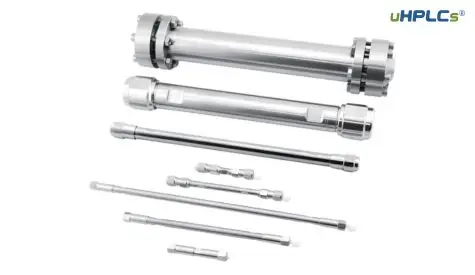
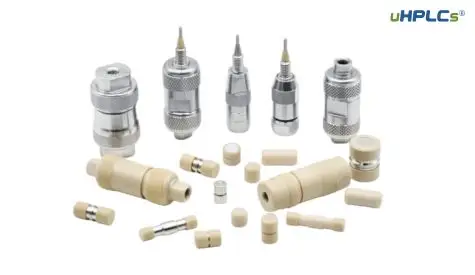
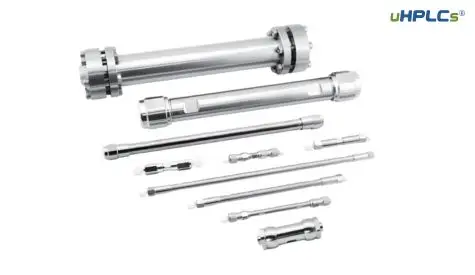
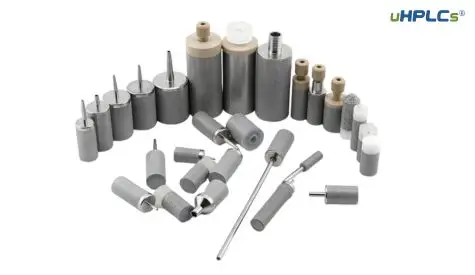
uHPLCs provides analytical HPLC columns, guard columns, inline filters, empty columns, chromatography consumables, analytical testing, and customized method-development support for pharmaceutical, food, chemical, and research laboratories.
Website: www.uhplcs.com
Email: [email protected]