In the world of analytical chemistry, chromatography plays a vital role in separating, identifying, and quantifying components in complex mixtures. Among the most widely used chromatographic techniques are Liquid Chromatography (LC) and Gas Chromatography (GC). While both aim to achieve separation and analysis, they operate on different principles and are suited for different types of samples and applications.
In this article, we’ll break down their fundamental differences and guide you on how to choose the right technique based on your sample and analytical needs.
Basic Principles: Gas vs Liquid Phase
At the heart of chromatography lies the interaction between the sample and two phases: the mobile phase (which carries the sample) and the stationary phase (which retains components to different degrees, enabling separation).
Gas Chromatography (GC) uses an inert carrier gas such as helium or nitrogen as the mobile phase. The sample is vaporized and carried through a long, thin capillary column coated with a stationary phase. Separation is based primarily on the sample’s volatility and boiling point.
Liquid Chromatography (LC), on the other hand, uses a liquid mobile phase, often a mixture of water and organic solvents like methanol or acetonitrile. The separation is influenced by the polarity, size, and chemical interactions between the compounds and the stationary phase (typically packed particles in a column).
Sample Requirements: Volatile vs Non-Volatile
One of the key differences between GC and LC lies in the nature of the sample they can handle.
·GC is best suited for small, volatile, and thermally stable compounds such as solvents, hydrocarbons, or environmental pollutants. Samples must be able to withstand high temperatures during vaporization without decomposing.
·LC is ideal for larger, polar, thermally sensitive, or non-volatile compounds. This includes proteins, peptides, pharmaceutical ingredients, polymers, and biological fluids.
In simple terms, if your compound can boil without breaking down, GC might be your tool. If it’s complex or delicate, LC will likely be the better choice.
Sample Preparation Considerations
Sample preparation is a critical step before chromatographic analysis, and requirements vary between GC and LC.
For GC, many samples require derivatization—a chemical modification that makes non-volatile or polar compounds more volatile and thermally stable. For instance, sugars or amino acids are often derivatized using silylation agents before GC analysis.
In contrast, LC is more accommodating to a broader range of samples. Common LC sample preparation techniques include protein precipitation, solid-phase extraction (SPE), and filtration, especially when dealing with biological fluids or complex matrices.
Instrumentation and Operating Conditions
Though both systems rely on the same separation principles, their hardware setups differ significantly:
·GC systems consist of an injector (for vaporizing the sample), a heated oven (housing the column), and a detector like FID (Flame Ionization Detector) or MS (Mass Spectrometer). The entire process is carried out at high temperatures, often ranging from 50°C to 300°C.
·LC systems include a high-pressure pump, injector, column packed with stationary phase material, and a detector (e.g., UV-Vis, PDA, or MS). The process typically occurs at ambient or slightly elevated temperatures under high pressure, especially in UHPLC systems.
Columns and Separation Mechanisms
In GC, columns are usually long and narrow capillary tubes (up to 60 meters), coated internally with a liquid stationary phase. Separation is achieved through differences in volatility and interaction with the stationary phase.
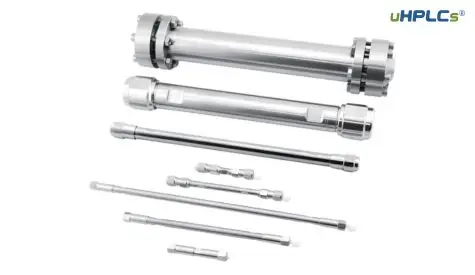
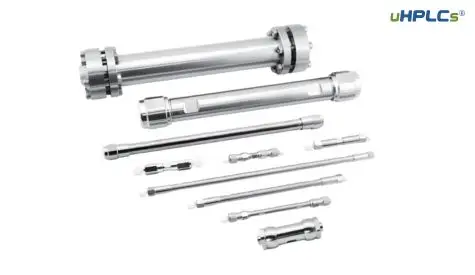
In LC, columns are short (typically 5–25 cm) and packed with solid particles, such as silica or C18 bonded phases. Separation mechanisms may include partition, adsorption, ion exchange, or size exclusion.
Each system requires optimized column chemistry to match the properties of the analytes and the separation goal.
Separation Efficiency and Resolution
Gas Chromatography typically offers higher separation efficiency due to the use of long capillary columns and low-viscosity mobile phase. This allows sharp peak shapes and excellent resolution, particularly for small, volatile compounds.
Liquid Chromatography, especially UHPLC, also delivers high resolution using small-particle columns and high-pressure operation. However, it’s often preferred for complex or thermally labile samples, where GC is unsuitable despite its higher theoretical efficiency.
Detection Techniques
Detection is a crucial step in any chromatographic method, and both GC and LC offer a range of detector options:
GC detectors include:
·FID (Flame Ionization Detector): Highly sensitive to hydrocarbons.
·TCD (Thermal Conductivity Detector): General-purpose, low sensitivity.
·MS (Mass Spectrometry): Offers detailed structural information.
LC detectors include:
·UV/Vis or PDA (Photodiode Array): Common and cost-effective.
·ELSD (Evaporative Light Scattering Detector): Useful for non-UV-absorbing compounds.
·MS (Mass Spectrometry): Increasingly used in pharmaceutical and proteomics analysis.
The choice of detector depends on the sensitivity needed and the type of compound being analyzed.
Application Fields: Where Each Technique Shines
GC is widely used in:
Environmental testing (e.g., VOCs in air or water)
Food safety (e.g., residual solvents, flavor analysis)
Petrochemical analysis
Forensic toxicology
LC is preferred for:
Pharmaceutical quality control and development
Bioanalysis (blood, plasma, urine)
Natural product research
Peptides, proteins, and antibody purification
In industries like pharma and biotech, LC (especially HPLC and UHPLC) dominates due to its ability to handle complex biological samples with high precision.
Summary Table: GC vs LC at a Glance
Feature Gas Chromatography (GC) Liquid Chromatography (LC)
Mobile phase Inert gas Liquid solvent
Sample requirements Volatile, thermally stable Non-volatile, thermally labile
Operating temperature High (up to 300°C) Ambient to moderate
Pressure Low High (especially in UHPLC)
Column type Capillary Packed
Common detectors FID, TCD, MS UV, PDA, ELSD, MS
Typical applications Solvents, gases, aroma compounds Drugs, biomolecules, food additives
Cost and complexity Lower system cost Higher system complexity and cost
Environmental and Resource Considerations
Chromatographic analysis also has implications for lab sustainability and operating costs.
GC is generally more environmentally friendly in terms of waste generation, as it does not produce liquid waste. It uses carrier gases like helium or nitrogen, which are inert and often recycled.
LC, on the other hand, consumes large volumes of organic solvents such as acetonitrile and methanol. These must be disposed of as hazardous waste, adding to environmental and economic burdens. Efforts to switch to green solvents or use solvent recycling systems are growing in LC laboratories.
How to Choose: GC or LC?
Still unsure which technique suits your needs? Here are some quick pointers:
Choose GC if:
Your sample is volatile and thermally stable.
You need fast screening for small organic compounds.
Your matrix is simple (e.g., air, purified solvent).
Choose LC if:
Your compound is polar, large, or heat-sensitive.
You are working with biological fluids, drugs, or natural extracts.
You need high selectivity and compatibility with MS detection.
Ultimately, the best method depends on your analytical goals, sample characteristics, and regulatory requirements.
Conclusion
Gas Chromatography (GC) and Liquid Chromatography (LC) are both essential tools in modern analytical laboratories. Understanding their differences in principle, instrumentation, and application helps ensure that the right method is chosen for each analysis.
Whether you’re analyzing volatile solvents or complex drug formulations, selecting the right technique can save time, improve accuracy, and boost your lab’s efficiency. When in doubt—consult your sample’s behavior and your analytical needs, and let the chemistry guide you.
Whether you’re optimizing your lab setup, evaluating a new application, or unsure which chromatography method fits your sample—our experts are here to help.
Contact us at [email protected] for personalized recommendations, product support, or technical guidance. Let’s make your analysis faster, more accurate, and easier.