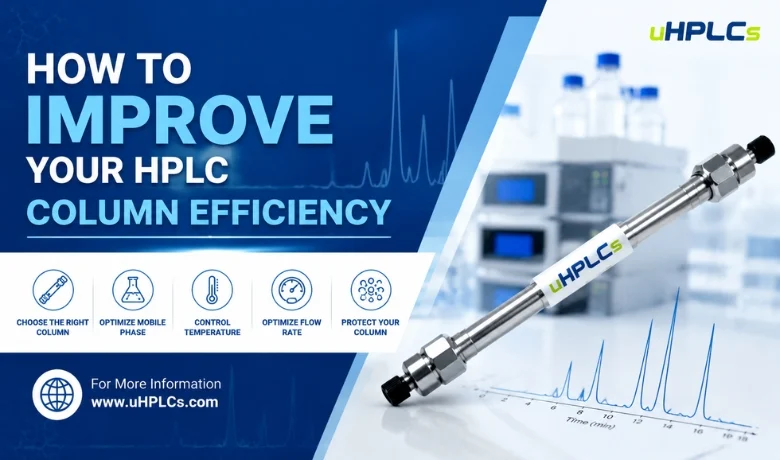
High-performance liquid chromatography (HPLC) plays a critical role in analytical laboratories for the separation, identification, and quantification of compounds. One of the key indicators of HPLC performance is column efficiency. High column efficiency not only improves resolution and peak shape but also leads to faster and more reliable analysis.
In this article, we’ll explore what column efficiency means and provide 10 practical tips to help you maximize it.
What is Column Efficiency?
Column efficiency refers to a column’s ability to produce narrow, symmetrical peaks, which are essential for accurate qualitative and quantitative analysis. It is commonly expressed as the number of theoretical plates (N), a concept that originates from distillation theory. The higher the number of plates, the more efficient the column. Efficient columns allow compounds to be more sharply separated, improving resolution and reducing analysis time. Factors that influence column efficiency include particle size, column dimensions, mobile phase composition, temperature control, and system setup.
10 Tips for Improving HPLC Column Efficiency
1. Use High-Quality Columns with Small, Uniform Particles
Smaller and more uniform particle packing improves mass transfer and reduces eddy diffusion, which results in sharper peaks and better resolution. Choose reputable manufacturers and ensure that columns are stored and handled properly to maintain their integrity.
2. Optimize Column Dimensions (Length and Inner Diameter)
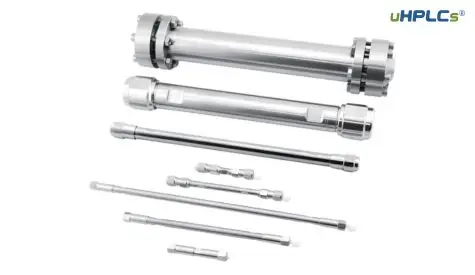
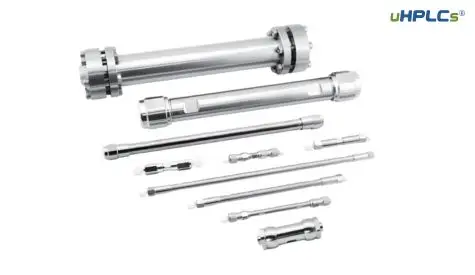
Longer columns generally offer better separation but also increase backpressure. Narrower internal diameters can improve sensitivity but require precise system alignment. Consider the balance between resolution and system pressure to avoid overloading the pump or exceeding system limits.
3. Match Mobile Phase Polarity, Strength, and pH to Your Analytes
Select solvents that are compatible with your stationary phase and analytes. Use buffers to control pH, especially for ionizable compounds, and adjust solvent strength to control elution. Maintaining consistent mobile phase composition is key for reproducible results.
4. Degas and Filter All Mobile Phases
Gases and particulates in the mobile phase can create bubbles, disturb the baseline, and damage the column. Always degas and filter solvents before use. Ultrasonic baths, helium sparging, or vacuum degassing can help eliminate dissolved gases.
5. Set the Optimal Flow Rate Based on Van Deemter Theory
The Van Deemter equation shows how flow rate affects column efficiency. Operate at the flow rate that gives the lowest height equivalent to a theoretical plate (HETP) for your column and mobile phase. Avoid operating too far above or below this optimal point.
6. Maintain Consistent Column Temperature Using a Column Oven
Temperature fluctuations can affect retention time and peak shape. A column oven ensures stable thermal conditions, improves reproducibility, and can enhance mass transfer. Always validate temperature settings and ensure uniform heating throughout the column.
7. Minimize Extra-Column Volume (Tubing, Detector, Injector)
Excess volume outside the column leads to peak broadening. Use short, narrow tubing and low-volume detectors and injectors to preserve peak shape. Carefully trim tubing and check fittings for leaks or dead volumes.
8. Ensure Sample Solvent Compatibility and Proper Injection Volume
The sample solvent should be similar in strength to the mobile phase to prevent peak distortion. Avoid overloading the column by injecting volumes that exceed its capacity. Always filter samples to prevent particulates from damaging the column.
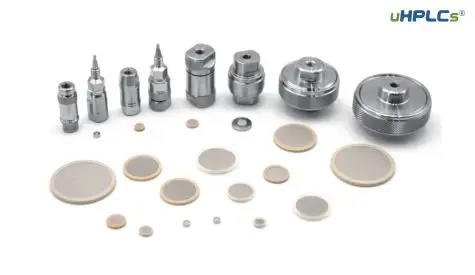
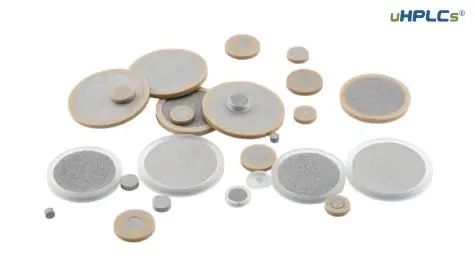
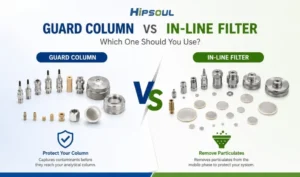
9. Use Guard Columns and Inline Filters, and Clean Regularly
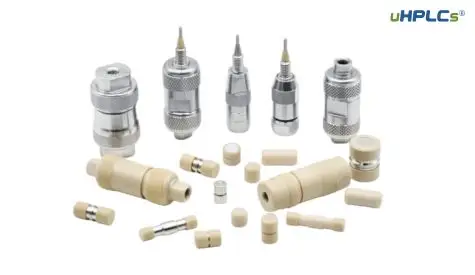
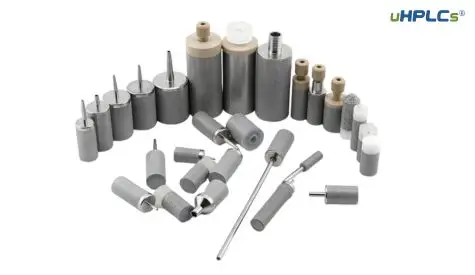
Protect the analytical column from particulates and strongly retained impurities with guard columns and inline filters. Regular cleaning helps restore column performance and extend its life. Use appropriate solvents for flushing based on the type of contamination.
10. Monitor Column Performance and Replace When Necessary
Track plate number, peak symmetry, and retention time. A sudden drop in performance or increasing backpressure may indicate the need for maintenance or replacement. Maintain a log of column usage and performance metrics for better troubleshooting and planning.
Troubleshooting Tips for Low Column Efficiency
Even with best practices in place, issues with column efficiency can still arise. The table below summarizes common problems, likely causes, and recommended actions to help troubleshoot and resolve them effectively.
| Symptom | Possible Cause | Recommended Solution |
| Low plate number | Column contamination, channeling, poor packing | Flush with strong solvent, reverse-flush if needed, replace column if issue persists |
| Peak tailing | Sample overload, poor sample solvent compatibility, degraded stationary phase | Reduce injection volume, match sample solvent with mobile phase, consider replacing the column |
| Broad peaks | Extra-column volume too large, degraded column, slow flow rate | Minimize tubing length, check fittings, increase flow rate within optimal range |
| High backpressure | Blocked frit, particulate contamination, viscous mobile phase | Replace or clean frit, filter all solvents and samples, use appropriate mobile phase composition |
| Shifting retention times | Unstable temperature, mobile phase composition drift, column aging | Use a column oven, ensure consistent mobile phase mixing, track column usage |
| Irreproducible results | Inconsistent injection volume, pH fluctuation, system leaks | Calibrate autosampler, prepare fresh buffer, check system for leaks |
By systematically diagnosing symptoms and verifying conditions, you can quickly identify the root cause of reduced efficiency and take corrective action.
Summary
Improving HPLC column efficiency requires attention to every detail in your system setup and operation. From column selection and mobile phase preparation to temperature control and system cleanliness, consistent best practices make a measurable difference in performance and data quality.
Want better HPLC performance? Explore our high-efficiency columns or contact us at [email protected] to elevate your analysis to the next level.
Let’s improve your workflow together!