
GC-MS Technology
Name the volatile peak.
The gas chromatograph separates. The mass spectrometer records the mass.
GC-MS pairs gas chromatography with mass spectrometry. This page covers when a volatile or semi-volatile sample belongs on a GC, and what the HIPSOUL laboratory actually runs.

-
A Gas Mobile Phase
The sample has to travel in a carrier gas. That is the split from LC-MS/MS.
-
A Mass on the Peak
GC-MS adds a mass to the retention time. FID and ECD record a response.
-
Listed Instruments
Agilent GC and GC-MS systems are on the analytical-services platform.
-
FID and ECD
Those detectors are listed for GC runs that do not need a mass.
-
No GC Column Catalog
HIPSOUL publishes HPLC and UHPLC columns. A GC column is not in that range.
GC-MS Overview
GC-MS separates compounds in a gas, then records a mass from the peak. A carrier gas moves the sample through a GC column. Compounds that travel at different speeds leave at different times. The mass spectrometer records ions from the peak that arrives.
The sample, or a preparation of it, has to be volatile enough to make that trip. A compound that stays in a liquid is an LC-MS/MS question, not a larger GC injection. FID and ECD can record the same GC separation without a mass. They answer a response question. GC-MS answers a mass question.
The analytical services laboratory lists Agilent GC and GC-MS systems, and it lists GC with FID and ECD. Those are instruments the laboratory uses. HIPSOUL does not manufacture them. This site does not publish a GC column catalog. HPLC columns remain the liquid-chromatography range.
Open analytical services
| Factor | GC-FID or GC-ECD | GC-MS |
|---|---|---|
| What is recorded | A response from the detector on the GC peak | Ions from the GC peak |
| Selectivity | Retention time plus that detector’s response | Retention time plus a mass or a selected ion |
| Typical question | Is the peak there, and how large is the response? | What mass is in this peak? |
| Sample | Volatile, or prepared so it can travel in the carrier gas | The same constraint |
| What HIPSOUL publishes | Agilent GC systems, with FID and ECD listed | Agilent GC-MS systems, used as a service |
Whether a peak can be named depends on the instrument, the matrix, the amount of analyte, and the reference information available. Column choice for the GC is part of that service discussion. It is not an HPLC catalog number.
Where a GC-MS Question Goes
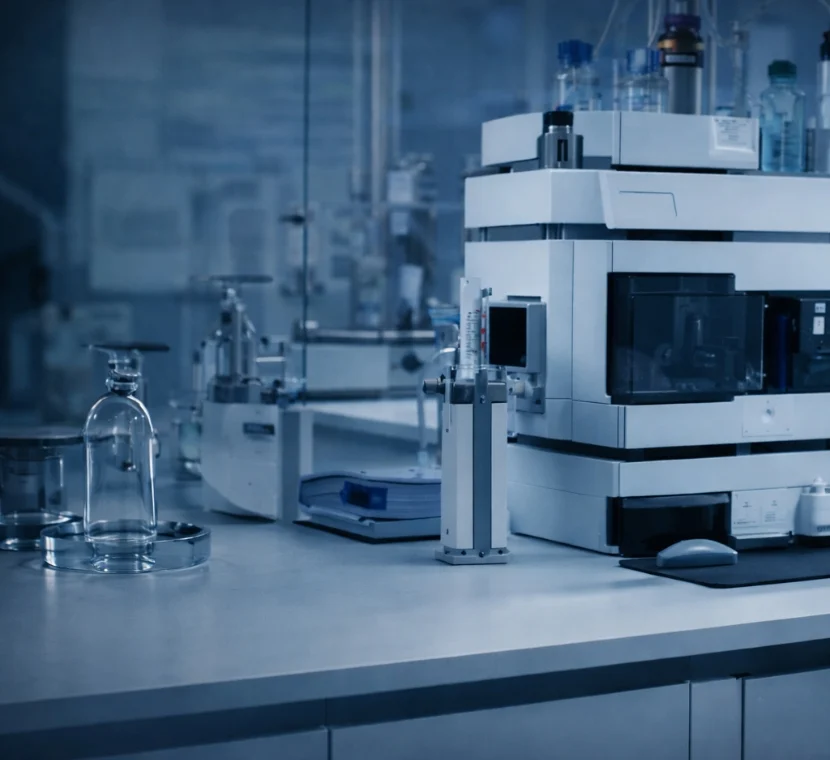
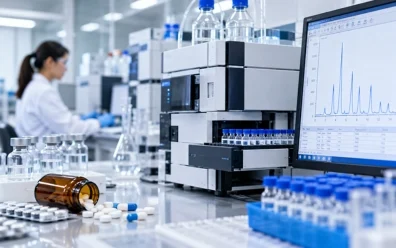
Published HIPSOUL routes. GC-MS is a service on the listed Agilent systems. The photographs are laboratory context. They are not a GC column range.
GC-MS Project Work
- Agilent GC and GC-MS systems are listed
- Volatile and semi-volatile samples, when GC is suitable
- Identification is not assumed in advance
- An HPLC column order is a different request

GC Method Development
- The services page includes HPLC, UPLC, and GC methods
- FID or ECD when the result is a response
- GC-MS when the result needs a mass
- Share the analyte and the matrix before the method is chosen
Impurity Identification
- Unknown compounds can be investigated with GC-MS
- LC-MS, UV-Vis, and IR are the other named techniques
- The amount of impurity limits how far the data can go
- The technique is chosen for the sample, not in advance

Reference-Standard Identity
- The reference-standard page names LC, MS, GC-MS, or HNMR
- GC-MS is used when it is relevant to that standard
- It is not the default identity test for every material
- Documentation follows the technique the project actually uses
What Changes on a GC-MS Method
These are the choices that decide whether the sample belongs on a GC. They are not a guaranteed identification on every peak.
-
Volatility
The analyte has to enter the carrier gas. A sample that only separates in a liquid mobile phase stays on LC-MS/MS or HPLC.
-
The Detector
FID and ECD are on the published GC platform. Choose them when the method needs a response. Choose GC-MS when the method needs a mass.
-
The Mass
A spectrum or a selected ion sits on top of the retention time. A flame-ionization response does not name the compound.
-
Sample Preparation
The extract has to suit the injector and the column. Say what the matrix is. The service discussion decides the preparation. This page does not publish a preparation recipe.
-
Outside the HPLC Catalog
HPLC, UHPLC, and preparative columns are published for liquid chromatography. A GC column request is not filled from those sheets. Share the GC method with analytical services.
When GC-MS Is the Method
Start with whether the analyte can travel in a gas, and whether the result has to include a mass. A compound that will not travel in the carrier gas is an LC-MS/MS question. An accurate mass, rather than a unit mass, is a high-resolution MS question.
-
A volatile or semi-volatile target
Gas chromatography is the separation when the analyte can travel in the carrier gas. Analytical services lists Agilent GC-MS for that work. Suitability is confirmed from the sample, not from the technique name alone.
-
A response is enough
FID and ECD are on the same GC platform. Use them when the method needs a peak response and does not need a mass. The detector still has to match the analyte.
-
An unknown that may be volatile
Impurity identification can include GC-MS, LC-MS, UV-Vis, or IR when the project requires that technique. The amount of material and the matrix decide how far the identification can go.
-
A liquid-phase or trace LC question
Nitrosamine and PFAS quantitation on this site is LC-MS/MS. A chromophore assay that already works stays on HPLC and UHPLC. Those methods are not moved onto a GC because a mass spectrometer is available.
Typical GC-MS Workflow
From a sample that can enter a gas chromatograph to a result the data can support. The run is an analytical service. HIPSOUL does not sell the GC column from the HPLC catalog.
-
1 Check Volatility
Confirm the analyte can travel in a carrier gas, or say if a preparation is already in use. A non-volatile target stops here and moves to liquid chromatography.
-
2 Choose the Detector
FID or ECD for a response. GC-MS for a mass. Both are on the published Agilent GC platform.
-
3 Separate in the Gas Phase
The GC column, carrier gas, and temperature program do the separation. HIPSOUL does not publish that column as a catalog part.
-
4 Report What the Data Supports
A mass and a retention time can support an identification. A full structure, or a peak with too little material, may still need more evidence.
Where GC-MS Is Used
Uses already named on published HIPSOUL pages. Each card opens that page. GC-MS is one technique on the list, used when the sample fits.
Need a GC-MS Run, Not a Column Part Number?
Send the analyte, whether it is volatile, the matrix, and whether you need a mass or only a detector response.
Contact Our ExpertsRelated Resources
Published HIPSOUL pages for the service, the liquid-phase mass-spectrometry route, and method development. These are not customer case studies.
Analytical Services
GC and GC-MS Project Work
View Services
Related Technology
LC-MS/MS Technology
Read the Page
Method Development
Method Development and Validation
Read the PageFrequently Asked Questions
GC-MS is gas chromatography followed by mass spectrometry. A carrier gas moves the sample through a GC column, and compounds leave at different times. The mass spectrometer then records ions from that peak. The sample, or a preparation of it, has to be volatile enough to travel in the gas. HIPSOUL does not manufacture the gas chromatograph, the mass spectrometer, or a GC column range.
FID and ECD record a detector response from the GC peak. They do not record a mass. GC-MS records ions from that peak, so the result is a retention time plus a mass or a selected ion. The analytical services platform lists Agilent GC systems with FID and ECD, and Agilent GC-MS systems. Which detector fits depends on the analyte and on the question the result has to answer. This page does not publish a HIPSOUL detection limit.
No. HIPSOUL manufactures liquid-chromatography columns and consumables. The analytical services page lists Agilent GC and GC-MS systems as instruments the laboratory uses. Those systems are not HIPSOUL products, and this site does not publish a GC column catalog.
When the analyte will not travel in a carrier gas, the separation belongs in a liquid. Trace methods that this site already describes as LC-MS/MS, including nitrosamines and PFAS, stay on the LC-MS/MS page. A UV assay that already answers the question stays on HPLC and UHPLC. Changing the sample vial does not turn an LC method into GC-MS.
Yes, when the project needs it and gas chromatography is suitable. The analytical services page lists Agilent GC and GC-MS systems, and it includes GC-MS among the techniques used for unknown-compound work. Method development can include a GC method. How far an identification can go depends on the amount of material, the matrix, and the reference information you can share.
No. An HPLC or UHPLC column is the separation step for a liquid mobile phase. A GC-MS method uses a GC column in a gas chromatograph. HIPSOUL publishes HPLC, UHPLC, and preparative column ranges. It does not publish a GC column range. Column choice for a GC-MS run is part of the analytical-service discussion.