
UV / PDA Detection
Record the absorbance, then check the spectrum.
The column separates. The detector measures light.
UV and PDA are the usual detectors when the analyte has a chromophore. This page covers when an absorbance result is the right choice, and the columns, guards, and ghost-peak traps HIPSOUL supplies for that flow path.

-
Absorbance
UV records response at the wavelength the method selects.
-
A Spectrum
PDA adds a spectrum. The HPLC page uses that for a peak-purity check.
-
Assay First
Related substances, dissolution, and stability on this site usually start here.
-
Not a Name
A spectrum can check a known peak. It does not identify an unknown the way MS can.
-
Hardware or a Run
Buy the column, or ask analytical services to run UV or PDA.
UV / PDA Overview
UV and PDA sit on the same packed-column separation as HPLC and UHPLC. A liquid mobile phase carries the sample through the column. Compounds leave at different times. The detector measures how much light the solution absorbs as each peak passes.
A UV detector follows the wavelength the method selects. A photodiode-array detector records absorbance across a wavelength range. The HPLC technology page describes that spectrum as a check on peak purity. Naming an unknown, or measuring below the UV working range, moves the same separation onto a mass spectrometer. That workflow is on the LC-MS/MS page.
HIPSOUL manufactures the HPLC columns, UHPLC / UPLC columns, guard columns, and Ghost Buster Columns on that flow path. Analytical services list Thermo Scientific U3000 and PDA, and they list PDA, DAD, TUV, and UV among the detectors the laboratory uses. HIPSOUL does not manufacture the detector.
Open analytical services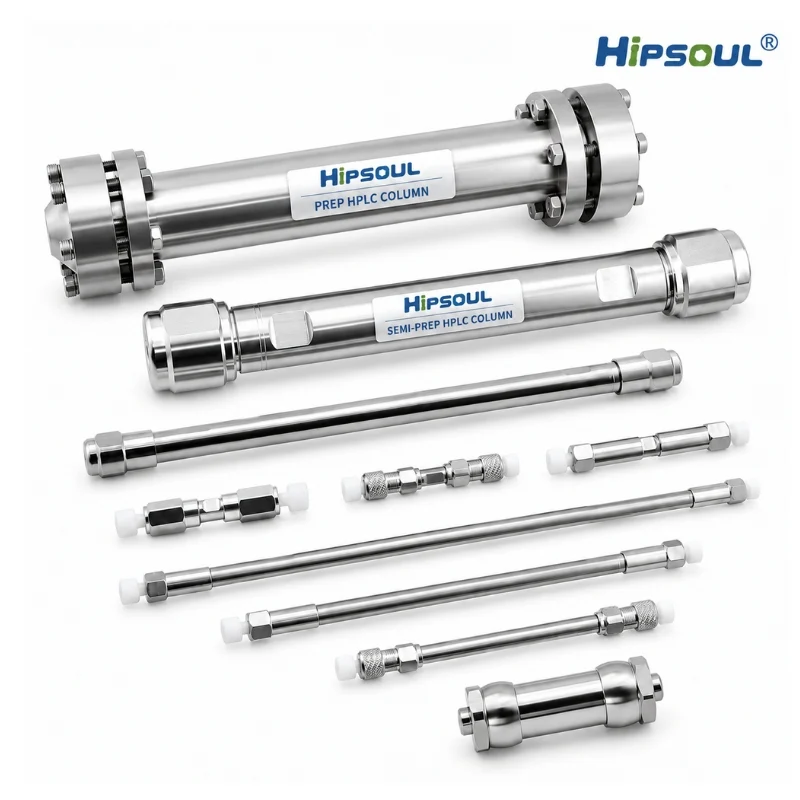

| Factor | UV | PDA |
|---|---|---|
| What is recorded | Absorbance at the wavelength the method selects | Absorbance across a wavelength range |
| Selectivity | Retention time plus a wavelength | Retention time plus a spectrum |
| Typical question | How much of this chromophore is present? | Is this peak spectrally consistent, and how much is present? |
| Identification | Quantifies a known chromophore. It does not name an unknown. | Supports a peak-purity check. A full identification still needs more evidence. |
| Mobile phase | Solvents and additives have to stay transparent at the working wavelength. | The same constraint across the wavelength range the method uses. |
| What HIPSOUL supplies | Columns, guards, filters, and ghost-peak traps. Analytical services list UV and TUV. | The same hardware. Analytical services list Thermo Scientific U3000 and PDA, and DAD. |
Response, the useful wavelength, and whether a peak is clean enough to integrate depend on the detector, the chromophore, the mobile phase, and the matrix. This page does not publish a detection limit.
Columns and Consumables for UV / PDA
Hardware from the published HIPSOUL range. The column does the separation. The guard, filter, and frit protect the flow path. A Ghost Buster Column traps mobile-phase impurities before they reach the injector. The UV or PDA detector is the instrument on the bench.
HPLC & UHPLC Columns
- HPLC columns and UHPLC / UPLC columns
- C18 is a common start for many small molecules
- Phase still comes from the analyte and the matrix
- Match particle size and pressure rating to the system
Ghost Buster Columns
- Traps impurities from solvents, tubing, and gradient mixing
- Installed upstream of the injector
- Aimed at ghost peaks on a gradient chromatogram
- Not a substitute for a guard column
Guard Columns
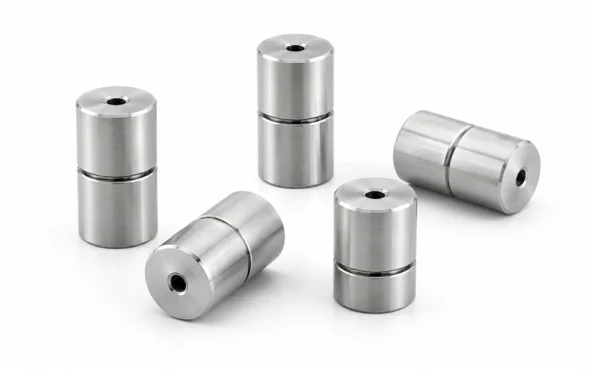
- Sits after the injector, ahead of the analytical column
- A short bed of related packing catches strongly retained material
- Use an inline filter when particles are the risk
- Neither one changes the detector
Fittings, Tubing & Filters
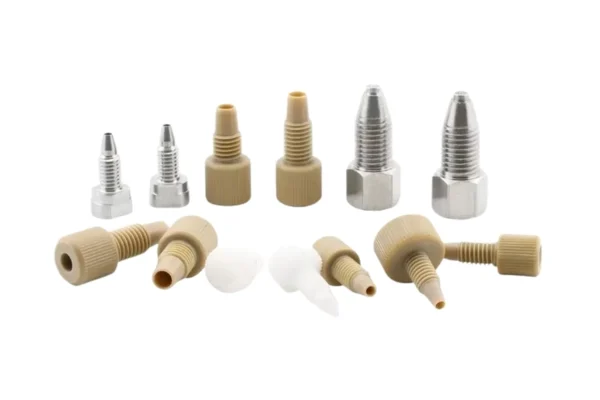
- PEEK and stainless steel fittings
- Capillary tubing sized to the flow
- Frits for particles in the flow path
- Extra-column volume shows up as peak shape on the chromatogram
What Changes on a UV / PDA Method
These are the choices that decide whether absorbance can answer the question. They are not a guaranteed detection limit on every sample.
-
A Chromophore
The analyte has to absorb at the wavelength the method uses. A compound with a weak or no UV response needs a different detector. The HPLC page names ELSD and CAD for some lipids and sugars when that detector is installed.
-
A Quiet Mobile Phase
Solvents and additives have to stay transparent at the working wavelength. A gradient can also concentrate impurities from the solvent line and release them as ghost peaks.
-
Peak Shape
Internal diameter, tubing bore, and the guard have to match the flow. Extra volume after the injector widens the peak the integrator has to measure.
-
Where the Ghost Peak Comes From
A Ghost Buster Column sits before the injector and targets mobile-phase impurities. A guard column sits after the injector and targets the sample. They answer different peaks.
-
Outside the Sheet
Other dimensions, phases, and end fittings can be discussed from the OEM page. Share the HPLC system and the wavelength before a format is confirmed.
When UV / PDA Is the Method
Start with the question the result has to answer. Then match a published column or an analytical-service request. Catalog numbers live on the column pages linked above.
-
A chromophore assay
Assay, related substances, dissolution, and stability work on the pharmaceutical applications page usually start on a reversed-phase HPLC or UHPLC column with UV or PDA. Column choice follows the analyte, the matrix, and the detector already on the method.
-
A peak-purity check
PDA adds a spectrum. The HPLC technology page describes that spectrum as a check on peak purity. It still does not name an unknown the way mass spectrometry can.
-
A weak or missing chromophore
Stay on the HPLC detection note for ELSD or CAD when the analyte has a weak or no UV response, such as some lipids and sugars, and only when that detector is installed and the mobile phase can be volatilized. Response is not assumed to be linear for assay.
-
A limit or a name UV cannot give
The nitrosamine and PFAS pages quantify by LC-MS/MS. A UV or PDA detector does not reach those limits. Food residues and trace toxicology on the applications pages follow the same split. That limit question is on the trace-level analysis page.
Typical UV / PDA Workflow
From a sample the column can accept to a result the chromatogram can support. HIPSOUL supports the column and consumable steps. Project work is discussed under analytical services.
-
1 Confirm the Analyte Absorbs
Check the chromophore, the wavelength, and whether the mobile phase stays transparent there. A missing chromophore is a different detector.
-
2 Separate
Choose the phase, the dimensions, and a flow path the peak shape can tolerate. Add a guard, a filter, or a Ghost Buster Column for the risk you actually have.
-
3 Record UV or PDA
UV follows the selected wavelength. PDA records the spectrum. HIPSOUL does not manufacture that detector.
-
4 Report What Absorbance Supports
A clean peak at the right retention time can quantify a known chromophore. A name, or a limit below the UV range, still needs another technique.
Where UV / PDA Is Used
Uses already described on published HIPSOUL pages. Each card opens that page. The column is the separation step. See the full set on Applications.




Need a Column for a UV or PDA Method?
Send the analyte, the matrix, the HPLC system, the wavelength, and the column dimensions if a method already exists. Say whether you need hardware or a sample run.
Contact Our ExpertsRelated Resources
Published HIPSOUL pages for the chromatography technique, the ghost-peak trap, and the laboratory. These are not customer case studies.
Related Technology
HPLC & UHPLC Technology
Read the Page
Column Range
Ghost Buster Columns
View Catalog
Analytical Services
UV and PDA Project Work
View ServicesFrequently Asked Questions
UV detection records absorbance as compounds leave an HPLC or UHPLC column. A photodiode-array detector, also called PDA, records that absorbance across a wavelength range, so a peak can be checked for spectral consistency. HIPSOUL supplies the columns, guards, filters, and ghost-peak traps on that flow path. HIPSOUL does not manufacture the detector.
UV follows absorbance at the wavelength the method selects. PDA records a spectrum, which the HPLC technology page describes as a check on peak purity. Neither result names an unknown the way mass spectrometry can. This page does not publish a HIPSOUL detection limit for either detector.
No. HIPSOUL manufactures chromatography columns and consumables. The analytical services page lists Thermo Scientific U3000 and PDA, and it lists PDA, DAD, TUV, and UV among the detectors the laboratory uses. Those instruments are not HIPSOUL products.
Start with the analyte, the matrix, and the wavelength the method already uses. Pharmaceutical assay, related substances, dissolution, and stability work on this site usually start on a reversed-phase HPLC or UHPLC column. C18 is the common start for many small molecules. Match the phase, particle size, internal diameter, and pressure rating to the system. The catalog row is the specification.
When the analyte has a weak or no UV response, the HPLC technology page points to ELSD or CAD for some lipids and sugars, and only if that detector is installed and the mobile phase can be volatilized. When the limit sits below the UV working range, or the peak has to be named, the nitrosamine and PFAS pages on this site use LC-MS/MS. A guard column, an inline filter, or a Ghost Buster Column does not add that detector.
Yes, when the project needs it. Analytical services list Thermo Scientific U3000 and PDA, plus PDA, DAD, TUV, and UV detection. How far a result can go depends on the chromophore, the matrix, and the reference information you can share. Buying a column and sending a sample for analysis are different requests.