
FROM MILLIGRAMS TO GRAMS — CUSTOM PURIFICATION CRO SOLUTIONS
Preparative HPLC Purification CRO Services
Custom preparative HPLC purification CRO services for research compounds, pharmaceutical impurities, reference materials, and complex chemical mixtures. From initial feasibility assessment to method development, isolation, and analytical characterization, HIPSOUL helps support your purification projects.
- Targeted High-Purity IsolationProject-defined purity goals
- Flexible Project ScaleDiscussed per sample & goal
- Custom Method DevelopmentChromatographic optimization
- Analytical CharacterizationAs agreed for the project
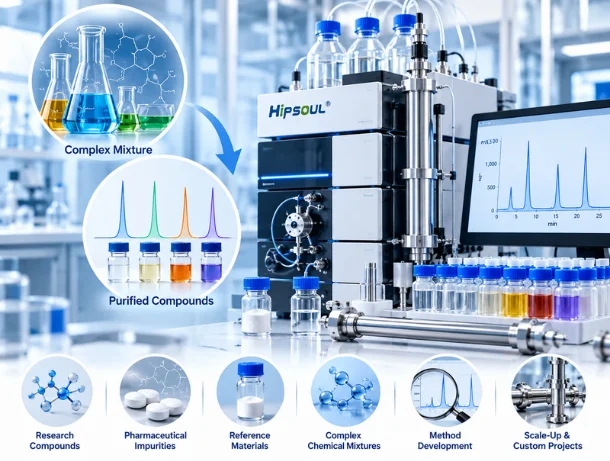
Common Challenges in Compound Purification
Purifying target compounds from complex mixtures can be challenging, especially when high purity, limited sample availability, or difficult-to-separate impurities are involved.
Complex Mixtures
Closely related compounds, impurities, and isomers can be difficult to separate using conventional purification methods.
Insufficient Purity
Residual impurities may interfere with analytical testing, structural characterization, and downstream research.
Limited Sample Availability
Small sample quantities require careful method selection and efficient purification strategies.
Time & Resource Constraints
Method development, purification optimization, and analytical verification can require significant laboratory resources.
Our Preparative HPLC CRO Services
Explore customized preparative HPLC CRO separation and purification services designed to support compound isolation, pharmaceutical research, and analytical reference material preparation.
Compound Purification
Purification of target compounds from synthetic reactions, complex mixtures, and research samples.
Pharmaceutical Impurity Isolation
Isolation of known or unknown pharmaceutical impurities, degradation products, and process-related compounds for research and characterization.
Reference Standard Preparation
Preparation and purification of research reference compounds and isolated impurity materials, subject to analytical characterization and project requirements.
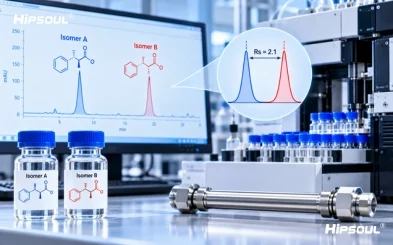
Isomer Separation
Method evaluation and separation of suitable structural, positional, geometric, or stereochemical isomers.
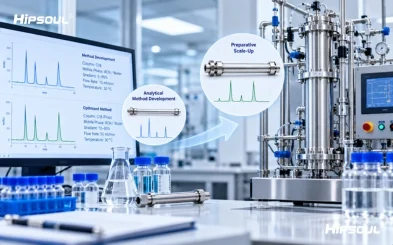
Method Development & Scale-Up
Development and optimization of chromatographic separation conditions, with feasibility assessment for transfer to preparative purification.
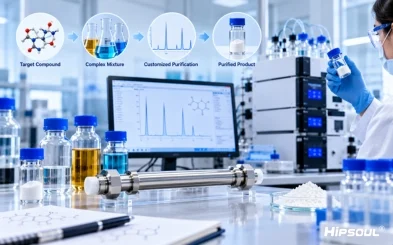
Custom Purification Projects
Tailored purification solutions for specialized compounds, difficult mixtures, and project-specific analytical requirements.
Compounds We Can Purify
Explore representative compound classes and purification targets relevant to pharmaceutical research, drug discovery, natural products, and specialty chemical applications. Specific purification feasibility depends on compound properties, sample composition, target purity, and required quantity.
Representative research targets for website browsing. Individual purification feasibility requires laboratory assessment. Not a verified project success list.
Pharmaceutical Impurities
Representative drug-related impurities and related materials commonly submitted for preparative HPLC feasibility review, including degradation products, process-related species, isomers, metabolites, and genotoxic alerts that require careful chromatographic separation before isolation.
Typical separation needs
- Impurity enrichment from API matrix
- Diastereomer and regioisomer resolution
- Low-level PGI isolation for reference use
- Forced-degradation peak tracking

Degradation Impurities
Stress-induced or shelf-life-related species formed from hydrolysis, oxidation, photolysis, or thermal exposure of drug substances and formulations.
- Hydrolysis-related impurity class (ester APIs)
- Oxidation-related impurity class (phenolic APIs)
- Photodegradation impurity class (UV-sensitive drugs)
- Thermal degradation impurity class
- 4-Aminophenol CAS 123-30-8
- N-Oxide degradant class (tertiary amine APIs)
- Ring-opened lactam degradant class
- Dehydration impurity class (alcohol-containing APIs)
Feasibility Assessment Required
Process-Related Impurities
Residual reagents, by-products, and synthetic intermediates carried into API from manufacturing routes, crystallization, or work-up steps.
- Residual solvent class (Class 2/3 ICH)
- Unreacted starting material class
- Side-reaction dimer impurity class
- Catalyst-derived impurity class (Pd/Li residues as organics)
- Recrystallization mother-liquor impurity class
- Protecting-group cleavage by-product class
- Salt-form counter-ion exchange residual class
- Polymorphic conversion trace impurity class
Feasibility Assessment Required
Isomeric Impurities
Enantiomers, diastereomers, geometric isomers, and atropisomers that must be resolved to support specification setting or reference isolation.
- Enantiomeric impurity class (chiral API)
- Diastereomeric impurity class
- Geometric isomer impurity class (E/Z)
- Atropisomer-related impurity class
- Racemic trace enrichment (single enantiomer API)
- Axial chirality impurity class
- Conformational isomer envelope class
Feasibility Assessment Required
Drug Metabolites
Human or preclinical metabolites used as reference standards, including phase I and phase II conjugates requiring prep-scale isolation.
- Glucuronide metabolite class
- Sulfate conjugate metabolite class
- N-Dealkylated metabolite class
- Hydroxylated metabolite class (aromatic/aliphatic)
- Acyl glucuronide reactive metabolite class
- Phase II glutathione conjugate class
- Oxidative deamination metabolite class
Feasibility Assessment Required
Potential Genotoxic Impurities
Alert structures and ICH M7-listed classes requiring trace enrichment; prep feasibility depends on stability, level, and matrix.
- N-Nitrosamine impurity class
- N-Nitrosodimethylamine CAS 62-75-9
- Alkyl halide reactive intermediate class
- Hydrazine CAS 302-01-2
- Aromatic amine alert class
- Aldehyde genotoxic alert class
- Epoxide intermediate impurity class
- Methylating agent residual class
Feasibility Assessment Required
API Intermediates
Penultimate and late-stage synthetic intermediates submitted for prep purification prior to final coupling or crystallization.
- Penultimate amide coupling intermediate class
- Boc-protected intermediate class
- Benzyl-protected intermediate class
- Heterocyclic ring-closure intermediate class
- Acid chloride activation intermediate class
- Grignard or organometallic quench impurity class
- Crystallization seed-related intermediate class
Feasibility Assessment Required
Isolated Impurity Reference Materials
Targeted isolation of named or numbered impurity peaks for qualification, forced-degradation studies, and regulatory reference stocks.
- Forced-degradation peak isolate (unnamed)
- Pharmacopeial impurity peak enrichment class
- Unknown impurity >0.1% enrichment class
- Co-eluting impurity pair separation class
- Stability-indicating impurity reference class
- Tablet excipient interference impurity class
Feasibility Assessment Required
Other Drug-Related Compounds
Related substances, counter-ions, solvates, and drug-linker components outside standard impurity taxonomies but commonly purified prep-scale.
- Related substance RRT cluster class
- Counter-ion exchange variant class
- Solvate/hydrate related substance class
- PROTAC linker-payload intermediate class
- ADC small-molecule payload class
- Prodrug cleavage product class
- Fixed-dose combination component cross-impurity class
Feasibility Assessment Required
Small Molecules
Drug discovery compounds, APIs, heterocycles, and synthetic building blocks often purified by preparative HPLC when crystallization or flash chromatography is insufficient for the required purity or stereochemical outcome.
Typical separation needs
- Final purity polish for bioassay stocks
- Heterocycle regioisomer resolution
- Scale-up of mg to g prep fractions
- Removal of colored by-products
Active Pharmaceutical Ingredients
Registered and development-stage API materials requiring prep-scale enrichment or final polishing chromatography.
- Metformin CAS 657-24-9
- Ibuprofen CAS 15687-27-1
- Omeprazole CAS 73590-58-6
- Amlodipine CAS 88150-42-9
- Losartan CAS 114798-26-4
- Simvastatin CAS 79902-63-9
- Ciprofloxacin CAS 85721-33-1
- Imatinib CAS 152459-95-5
Feasibility Assessment Required
Drug Discovery Compounds
Library hits, lead series, and tool compounds purified for assay, DMPK, or scale-up before GMP routes exist.
- Kinase inhibitor lead series (representative)
- GPCR agonist hit (representative)
- Covalent probe compound (representative)
- Fragment library member (representative)
- PROTAC degrader molecule (representative)
- Allosteric modulator (representative)
- Screening collection plate re-prep (representative)
Feasibility Assessment Required
Organic Synthesis Intermediates
Multistep organic intermediates requiring chromatographic purification when crystallization fails or purity specs are tight.
- Boc-amino acid derivative (representative)
- Fmoc-protected building block (representative)
- Suzuki coupling boronate intermediate (representative)
- Sonogashira alkyne intermediate (representative)
- Reductive amination imine intermediate (representative)
- Acyl hydrazide intermediate (representative)
- Aldehyde intermediate (stable derivative)
Feasibility Assessment Required
Heterocyclic Compounds
Nitrogen, oxygen, and sulfur heterocycles where regioisomer control and by-product removal drive prep HPLC use.
- Pyridine CAS 110-86-1
- Pyrimidine CAS 289-95-2
- Indole CAS 120-72-9
- Quinoline CAS 91-22-5
- Imidazole CAS 288-32-4
- Furan CAS 110-00-9
- Thiophene CAS 110-02-1
- Morpholine CAS 110-91-8
Feasibility Assessment Required
Aromatic Compounds
Polycyclic and substituted aromatics used as pharmacophores, dyes, or intermediates requiring high-purity prep fractions.
- Naphthalene CAS 91-20-3
- Anthracene CAS 120-12-7
- Pyrene CAS 129-00-0
- Phenol CAS 108-95-2
- Aniline CAS 62-53-3
- Salicylic acid CAS 69-72-7
- Benzoic acid CAS 65-85-0
Feasibility Assessment Required
Synthetic Building Blocks
Catalog and custom reagents purified to higher grade for coupling, linker, or library synthesis.
- Piperazine CAS 110-85-0
- Piperidine CAS 110-89-4
- Pyrrolidine CAS 123-75-1
- Cyclohexane derivative (representative)
- Boronic acid building block (representative)
- Carboxylic acid linker (representative)
- Amino alcohol building block (representative)
Feasibility Assessment Required
Chiral Small Molecules
Enantiopure or enantioenriched small molecules requiring chiral or achiral prep support.
- Chiral alcohol (representative)
- Chiral amine (representative)
- Chiral acid (representative)
- Atropisomeric biaryl (representative)
- Chiral sulfoxide (representative)
- Chiral epoxide (representative)
- Chiral allene (representative)
Feasibility Assessment Required
Custom Research Compounds
Client-specific synthetic targets with bespoke prep methods for mg to low-g delivery.
- Client bespoke API-like molecule (representative)
- Photocaged compound (representative)
- Stable isotope-labeled internal standard (representative)
- Fluorinated drug analogue (representative)
- Macrocycle-closure precursor (representative)
- Bile acid derivative (representative)
- Organometallic-ligated organic (representative)
Feasibility Assessment Required
Natural Products
Plant alkaloids, flavonoids, terpenoids, and other secondary metabolites frequently require preparative HPLC after extraction to obtain research-grade fractions for activity testing or reference material generation.
Typical separation needs
- Enrichment from crude plant extract
- Structurally similar analogue separation
- Minor component isolation from major peak
- Pilot prep before larger extraction campaign
Alkaloids
Nitrogen-containing plant alkaloids and related bases purified from extracts or semisynthetic routes.
- Berberine CAS 2086-96-0
- Morphine CAS 57-27-2
- Codeine CAS 76-57-3
- Atropine CAS 51-55-8
- Nicotine CAS 54-11-5
- Quinine CAS 130-95-0
- Colchicine CAS 64-86-8
- Caffeine CAS 58-08-2
Feasibility Assessment Required
Flavonoids
Flavonoid aglycones and glycosides separated by prep HPLC from plant matrices or fermentation.
- Quercetin CAS 117-39-5
- Kaempferol CAS 520-18-3
- Apigenin CAS 520-36-5
- Luteolin CAS 491-70-3
- Naringenin CAS 480-41-1
- Genistein CAS 446-72-0
- Rutin CAS 153-18-4
Feasibility Assessment Required
Polyphenols
Phenolic polymers and simple polyphenols requiring prep to resolve oxidation products and analogues.
- Resveratrol CAS 501-36-0
- Epigallocatechin gallate CAS 989-51-5
- Catechin CAS 154-23-4
- Gallic acid CAS 149-91-7
- Chlorogenic acid CAS 327-97-9
- Curcumin CAS 458-37-7
- Ellagic acid (representative)
Feasibility Assessment Required
Terpenoids
Mono-, sesqui-, and diterpenoids purified when volatility or co-extraction complicates distillation.
- Artemisinin CAS 63968-64-9
- Paclitaxel CAS 33069-62-4
- Menthol CAS 2216-51-5
- Limonene CAS 5989-27-5
- Ginsenoside Rb1 CAS 41753-43-9
- Beta-sitosterol CAS 83-46-5
- Betulinic acid (representative)
Feasibility Assessment Required
Saponins
Glycosylated terpenoid or steroid saponins separated from complex plant extracts.
- Ginsenoside Rb1 CAS 41753-43-9
- Ginsenoside Rg1 (representative)
- Aescin (representative)
- Digitonin (representative)
- Quillaic acid (representative)
- Soyasaponin I (representative)
- Tea saponin fraction (representative)
Feasibility Assessment Required
Phenolic Acids
Simple aromatic acids from plants used as standards or active ingredients.
- Gallic acid CAS 149-91-7
- Chlorogenic acid CAS 327-97-9
- Salicylic acid CAS 69-72-7
- Caffeic acid (representative)
- Ferulic acid (representative)
- Rosmarinic acid (representative)
- Protocatechuic acid (representative)
Feasibility Assessment Required
Coumarins
Benzo-alpha-pyrone coumarins and furanocoumarins from plants or synthesis.
- Coumarin CAS 91-64-5
- Umbelliferone CAS 93-35-6
- Esculin (representative)
- Psoralen (representative)
- Bergapten (representative)
- Scopoletin (representative)
- Aesculetin (representative)
Feasibility Assessment Required
Plant-Derived Active Compounds
Well-known botanical actives and standardized extract markers purified prep-scale.
- Curcumin CAS 458-37-7
- Capsaicin CAS 404-86-4
- Allicin (representative)
- Hypericin (representative)
- Parthenolide (representative)
- Salidroside (representative)
- Andrographolide (representative)
- Steviol glycoside (representative)
Feasibility Assessment Required
Peptides & Biomolecules
Synthetic peptides, peptide-related impurities, and selected biomolecules benefit from preparative reversed-phase or alternative modes when SPPS crude purity or impurity profiling requires milligram to gram isolation.
Typical separation needs
- Deletion sequence removal
- Peptide desalting and polish
- Modified peptide regioisomer prep
- Oligonucleotide desalting prep
Synthetic Peptides
SPPS-derived peptides purified for bioassay, conjugation, or reference.
- Oxytocin CAS 50-56-6
- Angiotensin II CAS 4474-91-3
- Bradykinin CAS 58-82-2
- Substance P CAS 33507-63-0
- GLP-1 sequence fragment (representative)
- Cell-penetrating peptide (representative)
- Antimicrobial peptide (representative)
Feasibility Assessment Required
Peptide Impurities
Deletion sequences, racemization products, and side-chain modification impurities from peptide synthesis.
- N-terminal deletion impurity class
- C-terminal deletion impurity class
- Aspimide / deamidation impurity class
- Disulfide mispairing impurity class
- Oxidized Met/His peptide impurity class
- Acetylation side-product class
- Dimer/oligomer peptide impurity class
Feasibility Assessment Required
Peptide Fragments
Proteolytic or synthetic peptide fragments used as epitopes or standards.
- Angiotensin I (representative)
- Amyloid beta fragment (representative)
- MHC epitope peptide (representative)
- Phosphopeptide fragment (representative)
- Biotinylated peptide fragment (representative)
- Fluorescently labeled peptide fragment (representative)
- Protein kinase substrate peptide (representative)
Feasibility Assessment Required
Amino Acid Derivatives
Protected amino acids, unnatural amino acids, and derivatives requiring prep purification.
- Leucine CAS 61-90-5
- Phenylalanine CAS 63-98-3
- Tryptophan CAS 73-22-3
- Cysteine CAS 52-90-4
- Tyrosine CAS 60-18-4
- Unnatural amino acid (representative)
- N-methyl amino acid (representative)
Feasibility Assessment Required
Modified Peptides
PEGylated, lipidated, phosphorylated, or cyclized peptides needing prep isolation.
- Phosphopeptide (representative)
- PEGylated peptide (representative)
- Lipidated peptide (representative)
- Methylated peptide (representative)
- Cyclized head-to-tail peptide (representative)
- Stapled peptide (representative)
- Glycopeptide (representative)
Feasibility Assessment Required
Selected Oligonucleotides
Short synthetic oligonucleotides where prep desalting or failure sequence removal is requested.
- DNA primer 20-mer (representative)
- RNA oligo 20-mer (representative)
- Phosphorothioate oligo (representative)
- 2′-OMe modified oligo (representative)
- LNA-containing oligo (representative)
- Fluorescently labeled oligo (representative)
- siRNA duplex strand (representative)
Feasibility Assessment Required
Food & Agricultural Chemicals
Food additives, nutraceutical markers, vitamins, and agrochemical-related compounds submitted for prep purification to support method development, reference stocks, or impurity isolation from technical materials.
Typical separation needs
- Vitamin isomer separation
- Pesticide technical grade enrichment
- Natural colorant polish from extract
- Additive-related impurity isolation
Food Additives
Preservatives, sweeteners, and functional additives purified for analytical reference or pilot batches.
- Benzoic acid CAS 65-85-0
- Sorbic acid CAS 110-44-1
- Caffeine CAS 58-08-2
- Ascorbic acid CAS 50-81-7
- Steviol glycoside mix (representative)
- Taurine (representative)
- Sucralose (representative)
Feasibility Assessment Required
Food Colorants
Synthetic and natural colorants separated from isomeric or degradation-related by-products.
- Tartrazine CAS 1934-21-0
- Sunset Yellow FCF CAS 2783-94-0
- Beta-carotene CAS 7235-40-7
- Lycopene CAS 502-65-8
- Anthocyanin fraction (representative)
- Chlorophyll derivative (representative)
- Caramel color marker (representative)
Feasibility Assessment Required
Vitamins
Fat- and water-soluble vitamins and provitamins purified for assay reference or stability studies.
- Ascorbic acid CAS 50-81-7
- Retinol CAS 68-26-8
- Tocopherol (alpha) CAS 59-02-9
- Riboflavin CAS 83-88-5
- Thiamine CAS 59-43-8
- Folic acid CAS 59-30-3
- Cholecalciferol (representative)
Feasibility Assessment Required
Nutraceutical Compounds
Dietary supplement actives and marker compounds isolated prep-scale from blends or extracts.
- Resveratrol CAS 501-36-0
- Quercetin CAS 117-39-5
- Curcumin CAS 458-37-7
- Glutathione CAS 70-18-8
- Coenzyme Q10 (representative)
- Spirulina phycocyanin (representative)
- Omega-3 ethyl ester marker (representative)
Feasibility Assessment Required
Plant Active Ingredients
Botanical supplement ingredients requiring prep after extraction or fermentation.
- Ginsenoside Rb1 CAS 41753-43-9
- Epigallocatechin gallate CAS 989-51-5
- Berberine CAS 2086-96-0
- Milk thistle silymarin fraction (representative)
- Ginkgo flavone glycosides (representative)
- Aloe anthraquinone (representative)
- Valerian sesquiterpene (representative)
Feasibility Assessment Required
Pesticide-Related Compounds
Technical grade actives and co-formulant organic components submitted for prep enrichment.
- Glyphosate CAS 1071-83-6
- Atrazine CAS 1912-24-9
- Malathion CAS 121-75-5
- Parathion CAS 56-38-2
- Imidacloprid CAS 138261-41-3
- 2,4-D acid (representative)
- Azoxystrobin (representative)
Feasibility Assessment Required
Agricultural Chemical Impurities
Manufacturing impurities, isomers, and metabolites associated with agrochemical technical materials.
- Pesticide manufacturing impurity class
- Chiral pesticide enantiomer class
- Aflatoxin B1 CAS 1162-65-8
- Glyphosate AMPA metabolite (representative)
- Triazine degradation product class
- Organophosphate oxon impurity class
- Fungicide stereoisomer impurity class
Feasibility Assessment Required
Specialty & Research Chemicals
Dyes, fluorophores, fine chemicals, and custom synthesis targets used in research settings where preparative HPLC delivers the purity required for downstream photochemistry, labeling, or reference certification.
Typical separation needs
- Fluorophore isomer separation
- Dye by-product removal
- Reference material certification prep
- Heterocycle library polish
Dyes & Pigments
Industrial and laboratory dyes purified to remove positional isomers and metallic or polymeric by-products.
- Rhodamine B CAS 81-88-9
- Methylene blue (representative)
- Crystal violet (representative)
- Sudan I (representative)
- Indigo (representative)
- Phthalocyanine blue fraction (representative)
- Alizarin (representative)
Feasibility Assessment Required
Fluorescent Compounds
Fluorophores and labeling reagents requiring high purity for microscopy or assay development.
- Fluorescein CAS 2321-07-5
- FITC-labeled linker (representative)
- Coumarin CAS 91-64-5
- Alexa dye analogue (representative)
- Cy5 dye analogue (representative)
- Quinacrine (representative)
- NBD chloride derivative (representative)
Feasibility Assessment Required
Fine Chemicals
High-value chemical intermediates and reagents sold at research or pilot purity upgraded via prep.
- DMSO CAS 67-68-5
- DMF CAS 68-12-2
- Pyridine CAS 110-86-1
- Bisphenol A CAS 80-05-7
- Phthalic acid CAS 88-99-3
- Stearic acid CAS 57-11-4
- Palmitic acid CAS 57-10-3
Feasibility Assessment Required
Chemical Reference Materials
CRM and working-standard candidates enriched by prep before certification analysis.
- Primary standard candidate (small molecule)
- Secondary working standard (representative)
- Mixture component isolation (representative)
- Stable isotope standard (representative)
- Pharmacopeial RS analogue (representative)
- Proficiency test material isolate (representative)
- Expired RS re-purification (representative)
Feasibility Assessment Required
Specialty Heterocycles
Research heterocycles not covered under drug discovery taxonomies, including electronics and material precursors.
- Carbazole (representative)
- Benzimidazole (representative)
- Benzothiazole (representative)
- Oxazole (representative)
- Thiazole (representative)
- Triazole (representative)
- Tetrazole (representative)
Feasibility Assessment Required
Research Intermediates
Custom intermediate molecules from academic and CRO routes requiring one-off prep purification.
- Photoredox catalyst ligand (representative)
- Organocatalyst intermediate (representative)
- Polymer monomer (representative)
- Liquid crystal intermediate (representative)
- Battery electrolyte additive (representative)
- Agrochemical intermediate (representative)
- Material science cross-linker (representative)
Feasibility Assessment Required
Custom Synthetic Compounds
One-off synthetic targets from client structures with feasibility-first prep assessment.
- Client structure on demand (representative)
- Library analog series member (representative)
- Stable radical compound (representative)
- Heavy atom labeled compound (representative)
- Boronic ester product (representative)
- Silane-protected alcohol (representative)
- Fluorinated aryl target (representative)
Feasibility Assessment Required
No matching compounds in the published list
Tell us your target compound name, CAS number, sample composition, desired purity, and required quantity for a customized feasibility review.
Request a Feasibility Assessment →Can’t Find Your Target Compound?
Tell us your target compound name, CAS number, sample composition, desired purity, and required quantity. Our technical team can review your requirements and assess the feasibility of a customized purification approach.
Laboratory Capabilities
Our purification workflow combines chromatographic method development, preparative separation, and analytical evaluation to support customized research requirements.
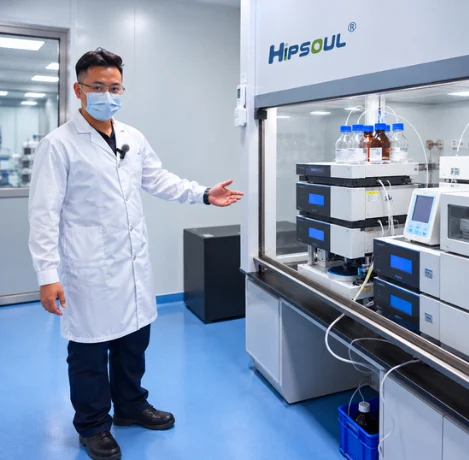
Technical capability checklist
Instrument brands, column inventory, loading ranges, and detection methods are confirmed during project review. The items below describe the capability areas discussed with clients—not a published equipment inventory.
- Preparative HPLC purification workflow design
- Column and stationary-phase selection support, including preparative HPLC columns
- Method development and scale-transfer assessment
- Fraction collection strategy aligned to the target peak
- Analytical purity evaluation using project-agreed methods
- Optional complementary characterization via internal or partnered techniques when required
- Documentation package defined in the project agreement
- Related testing routes on Analytical Services and Analytical CRO Services
Representative Purification Projects
Explore how customized chromatographic approaches can address challenging separation and purification requirements.
API Impurity Isolation
Compound class: Pharmaceutical impurity
Challenge: Enrich a low-level impurity from an API matrix for characterization.
Approach: Confirm analytical resolution, then evaluate preparative loading and fraction cutting.
- Starting purity
- Pending lab data
- Final purity
- Pending lab data
- Purified quantity
- Pending lab data
- Application
- Research / characterization
Natural Product Fractionation
Compound class: Natural product
Challenge: Separate a target constituent from a complex plant-derived mixture.
Approach: Screen selectivity, then transfer a workable analytical method toward preparative isolation.
- Starting purity
- Pending lab data
- Final purity
- Pending lab data
- Purified quantity
- Pending lab data
- Application
- Research isolation
Isomer Separation Study
Compound class: Isomeric mixture
Challenge: Resolve closely related isomers when conventional purification is insufficient.
Approach: Evaluate phase and mobile-phase options before discussing preparative collection.
- Starting purity
- Pending lab data
- Final purity
- Pending lab data
- Purified quantity
- Pending lab data
- Application
- Method feasibility
Our Purification Service Workflow
- 01
Project Evaluation
Review target compound information, sample properties, purity goals, and project requirements.
- 02
Feasibility Study
Evaluate suitable chromatographic conditions and initial separation feasibility.
- 03
Method Development
Optimize separation parameters, mobile phases, columns, and collection conditions.
- 04
Preparative Purification
Perform compound isolation and purification using an appropriate preparative method.
- 05
Analysis & Quality Review
Evaluate the purified material using the analytical methods agreed upon for the project.
- 06
Delivery
Provide purified material and agreed analytical documentation.
What You Receive
Purified Compound
Isolated material prepared according to the agreed project scope and target specifications.
Analytical Report
Analytical results and supporting documentation as specified in the project agreement.
Chromatograms
Relevant chromatographic data documenting the separation and analytical evaluation.
Method Information
Agreed chromatographic conditions and method details where applicable.
Technical Support
Project communication and technical consultation regarding the purification results.
Frequently Asked Questions
What types of compounds can you purify?
We discuss purification for research compounds, pharmaceutical impurities, selected natural products, peptides where suitable, and specialty chemicals. Acceptance depends on solubility, stability, matrix complexity, target purity, and available sample quantity. The catalog on this page shows representative research targets, not a verified success list for every entry.
What is preparative HPLC purification?
Preparative HPLC purification CRO work uses liquid chromatography at a larger loading scale so a target compound can be isolated and collected, rather than only measured. A workable analytical separation usually comes first. Column hardware options are described on our Preparative HPLC technology and prep column pages.
Can you isolate pharmaceutical impurities?
Pharmaceutical impurity isolation can be evaluated when the impurity is chromatographically resolvable and enough sample is available for the intended characterization goal. Unknown or low-level impurities may need method development before preparative collection is practical.
What sample quantity is required?
Required sample quantity depends on target purity, impurity level, recovery expectations, and the analytical work planned after isolation. Share approximate available mass during the inquiry so the team can assess whether a preparative approach is realistic.
What purity levels can you achieve?
Achievable purity depends on starting composition, selectivity, and the agreed specification. We do not publish a single unconditional purity guarantee. Target purity is defined per project after feasibility review.
Can you separate closely related isomers?
Isomer separation is considered when analytical scouting shows adequate selectivity. Structural, positional, geometric, or stereochemical isomers may require specialized phases or conditions. Feasibility is confirmed before scale-up.
Do you provide purification method development?
Yes. Method development and optimization can be included when existing conditions are incomplete or when transfer from analytical to preparative scale needs evaluation. Scope is agreed before laboratory work begins.
Can you handle milligram- or gram-scale projects?
Project scale is reviewed case by case based on sample availability, solubility, column loading, and the amount of purified material requested. Milligram- and gram-oriented requests can be discussed when the chemistry and method support that load.
What analytical documentation is available?
Documentation follows the project agreement and may include chromatograms, purity results, and method details where applicable. Additional characterization techniques are arranged only when required and confirmed for that project.
How can I request a purification quotation?
Use the inquiry form on this page or contact [email protected]. Include compound name or CAS, sample composition, available quantity, target purity, and any existing method notes to speed up review.
How long does a purification project take?
Timelines vary with method readiness, mixture complexity, and required analytical work. A schedule is confirmed only after feasibility review and agreement on scope.
Can you sign a confidentiality agreement?
A confidentiality agreement can be discussed before detailed sample information or proprietary structures are shared. Contact the team to start that process.
Submit Purification Inquiry
Include compound name, CAS number if available, sample quantity, target purity, required purified quantity, and a short project description. For chromatograms or method files, email [email protected].