Introduction
When it comes to liquid chromatography, choosing between Reversed-Phase Chromatography (RPC) and Normal-Phase Chromatography (NPC) can be tricky. Both methods have their strengths, but the right choice depends on your sample and what you’re trying to achieve.
Are you working with non-polar or moderately polar compounds? Then RPC might be the way to go. Or perhaps you’re dealing with highly polar compounds that need a more selective separation—NPC could be the better fit.
In this article, we’ll break down the key differences, advantages, and applications of each method, helping you decide which one best suits your needs.
What is Reversed-Phase and Normal-Phase?
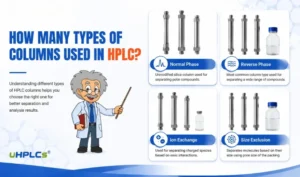
Reverse Phase Chromatography (RP-HPLC) and Normal Phase Chromatography (NP-HPLC) are two types of High Performance Liquid Chromatography (HPLC) techniques used in analytical chemistry to separate components of a mixture based on their interaction with the stationary phase (the column packing material) and the mobile phase (the liquid solvent).
1. Reverse Phase (RP-HPLC):
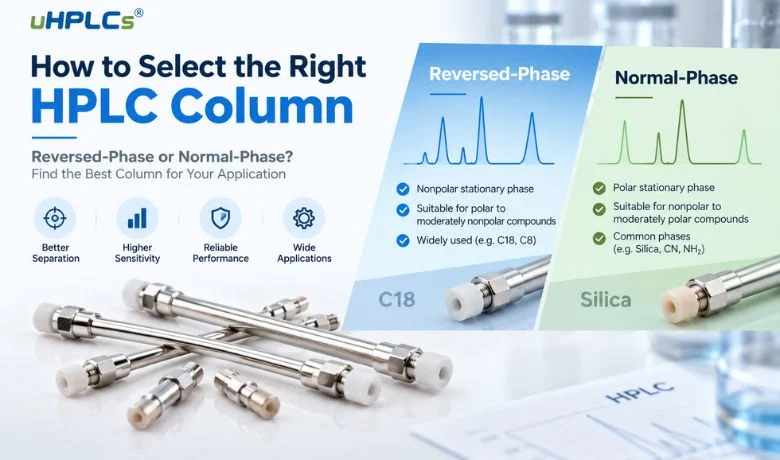
●In RP-HPLC, the stationary phase is a solid support with a non-polar surface, and the mobile phase is a polar solvent (like water or a water-organic solvent mixture).
●It is used primarily for the separation of non-polar or less polar compounds.
●The interaction between the stationary phase and the analytes is based on hydrophobic (lipophilic) interactions.
●RP-HPLC columns are often used for the separation of compounds like lipids, fats, and other hydrophobic substances.
2. Normal Phase (NP-HPLC):
●In NP-HPLC, the stationary phase is a polar material, and the mobile phase is a non-polar solvent or a mixture of non-polar solvents with a small amount of polar solvents.
●It is used for the separation of polar compounds, including ionic compounds.
●The interaction between the stationary phase and the analytes is based on hydrogen bonding, dipole interactions, and other polar interactions.
●NP-HPLC columns are often used for the separation of compounds like sugars, amino acids, and other polar substances.
Key Differences Between Reversed-Phase and Normal-Phase
| Feature/Aspect | Reverse Phase Chromatography (RP-HPLC) | Normal Phase Chromatography (NP-HPLC) |
| Stationary Phase | Non-polar (hydrophobic) | Polar (hydrophilic) |
| Mobile Phase | Polar (often contains water) | Non-polar (typically organic solvents) |
| Separation Principle | Based on hydrophobic interactions | Based on polar interactions, like hydrogen bonding |
| Compound Suitability | Non-polar or hydrophobic compounds | Polar or hydrophilic compounds |
| Mobile Phase Polarity | More polar | Less polar (or contains a higher percentage of non-polar solvents) |
| Column Selection | Usually end-capped with hydrophobic ligands, like C18 | Often end-capped or has polar functional groups like amines or diols |
| Application Fields | Commonly used in pharmaceuticals, environmental analysis, food chemistry for lipids, fats, etc. | Used in the analysis of sugars, amino acids, and other polar substances. |
Advantages and Limitations of Reversed-Phase Chromatography (RPC)
Advantages
- Versatile for Various Samples: RPC is effective for separating a wide range of non-polar to moderately polar compounds.
- User-Friendly: Uses aqueous solvents (water + organic solvents), which are safer and easier to handle.
- Fast and High Resolution: RPC offers quick analysis with excellent resolution, especially for small organic molecules, peptides, and proteins.
Limitations
- Less Effective for Highly Polar Compounds: RPC struggles to separate highly polar substances effectively.
- Limited Resolution for Large Polar Molecules: Large polar compounds may not separate well in RPC.
- Solvent Compatibility: The mobile phase is often limited to polar solvents, reducing flexibility for certain sample types.
Advantages and Limitations of Normal-Phase Chromatography (NPC)
Advantages
- Ideal for Polar Compounds: NPC excels in separating highly polar compounds, which RPC may struggle with.
- High Resolution: Offers excellent separation, especially for closely related polar compounds.
- Selective Separation: Achieves high selectivity based on polar interactions, useful for precise separations.
Limitations
- Requires Non-Polar Solvents: Uses non-polar solvents (e.g., hexane), which can be hazardous and require careful handling.
- Slower Analysis: NPC separations typically take longer than RPC, reducing throughput.
- Sensitive to Moisture: Water can interfere with NPC, making solvent preparation more critical.
Key Factors When Choosing NPC or RPC
Choosing between Normal Phase Chromatography (NPC) and Reverse Phase Chromatography (RPC) depends on several factors related to the chemical properties of the analytes, the type of stationary phase, and the desired separation characteristics. Here’s a guide on how to choose between NPC and RPC:
1. Sample Polarity
●NPC: Best for highly polar compounds (e.g., sugars, amino acids).
●RPC: Ideal for non-polar to moderately polar compounds (e.g., organic molecules, peptides).
2. Solvent Compatibility
●NPC: Requires non-polar solvents (e.g., hexane), which may pose safety and handling challenges.
●RPC: Uses polar solvents (e.g., water, methanol), which are generally easier to handle and safer.
3. Resolution and Separation Needs
●NPC: Provides high selectivity for closely related polar compounds, achieving excellent resolution.
●RPC: Offers high resolution for hydrophobic compounds and is more versatile for complex mixtures.
4. Analysis Speed
●NPC: Slower analysis due to longer interactions with the stationary phase.
●RPC: Faster and more efficient, suitable for high-throughput applications.
5. Application Type
●NPC: Works well for lipids, natural products, and other polar compounds.
●RPC: Ideal for biological molecules, peptides, and pharmaceuticals.
Applications and Suitability
Normal Phase Chromatography (NPC) and Reverse Phase Chromatography (RPC) have distinct applications and suitability based on the chemical properties of the analytes and the desired separation characteristics. Maybe know more about their applications and suitability can assist you to choose them:
Normal-Phase Chromatography (NPC)
Applications:
●Natural Products: Well-suited for the separation of polar natural compounds, such as flavonoids and alkaloids.
●Lipid Analysis: Used extensively in analyzing polar lipids and other fat-based compounds.
●Polar Mixtures: Perfect for analyzing highly polar analytes like sugars, amino acids, and other similar compounds.
Suitability:
●Best for highly polar compounds.
●Commonly used in specialized applications requiring non-polar solvents.
●Sensitive to moisture, requiring precise control of the environment and solvent purity.
Reversed-Phase Chromatography (RPC)
Applications:
●Pharmaceuticals: Commonly applied in the analysis and quality control of pharmaceutical products.
●Proteomics and Biomolecules: Excellent for separating peptides, proteins, and other biological molecules.
●General Organic Chemistry: Suitable for non-polar to moderately polar organic compounds.
Suitability:
●Works well for non-polar or moderately polar compounds.
●Versatile and user-friendly, making it the default choice in many laboratories.
●Compatible with aqueous solvents, which are safer and easier to handle.
Conclusion
The choice between Normal-Phase Chromatography (NPC) and Reversed-Phase Chromatography (RPC) depends on sample polarity and application needs. NPC is ideal for highly polar compounds, while RPC is more versatile and suitable for a wide range of non-polar to moderately polar substances. By understanding their differences and advantages, you can select the right chromatography method to achieve optimal results.
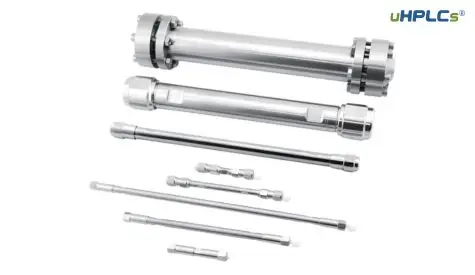
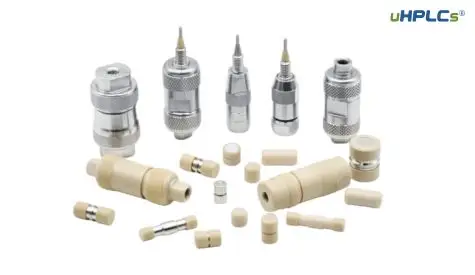
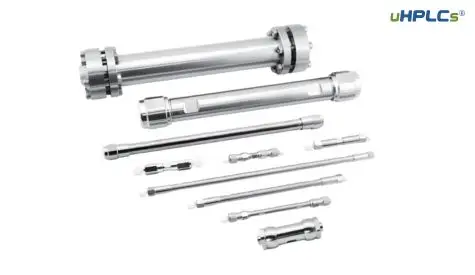
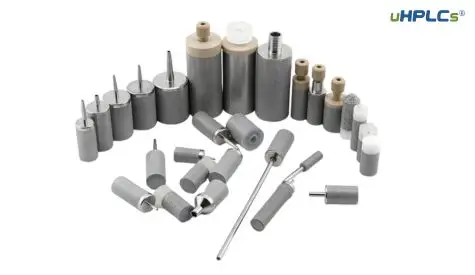
HPLC Column Professional OEM Factory
uHPLCs is a professional HPLC (high-performance liquid chromatography) column OEM (original equipment manufacturer) factory based in China.
We specialize in providing high-quality Normal-Phase and Reversed-Phase HPLC columns tailored to your needs. Our offerings include a wide range of sizes, particle types, and compatibility options to support various applications. Whether you need reliable separation for pharmaceuticals, natural products, or complex mixtures, our HPLC columns deliver precision, consistency, and performance. Contact us at at [email protected] today to learn more about our solutions!