Pharmaceutical Analysis · Technical Guide
Need a fit-for-purpose HPLC method that stands up in QC and regulatory review? Start with ICH Q14 analytical procedure development.
This practical guide shows how Analytical Target Profiles (ATP), risk assessment, robustness studies and control strategies help pharmaceutical laboratories build methods that are suitable for their intended purpose—and ready for ICH Q2(R2) validation.
ICH Q14 analytical procedure development is a harmonized, science- and risk-based framework for developing pharmaceutical analytical procedures. For R&D and QC HPLC laboratories, it links measurement objectives to method understanding, robustness, routine controls and lifecycle change management. Below you will find the core concepts, a six-step workflow and an illustrative reversed-phase HPLC assay example.
HPLC Method Development
ATP · Risk · Robustness
Key takeaways
- ICH Q14 focuses on developing and maintaining analytical procedures; ICH Q2(R2) focuses on validating performance.
- An Analytical Target Profile (ATP) clarifies what the measurement must achieve before technology selection—documentation is optional, but useful.
- Enhanced tools such as DoE, PAR or MODR are valuable when justified; they are not mandatory for every HPLC procedure.
- For HPLC assays, column chemistry, mobile-phase design, robustness and system suitability should be tied to the intended use and control strategy.
In this guide
1. What Is ICH Q14 Analytical Procedure Development?
ICH Q14, Analytical Procedure Development, is an International Council for Harmonisation (ICH) guideline describing science- and risk-based approaches for developing and maintaining analytical procedures used to evaluate pharmaceutical quality. Its primary scope covers release and stability testing of commercial drug substances and products. The same principles can also support other control-strategy procedures and, in a phase-appropriate way, clinical development.
The guideline addresses technology selection, analytical performance, knowledge and risk management, robustness, analytical procedure control strategies and lifecycle changes. It complements ICH Q2(R2), which addresses validation of analytical procedures. Teams working on pharmaceutical HPLC methods often use both guidelines together: Q14 to build understanding, Q2(R2) to demonstrate performance.
ICH Q14 guideline status
ICH Q14 reached Step 4 in November 2023. EMA adopted the guideline in December 2023, with an EU effective date of June 14, 2024. The Step 5 Revision 1 document records April 2025 terminology and formatting corrections. Always consult the applicable regional requirements and the current official version for regulatory decisions.
OFFICIAL GUIDELINE · PDF RESOURCE
ICH Q14 Guideline on Analytical Procedure Development
EMA / ICH · Step 5, Revision 1 · 43 pages · Document EMA/CHMP/ICH/195040/2022
Read the complete guideline for regulatory terminology, analytical lifecycle principles and official development examples.
Read ICH Q14 Guideline (PDF) ↗
Source: European Medicines Agency / ICH. Reproduced with acknowledgment of the source.
2. Minimal vs. Enhanced Approaches Under ICH Q14
ICH Q14 recognizes both a minimal approach and elements of an enhanced approach. A minimal approach remains acceptable when it produces a robust procedure fit for its intended purpose. Enhanced development can add systematic risk assessment, multivariate experimentation and deeper understanding of parameter interactions.
| Dimension | Minimal approach | Enhanced approach |
|---|---|---|
| Development | Fit-for-purpose studies | Systematic knowledge building |
| Risk management | As appropriate | More structured evaluation |
| Experiments | Targeted performance and robustness studies | May include DoE and parameter interactions |
| Operating ranges | Defined controls | May support PAR or MODR |
3. Analytical Target Profile (ATP): Definition and HPLC Example
An Analytical Target Profile (ATP) describes the intended purpose of an analytical measurement, the product attributes to be measured and relevant performance characteristics with associated criteria. It helps laboratories define what a measurement must achieve before committing to a particular analytical technology—for example, before selecting a specific C18 HPLC column chemistry for a tablet assay.
Formal documentation and submission of an ATP are optional under ICH Q14, although an ATP may facilitate communication between development, QC and quality assurance, and support lifecycle management.
Illustrative ATP for an HPLC tablet assay
| ATP element | Illustrative description |
|---|---|
| Intended purpose | Quantify an active ingredient in tablets |
| Reportable result | Percentage of labeled content |
| Selectivity | No unacceptable interference from relevant matrix components |
| Accuracy and precision | Criteria justified for intended use |
| Technique | RP-HPLC as a candidate, subject to suitability |
Educational example only. Product-specific acceptance criteria require scientific justification and experimental evidence.
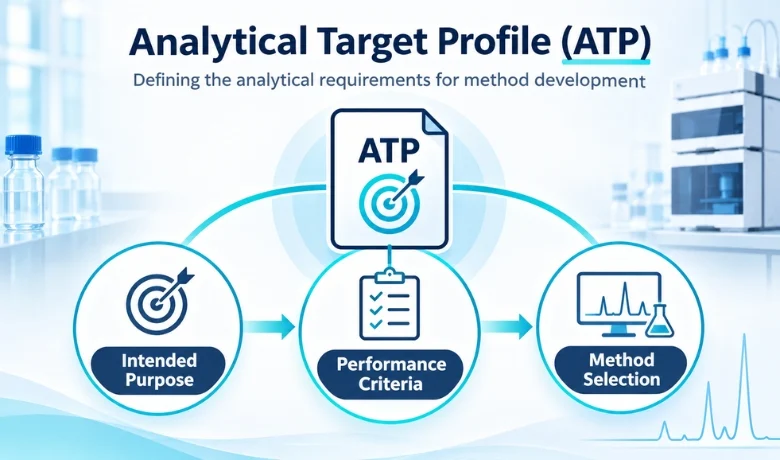
Figure 1. How an analytical target profile informs method development.
4. Six-Step Analytical Procedure Development Workflow
The following six steps are a practical interpretation of ICH Q14 principles, not a mandatory sequence prescribed by the guideline. Depending on the method, development activities may overlap or be repeated. Laboratories that also need experimental support can review uHPLCs analytical method development and validation capabilities alongside this framework.
01 · Define the analytical objective. Identify the product attribute, intended result and necessary performance.
02 · Select the analytical technique. Assess analyte properties, matrix, instrument capability and intended use.
03 · Identify parameters and risks. Evaluate factors that may affect specificity, accuracy, precision or other relevant performance.
04 · Optimize conditions. Use suitable experiments, and DoE when justified, to identify effective operating conditions.
05 · Evaluate robustness. Study deliberate parameter variations and investigate appropriate ranges.
06 · Establish controls. Define operating instructions, system suitability and other measures needed for routine use.
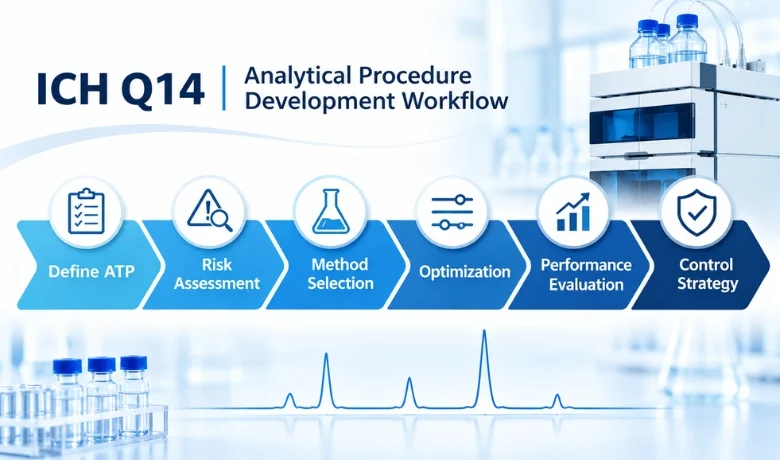
Figure 2. An illustrative analytical procedure development workflow aligned with ICH Q14 principles.
5. Practical Example: Applying ICH Q14 to HPLC Method Development
5.1 Define the measurement objective
A pharmaceutical laboratory needs to quantify an active ingredient in a tablet formulation without unacceptable interference from excipients or relevant degradation products. The intended assay result and performance expectations guide the development strategy and later validation planning under ICH Q2(R2).
5.2 Screen columns and mobile phases
A reversed-phase C18 HPLC column may be a useful starting candidate for many small-molecule applications, but it is not automatically the best choice. Stationary-phase chemistry, column dimensions, particle size, analyte ionization, mobile-phase composition and detector compatibility should be considered together.
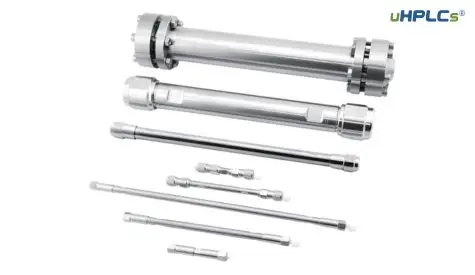
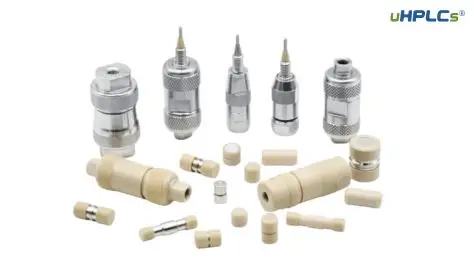
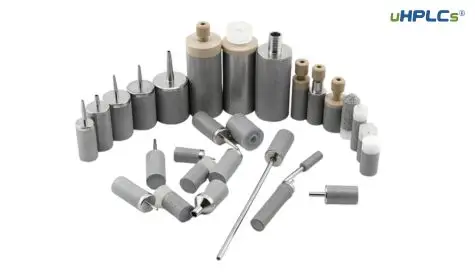
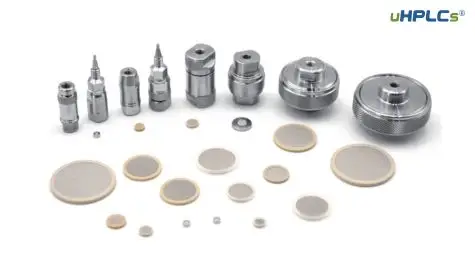
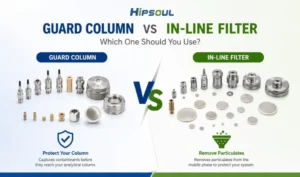
Column screening should prioritize selectivity, retention, peak symmetry, acceptable pressure and the separation needed for the intended measurement. Where appropriate, a compatible HPLC guard column can help protect the analytical column from sample contaminants, but it does not replace method optimization or validation. For particulate protection in the flow path, laboratories may also evaluate an HPLC inline filter; see also guard column vs in-line filter.
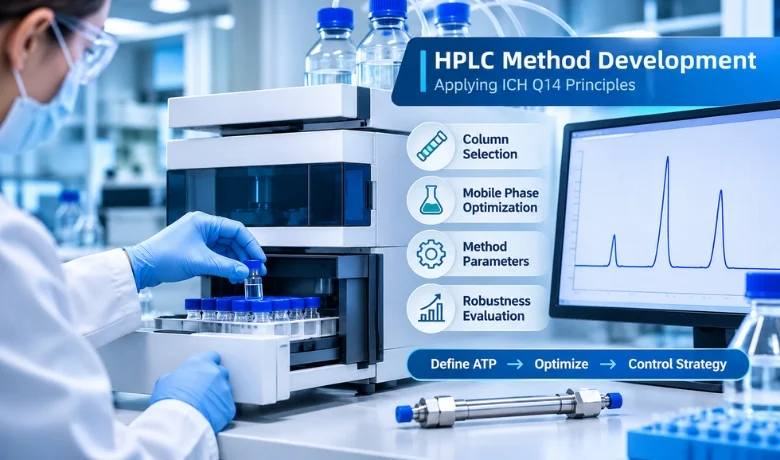
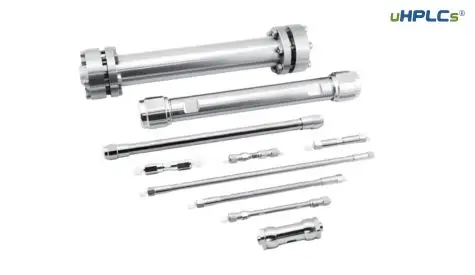
Figure 3. HPLC column selection and chromatographic optimization during method development.
5.3 Optimize chromatographic conditions
Relevant variables may include mobile-phase pH, organic solvent content, flow rate, column temperature, injection volume and sample solvent. Each can influence the result in different ways. For example, pH may alter the retention and selectivity of ionizable analytes, while injection solvent strength may affect peak shape.
| HPLC parameter | Potential effect | Evaluation |
|---|---|---|
| Mobile-phase pH | Ionization and selectivity | Targeted pH study |
| Organic composition | Retention and resolution | Composition study |
| Column temperature | Retention and selectivity | Temperature variation |
| Flow rate | Analysis time and efficiency | Flow-rate variation |
5.4 Evaluate robustness and system suitability
After identifying promising conditions, the laboratory investigates realistic parameter variations. Risk assessment can help prioritize factors that might compromise the measurement. System suitability criteria should then be selected based on the intended procedure and development knowledge, rather than copied indiscriminately from another method.
Depending on the procedure, relevant system suitability attributes may include chromatographic resolution, peak symmetry and replicate injection precision. Acceptance limits must be justified by the method’s performance requirements.
5.5 Document the analytical procedure
Documentation should allow a qualified analyst to reproduce the procedure. It may include sample and standard preparation, chromatographic conditions, equipment and column specifications, calibration, calculations, system suitability and reportable result definitions. When hardware is packed in-house, column tube selection also matters—see how to choose the right empty HPLC column tube and our empty HPLC column hardware. Development and robustness knowledge should be retained as appropriate to support validation and future changes.
6. Risk Assessment, Robustness and Control Strategy
Quality risk management
Risk assessment helps identify analytical procedure parameters that could affect measurement quality. Formal tools such as Ishikawa diagrams or FMEA may be useful, but the level of formality should be appropriate to the procedure and available knowledge. The objective is to prioritize meaningful studies and reduce the risk of poor performance in routine use.
Robustness and Design of Experiments
Robustness is evaluated through deliberate changes in analytical parameters. When parameters interact, multivariate experiments such as DoE may help explain combined effects. Data generated during suitable development studies can contribute to validation where the relevant performance characteristics have been adequately evaluated.
PAR, MODR and control strategy
A Proven Acceptable Range (PAR) characterizes a range for an individual parameter while other parameters are held constant. A Method Operable Design Region (MODR) describes combined parameter ranges shown to maintain fit-for-purpose performance. Neither concept is a universal requirement. Any associated regulatory flexibility depends on justified supporting data and applicable approvals.
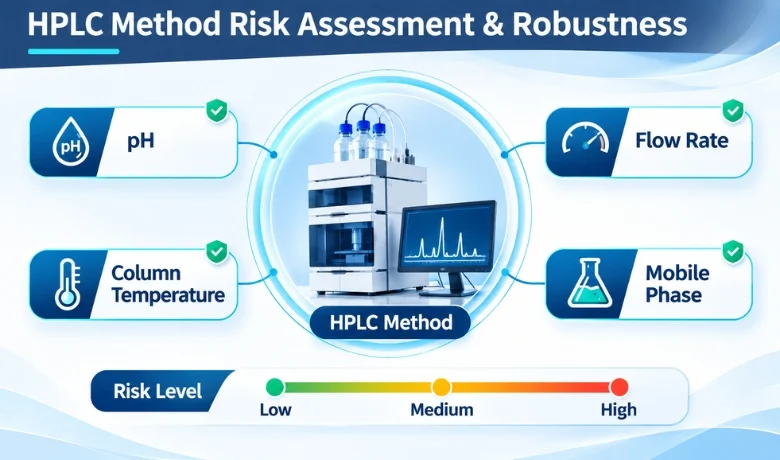
Figure 4. Illustrative risk assessment for HPLC analytical procedure parameters.
An analytical procedure control strategy should be defined before validation and confirmed after validation. It may include operating parameter controls, sample preparation requirements, calibration, system suitability testing and ongoing monitoring where appropriate. For non-routine investigations beyond standard release methods, see also uHPLCs analytical testing services.
7. ICH Q14 vs. ICH Q2(R2): Development and Validation
ICH Q14 addresses the development and understanding of analytical procedures; ICH Q2(R2) addresses the demonstration of analytical procedure performance through validation. The two guidelines are complementary rather than interchangeable.
| Topic | ICH Q14 | ICH Q2(R2) |
|---|---|---|
| Primary focus | Procedure development | Procedure validation |
| Typical activities | Selection, optimization, risk, robustness, controls | Evaluation of relevant validation characteristics |
| Lifecycle role | Development and change management | Validation and revalidation |
Relevant development data may support validation without unnecessary repetition, provided that their suitability is demonstrated. Changes to an established procedure may require risk assessment, bridging studies and partial or full revalidation depending on their impact.
8. Common Challenges When Implementing ICH Q14
Insufficient understanding of method variability
An HPLC procedure may work under one set of conditions but become unreliable when pH, temperature or sample preparation varies. Prior knowledge and targeted robustness studies can help identify such vulnerabilities before methods move into routine QC.
Poorly aligned system suitability criteria
System suitability tests should detect performance problems relevant to the intended measurement. Criteria selected without reference to development data may overlook important risks.
Inadequate change-management documentation
Changes to columns, instruments, reagents or operating conditions may affect performance. Documented development knowledge makes it easier to evaluate the impact and determine whether further studies or regulatory actions are necessary. Keeping consistent consumables—such as columns, guards and HPLC consumables—also reduces uncontrolled variability during transfer and lifecycle changes.
RELATED HPLC PRODUCTS
Protect Your Analytical HPLC Column
During routine HPLC analysis, appropriately selected guard columns can help protect analytical columns from particulate and strongly retained contaminants. Selection should consider column chemistry, dimensions and system compatibility. Learn more in the principle of HPLC guard column use.
Next step for your lab
Planning an ICH Q14-aligned HPLC assay?
Share your analyte class, matrix, column preference and performance goals. Our team can help you select suitable HPLC columns and consumables, or discuss method development support.
9. Frequently Asked Questions About ICH Q14
What is ICH Q14 analytical procedure development?
ICH Q14 is an internationally harmonized guideline describing science- and risk-based principles for developing and maintaining pharmaceutical analytical procedures fit for their intended purpose.
Is ICH Q14 mandatory for all analytical methods?
No single answer applies to every method or jurisdiction. ICH Q14 primarily addresses release and stability procedures for commercial pharmaceutical products, while other applications may use its principles as appropriate. Not every enhanced tool is mandatory.
Is an Analytical Target Profile required?
ICH Q14 states that formal ATP documentation and submission are optional. An ATP can nevertheless help clarify intended measurement performance and guide development and validation.
Does ICH Q14 apply to HPLC methods?
Yes. Its principles can be applied to pharmaceutical HPLC procedures, including technology and column selection, chromatographic optimization, robustness assessment and analytical control strategy development. Related application context is covered in our overview of 12 applications of HPLC in industry and research.
What is the difference between ICH Q14 and ICH Q2(R2)?
ICH Q14 focuses on procedure development and lifecycle understanding, while ICH Q2(R2) addresses validation of relevant analytical performance characteristics.
Is MODR required under ICH Q14?
No. An MODR may be established when suitable multivariate development data justify combined operating ranges, but it is not required for every procedure.
Can development data support validation?
Yes. Appropriate development data may contribute to validation where they adequately cover the relevant performance characteristics. Any remaining validation needs should be justified.
10. Conclusion and Official References
ICH Q14 encourages laboratories to develop analytical procedures through scientific understanding, risk assessment, robustness evaluation and appropriate control strategies. For HPLC laboratories, these principles support informed decisions about chromatographic conditions, column selection, system suitability and lifecycle changes. ICH Q14 should be considered alongside ICH Q2(R2) when planning method development and validation. Explore more HPLC application guidance in the HPLC application hub.
References
- ICH / EMA. ICH Q14: Analytical Procedure Development, Step 5, Revision 1. View PDF.
- ICH. Q2(R2): Validation of Analytical Procedures.
- ICH. Q9(R1): Quality Risk Management.
- ICH. Q12: Technical and Regulatory Considerations for Pharmaceutical Product Lifecycle Management.
Editorial note: This educational guide is not a substitute for official ICH documents, pharmacopoeial standards or regional regulatory requirements. The HPLC examples are illustrative and do not represent validated experimental results.