uHPLCs HIPSOUL

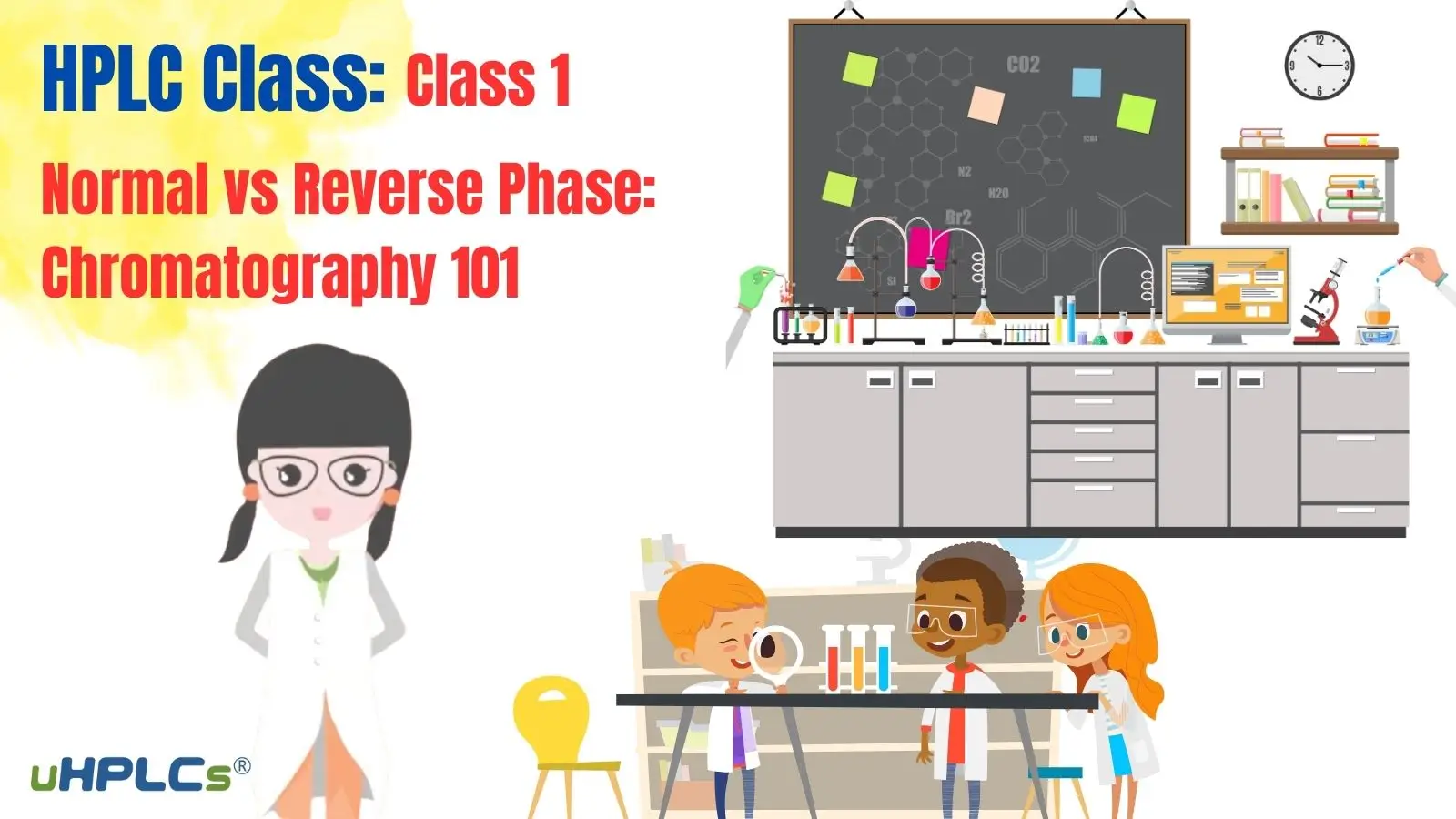
Normal vs Reverse Phase Chromatography Column 101

Normal vs Reverse Phase Chromatography 101

Introduction to Normal and Reverse Phase Chromatography Columns

In High-Performance Liquid Chromatography (HPLC), the choice of column is critical to achieving optimal separation and analysis of compounds. Normal Phase (NP) and Reverse Phase (RP) chromatography columns are the two main types, each with unique characteristics, histories, and applications. This guide will introduce you to the various kinds of NP and RP chromatography columns, exploring their development and distinct features.

Normal Phase Chromatography Columns

History: Normal Phase Chromatography (NPC) columns were among the first types used in HPLC, building on the early work of Mikhail Tsvet in 1903. These columns were initially developed to leverage the polar interactions between the stationary phase and analytes.

Types and Features:

1.Silica Columns:

*Description: Silica gel columns are the most common type of NP columns. They consist of a polar silica stationary phase with hydroxyl groups on the surface.

*Features: High polarity, excellent for separating polar compounds, strong retention of polar analytes.

*Applications: Separation of lipids, sterols, and polar pharmaceuticals.


2.Alumina Columns:

*Description: Similar to silica columns but use alumina as the stationary phase.

*Features: High polarity, suitable for compounds sensitive to silica gel.

*Applications: Analysis of basic compounds and separation of isomers.


3.Bonded Phase Columns (e.g., Amino, Diol):

*Description: These columns have silica particles bonded with polar functional groups like amino or diol.

*Features: Tailored polarity, reduced peak tailing, and improved selectivity for specific analytes.

*Applications: Carbohydrate analysis, separation of polar and moderately polar compounds.
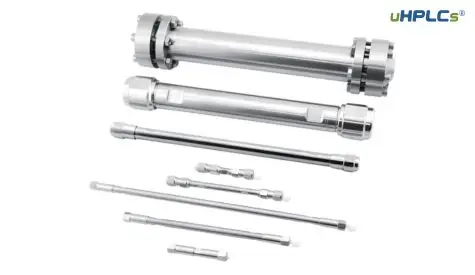
 
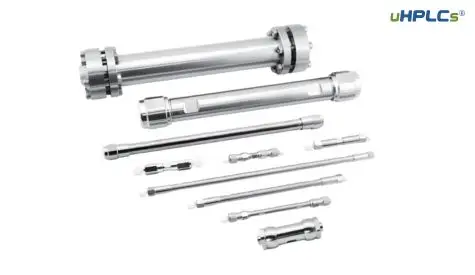
HPLC Column For Sale
 

Reverse Phase Chromatography Columns

History: Reverse Phase Chromatography (RPC) columns became prominent in the 1970s, offering a versatile and robust alternative to NP columns. These columns revolutionized HPLC by enabling the separation of a wider range of compounds, especially non-polar and hydrophobic analytes.

Types and Features:

1.C18 (Octadecylsilane) Columns:

*Description: C18 columns are the most widely used RPC columns, featuring a non-polar octadecylsilane (C18) stationary phase bonded to silica particles.

*Features: High hydrophobicity, versatile, suitable for a broad range of compounds.

*Applications: Pharmaceutical analysis, environmental monitoring, peptide and protein separations.

2.C8 (Octylsilane) Columns:

*Description: C8 columns have a shorter carbon chain (octylsilane) compared to C18, providing a less hydrophobic stationary phase.

*Features: Moderate hydrophobicity, faster elution times for non-polar analytes.

*Applications: Analysis of moderately non-polar compounds, faster separations in complex mixtures.

3.Phenyl Columns:

*Description: Phenyl columns have a phenyl group bonded to the silica particles, offering π-π interactions in addition to hydrophobic interactions.

*Features: Unique selectivity for aromatic compounds, moderate hydrophobicity.

*Applications: Separation of aromatic compounds, pharmaceuticals, and complex natural products.

4.Polar Embedded Columns:

*Description: These columns feature polar groups embedded within the non-polar stationary phase, providing both polar and non-polar interaction sites.

*Features: Enhanced selectivity, reduced peak tailing for polar and ionic compounds.

*Applications: Analysis of polar pharmaceuticals, metabolites, and bio-molecules.
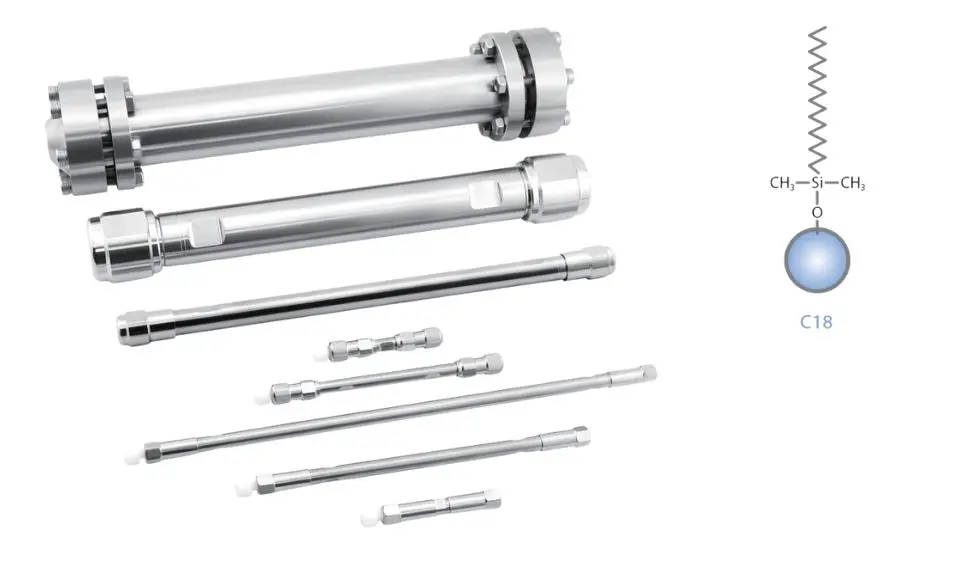
C18 HPLC Column for sale uHPLCs

Comparison of Normal and Reverse Phase Chromatography Columns

1.Polarity:

*NP Columns: Polar stationary phase, suitable for polar analytes.

*RP Columns: Non-polar stationary phase, ideal for non-polar and hydrophobic analytes.

2.Retention Mechanism:

*NP Columns: Retain polar compounds longer due to polar interactions.

*RP Columns: Retain non-polar compounds longer due to hydrophobic interactions.

3.Versatility:

*NP Columns: Best for specific applications like isomer separation and lipid analysis.

*RP Columns: Highly versatile, applicable to a wide range of compounds and industries.

4.Solvent Compatibility:

*NP Columns: Use non-polar solvents like hexane, chloroform.

*RP Columns: Use polar solvents like water, methanol, acetonitrile.
Comparison Table for Normal and Reverse Phase Chromatography Columns

Feature/AspectNormal Phase Chromatography (NPC)Reverse Phase Chromatography (RPC)
Stationary PhasePolar (e.g., silica gel, alumina)Non-polar (e.g., C18, C8, phenyl)
Mobile PhaseNon-polar (e.g., hexane, chloroform)Polar (e.g., water, methanol, acetonitrile)
Retention MechanismBased on polarity; polar compounds retained longerBased on hydrophobicity; non-polar compounds retained longer
Types of ColumnsSilica, alumina, amino, diolC18 (octadecylsilane), C8 (octylsilane), phenyl, polar embedded
ApplicationsLipid analysis, isomer separation, polar pharmaceuticalsPharmaceutical analysis, peptides, proteins, environmental monitoring, aromatic compounds
AdvantagesEffective for specific polar separationsVersatile, robust, suitable for a wide range of compounds
Solvent CompatibilityNon-polar solvents (hexane, chloroform)Polar solvents (water, methanol, acetonitrile)
Development HistoryOriginating in early 20th century, based on adsorption principlesDeveloped in the 1970s, providing enhanced versatility and applicability
Examples of UseAnalyzing lipids, sterols, polar pharmaceuticalsAnalyzing pharmaceuticals, peptides, proteins, complex mixtures
Column CharacteristicsHigh polarity, strong retention of polar analytesHigh hydrophobicity, suitable for non-polar analytes
Key FeaturesTailored polarity, reduced peak tailing for specific analytesUnique selectivity for aromatic compounds, reduced peak tailing for polar and ionic compounds

Conclusion

Understanding the different types of Normal and Reverse Phase Chromatography columns is crucial for selecting the appropriate column for your analytical needs. Normal Phase columns excel in separating polar compounds, while Reverse Phase columns offer versatility and robust performance for a broad spectrum of analytes. Mastery of these column types ensures precise, reliable, and efficient chromatographic separations, enhancing your analytical capabilities in various fields.

About uHPLCs

uHPLCs is a professional manufacturer and solution provider specializing in HPLC columns, chromatography consumables, and analytical separation technologies.

Chromatography Products

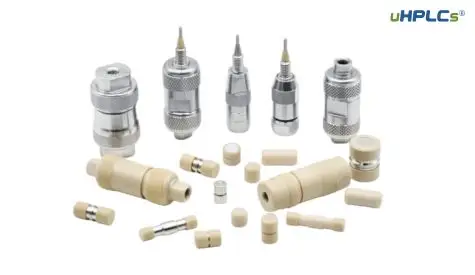
Analytical and preparative HPLC columns, guard columns, inline filters, empty HPLC columns, solvent inlet filters, PEEK fittings, tubing, and related chromatography accessories.

Technical Services

Method development, analytical testing, preparative purification, application support, and laboratory separation solutions.

OEM & Custom Solutions

OEM/ODM manufacturing and customized chromatography components for laboratories, pharmaceutical companies, research institutes, and instrument manufacturers.

With strict quality control and responsive technical support, uHPLCs helps customers improve separation efficiency, shorten development time, and build more reliable analytical workflows.

Contact

Share:

HOTSALE HPLC PRODUCTS

Send Us A Message

HPLC GUARD COLUMN VS INLINE FILTER
Uncategorized

Guard Column vs In-Line Filter Which One Should You Use

Guard Column vs In-Line Filter Which One Should You Use If you’re choosing between a guard column and an in-line filter, the simplest answer is this: Tips Guard columns and in-line filters are not interchangeable. They solve different problems, and in many HPLC systems the most reliable protection strategy is to use them together. Before

Read More »
HOW MANY TYPES OF COLUMNS USED IN HPLC
Uncategorized

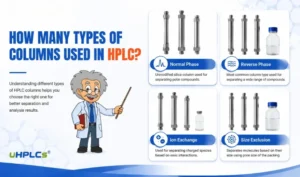
How Many Types of Columns Used in HPLC ?

High-performance liquid chromatography (HPLC) columns are selected according to the analyte’s polarity, charge, molecular size, and specific chemical interactions. Choosing the right column chemistry is one of the most important steps in achieving reliable separation, suitable resolution, and repeatable analytical results. In this guide Normal-phase HPLC columns Reversed-phase HPLC columns Ion-exchange HPLC columns Size-exclusion HPLC

Read More »
HPLC METHOD DEVELOPMENT by HIPSOUL
Uncategorized

HPLC Method Development Guide: From Analytical Goals to Robust Methods

HPLC Method Development: A Practical Guide to Building Robust and Reproducible Methods Quick Summary Developing a reliable HPLC method involves much more than adjusting flow rate, gradient slope, temperature, or injection volume. A robust method begins with a clearly defined analytical objective and is built through appropriate column selection, mobile-phase design, controlled parameter optimization, and

Read More »