
HPLC Applications & Analytical Solutions
Explore chromatography solutions for pharmaceutical, biopharmaceutical, food, environmental, and clinical applications. Find suitable HPLC columns, consumables, and analytical support for your separation challenges.
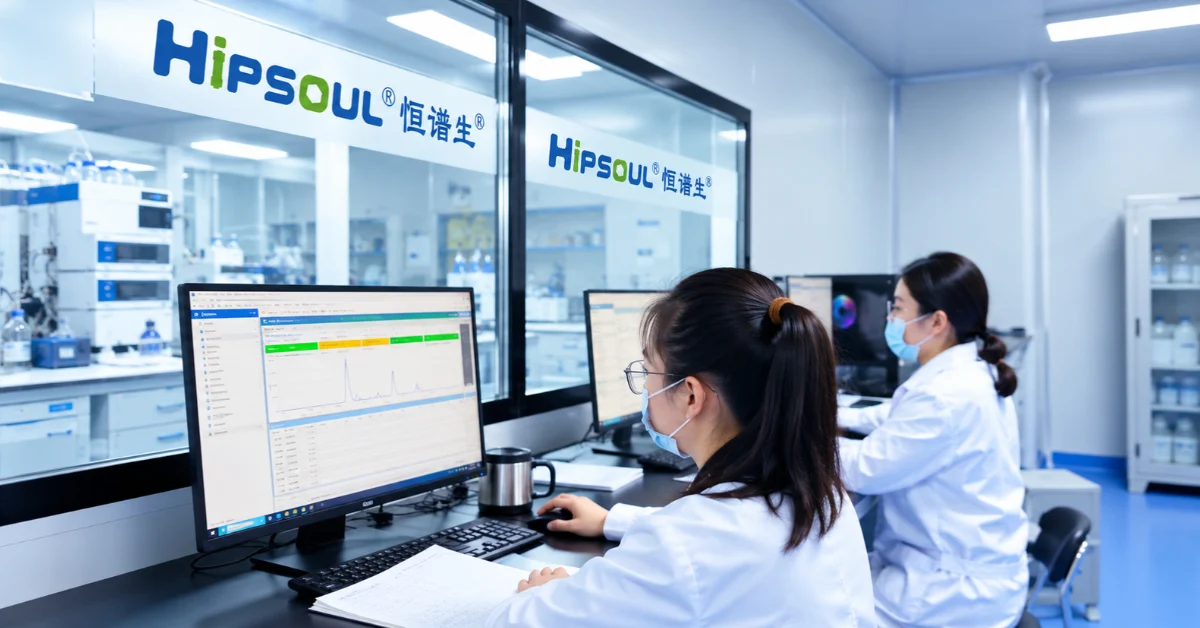
Explore HPLC Applications by Industry
Discover chromatography workflows, suitable products, and analytical approaches for your industry. Each route below goes to a published HIPSOUL page.
Pharmaceutical Analysis
Assay, related substances, dissolution, and stability work usually start on a reversed-phase HPLC or UHPLC column with UV or PDA detection. Column choice follows the analyte, matrix, dimensions, and the detector already on the method. Unknown-peak identification, or a limit below the UV range, is a mass-spectrometry question.
- API assay
- Related substances
- Dissolution
Biopharmaceutical Analysis
Peptide, protein, and oligonucleotide work depends on the chemistry and the pore size, not on a general small-molecule C18 method. SEC and HILIC columns are in the published range, and preparative columns are used when the goal is isolation. Sequence-level identification still requires mass spectrometry.
- Peptide assay
- Size exclusion
- Prep isolation
Food & Beverage Testing
Food and beverage methods cover sugars, vitamins, organic acids, additives, and some residues. Reversed-phase and HILIC separations are both used. A UV method can quantify many additives. Pesticide residues and other trace contaminants are usually confirmed by LC-MS/MS, not by a larger HPLC column alone.
- Vitamins
- Additives
- Sugars
Environmental Analysis
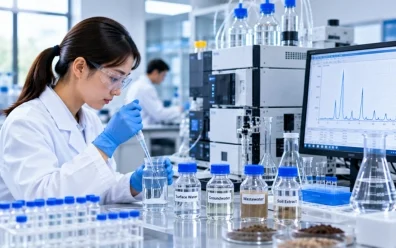
Water, soil, and waste samples are often dirty, and the targets can sit at low concentration. HPLC or UHPLC provides the separation. Guard columns and inline filters protect the analytical column from particulates. Many regulatory trace methods, including PFAS, are quantified by LC-MS/MS rather than UV.
- Water samples
- Soil extracts
- Trace organics
Clinical & Biomedical Research
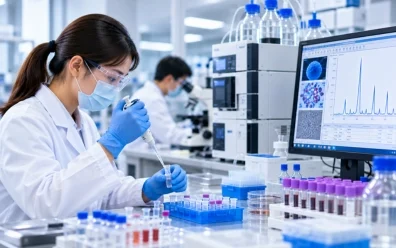
Plasma, urine, and other biological matrices need cleanup before a stable chromatogram is realistic. HPLC is used for drug checks, metabolite profiles, and biomarker methods when the detector fits the concentration. Trace toxicology in these matrices is typically an LC-MS/MS method, not a routine UV assay.
- Drug monitoring
- Metabolites
- Biomarkers
Chemicals & Materials Analysis
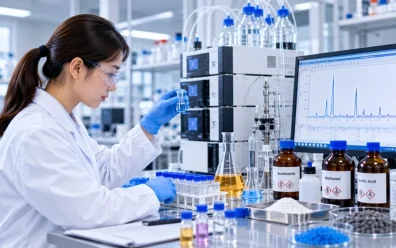
Monomers, additives, solvents, and specialty chemicals are separated by polarity and by a detector that can see them. Normal-phase, reversed-phase, and HILIC columns are in the HIPSOUL range. Preparative hardware is the route when the task is fraction isolation rather than a finished-product release assay.
- Additives
- Specialty chemicals
- Fraction isolation
More published routes
-
Cosmetics & Personal Care
Ingredient and preservative questions can be discussed from the sample. A dedicated cosmetics page is not published.
-
Agricultural & Horticultural
Plant and horticultural research notes already on the site.
-
Forensic Toxicology
Published note on HPLC in forensic toxicology. Trace confirmation is usually LC-MS/MS.
-
Academic Research
Column selection and method support for research laboratories.
Earlier application notes remain published and are not replaced by this page.
Solutions for Specific Analytical Challenges
These are separation problems, not a claim that one HPLC-UV method covers every limit. Where the published method is LC-MS/MS, the column is only the separation step.
Nitrosamine Impurity Analysis
Separation: HPLC or UHPLC. Quantitation at regulatory limits: LC-MS/MS.
Nitrosamine impurities in pharmaceuticals are controlled at very low levels. The separation can sit on an HPLC or UHPLC column, but accepted quantitative methods use tandem mass spectrometry. A UV or PDA detector does not reach those limits.
View solutionPFAS Analysis
Separation: reversed-phase LC. Quantitation: LC-MS/MS.
PFAS methods separate a wide polarity range, often on a C18-type phase, then quantify by LC-MS/MS. Tubing, frits, and solvent filters can add background. An inline filter stops particles. It is not the PFAS detector.
View solutionPharmaceutical Impurity Profiling
Routine related substances: HPLC-UV or PDA. Unknown peaks: LC-MS.
Related-substance methods with UV or PDA remain the routine tool for many APIs and dosage forms. Naming an unknown peak, or measuring below the UV working range, moves the same separation to a mass spectrometer. Named impurity standards are listed separately from columns.
View solutionPeptide Analysis & Purification
Analytical RP-HPLC, SEC for size, preparative HPLC for isolation.
Peptide assay and purification use reversed-phase conditions chosen for the sequence and the scale. Analytical and preparative work need different column diameters. SEC answers a size question. A separate peptide application page is not published.
View solutionChiral Separation
Needs a chiral phase or a chiral additive. A plain C18 column does not resolve enantiomers.
Enantiomer separation is a stationary-phase decision, not a longer reversed-phase run. HIPSOUL has not published a chiral application page. Method development, plus the normal-phase and C18 column ranges, is the current way to start that discussion.
View solutionHPLC Method Development
Column chemistry, dimensions, particle size, mobile phase, and detector.
A usable method matches those variables to the sample and to the decision the data must support. HIPSOUL publishes a method-development guide and offers method development as an analytical service. Hardware is selected after the conditions are clear.
View solutionRelated published pages: drug impurity reference standards, SEC columns, prep HPLC columns, normal-phase columns, C18 columns.
HPLC Products Supporting Your Applications
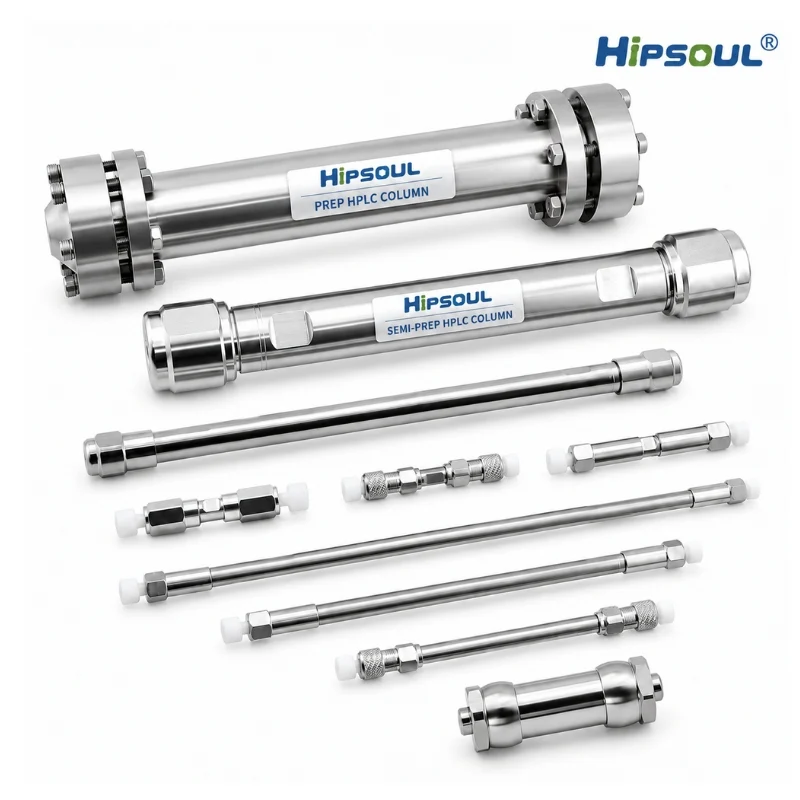
These are manufactured HIPSOUL products. The photographs show the hardware as supplied. They are not application chromatograms.
HPLC & UHPLC Columns
The column sets chemistry, particle size, and dimensions. HPLC columns and the separate UHPLC / UPLC column range are both published. Match them to the sample and to the pressure limit of the instrument.
View columns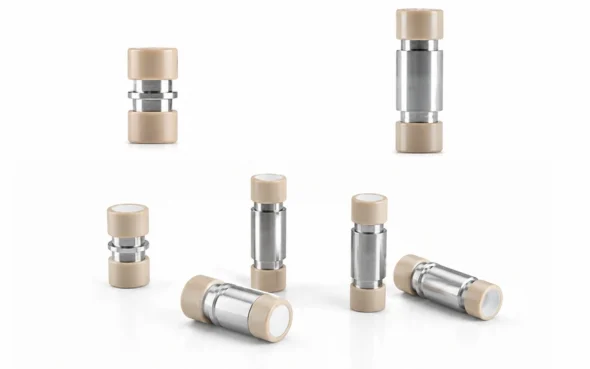
HPLC Guard Columns
A short cartridge of related chemistry sits ahead of the analytical column and traps strongly retained material. It extends column life. It does not replace sample filtration or a validated cleanup step.
View guard columns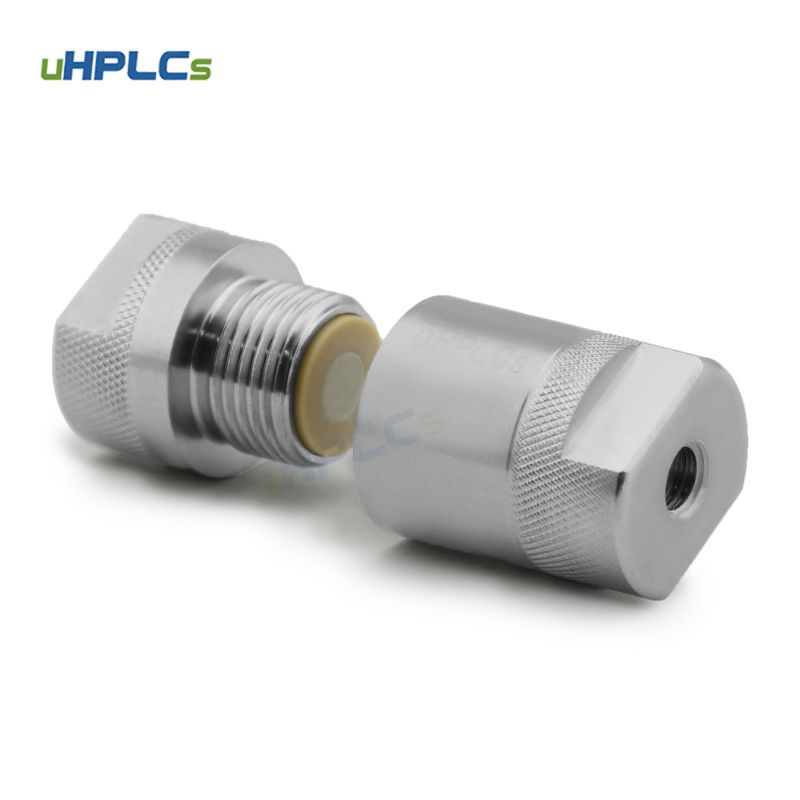
HPLC Inline Filters
An inline filter is a frit in a holder. It stops particles before they reach the column. It does not create a chemical separation. Use it for particulate risk, and a guard column when the packing itself needs chemical protection.
View inline filters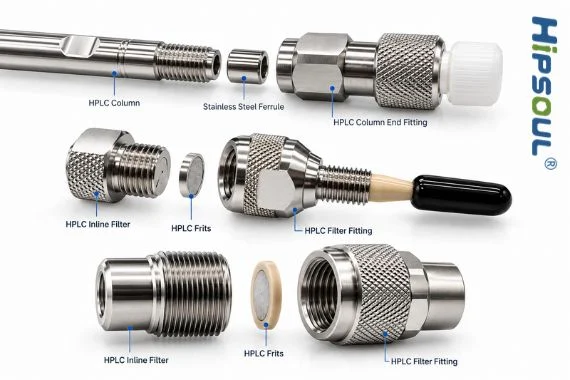
Chromatography Consumables
Frits, fittings, tubing, and empty column hardware keep the flow path sealed. Match thread, bore, and pressure rating to the instrument. The photograph shows frits, one part of that range.
View consumables
From Sample to Reliable Analytical Results
HIPSOUL supports this path with published column and consumable ranges, and with analytical services that are already on the site: method development, analytical testing, and separation or purification work. Hardware selection is not the same step as running the assay.
-
01
Understand Your Sample
Matrix, target analyte, expected concentration, known interferences, and any method already in use.
-
02
Select Separation Conditions
Phase chemistry, column dimensions, particle size, and a detector that can actually see the analyte at that level.
-
03
Optimize Chromatographic Performance
Guard column, inline filter, frit, and fittings chosen for the matrix. The aim is stable peak shape and a protected analytical column.
-
04
Review Results & Next Steps
A product recommendation, method development, analytical testing, or separation and purification when that is the real need.
Application Notes & Technical Resources
Guides already published on uhplcs.com. These are selection and troubleshooting notes, not customer case studies.
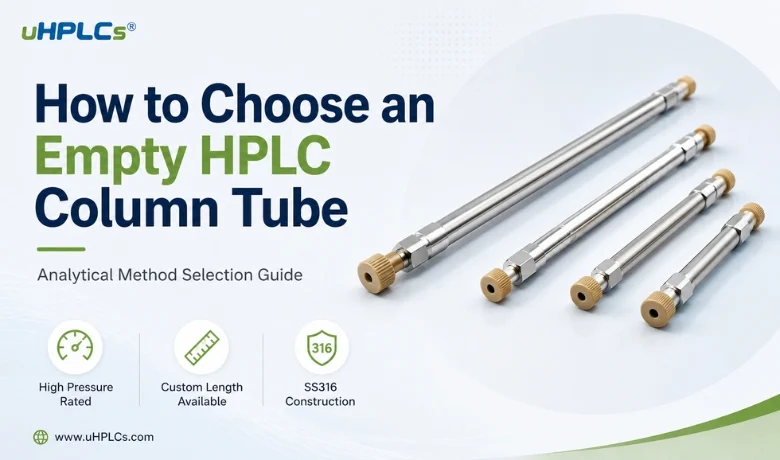
Column hardware
How to Choose the Right Empty HPLC Column Tube
Read Guide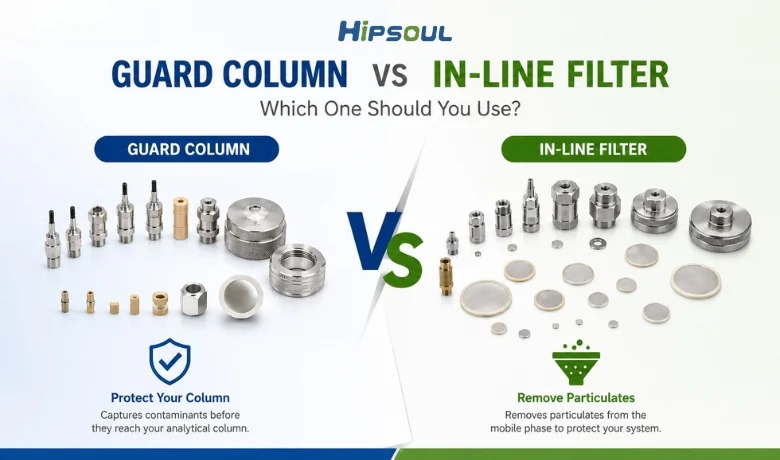
Column protection
Guard Column vs In-Line Filter
Read Guide
Method development
HPLC Method Development Guide: From Analytical Goals to Robust Methods
Read GuideFrequently Asked Questions About HPLC Applications
What industries commonly use HPLC and UHPLC?
Pharmaceutical, biopharmaceutical, food, environmental, clinical research, and chemical laboratories all use HPLC or UHPLC when a liquid separation and a suitable detector can answer the question. The industry does not choose the column by itself. The sample matrix, the analyte, and the required detection limit do.
How do I choose an HPLC column for a specific application?
Start with the analyte polarity, the matrix, the existing instrument, and whether the result is an assay, an impurity profile, or an isolation. Reversed-phase C18 is a common start for many small molecules. HILIC, normal phase, phenyl, PFP, and SEC are better fits for other chemistries. Send the sample description if you want a recommendation from the published range.
When should I use a guard column or inline filter?
Use an inline filter when particles are the risk. Use a guard column when you also need a short bed of related packing to catch strongly retained material before it reaches the analytical column. Neither one changes a UV method into an LC-MS/MS method. The comparison is covered in the guard column versus inline filter guide.
Can HIPSOUL support method development and purification?
Yes, within the services already published. Method development and validation are offered as an analytical service. Analytical testing is a separate service. Separation and purification support, including preparative HPLC columns, is also published. A column order alone is not a validated method.
What information should I provide for an application-specific recommendation?
Send the sample or analyte, the matrix, the instrument, the current column and method if you have one, the detector, the concentration range, and what decision the result must support. A chromatogram or method printout helps. Do not send confidential formulation details you are not ready to share.
Need Help With Your HPLC Application?
Describe the sample and the result you need. The technical team uses that to point you to a published column, a consumable, or an analytical service that already exists.
- Sample or analyte, and the matrix
- Instrument, detector, and current method
- Whether you need hardware, method work, testing, or purification
The form includes a spam check. Your details are used to reply to this inquiry. You can also write to [email protected].