Every day, laboratories make decisions based on what a chromatogram reveals. A small impurity peak can influence the disposition of a pharmaceutical batch. A trace contaminant in water can change how a sample is reported. And in peptide development, two closely eluting compounds may determine whether a purification method is ready to scale.
High-performance liquid chromatography (HPLC) helps scientists answer these questions—but useful chromatography is about more than producing peaks. The method must separate what matters, measure it reliably, and continue to perform across real samples and routine sequences.
This guide explores 12 applications of HPLC, with practical examples, method-selection considerations, common problems, and guidance on choosing columns and consumables.
What Are the Main Applications of HPLC?
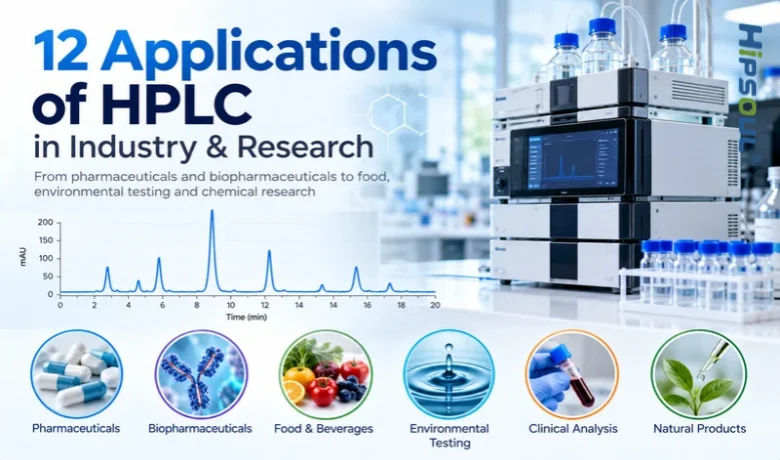
HPLC is used to separate, identify, and quantify compounds in complex mixtures. Major applications include pharmaceutical quality control, drug stability studies, peptide and protein analysis, food testing, environmental monitoring, clinical bioanalysis, and preparative purification.
| Application | Typical analytes | Common approach |
|---|---|---|
| Pharmaceutical QC | APIs, related impurities | RP-HPLC-UV/DAD |
| Drug stability | Degradation products | Stability-indicating HPLC |
| Biopharmaceuticals | Peptides, proteins, aggregates | RP-HPLC, SEC, IEX |
| Food safety | Preservatives, mycotoxins | HPLC-UV/FLD, LC-MS/MS |
| Beverages | Caffeine, vitamins | HPLC-UV/DAD |
| Environmental | Pesticides, PFAS | LC-MS/MS |
| Clinical bioanalysis | Drugs, metabolites | LC-MS/MS |
| Forensic toxicology | Drugs, toxicants | LC-MS/MS |
| Natural products | Flavonoids, alkaloids | HPLC-DAD, LC-MS |
| Industrial chemistry | Intermediates, additives | RP-HPLC, SEC |
| Preparative purification | Peptides, target compounds | Preparative HPLC |
| Academic research | Novel compounds | HPLC, UHPLC, LC-MS |
These are representative approaches, not universal methods. Suitability depends on analyte chemistry, matrix, detector, sensitivity, and validation requirements.
How Does HPLC Work—and Why Is It So Versatile?
In liquid chromatography, a sample moves through a stationary phase packed inside a column while a liquid mobile phase carries it through the system. Compounds interact differently with the two phases, giving rise to distinct retention behavior.
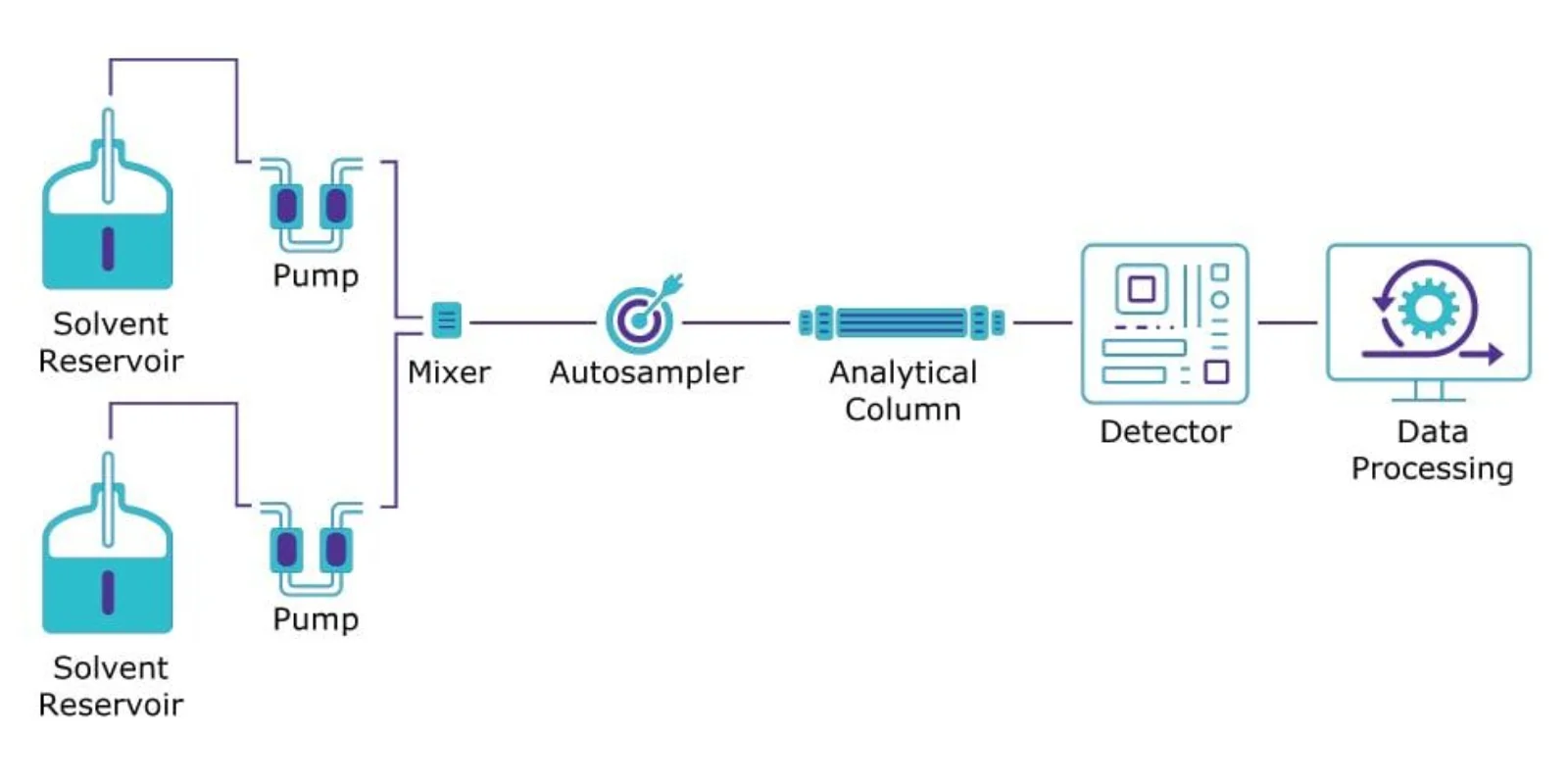
- The pump delivers mobile phase at a controlled flow rate.
- An autosampler introduces the sample.
- Compounds separate inside the HPLC column.
- A detector measures the eluting components.
- Software converts detector signals into chromatographic information.
Changing stationary-phase chemistry can change selectivity; adjusting pH, solvent composition, gradient, or temperature changes retention and peak behavior. Those adjustments are not interchangeable. For formal terminology, consult USP General Chapter <621>: Chromatography.
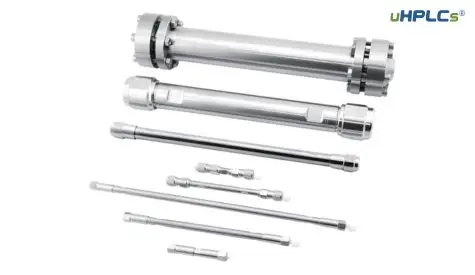
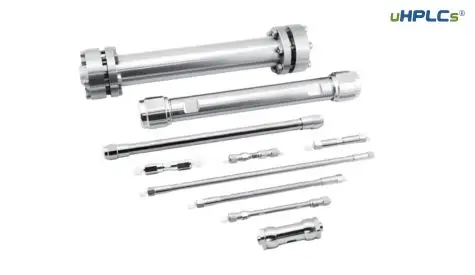
For a broader overview of applications and available components, explore UHPLCs HPLC application resources and HPLC consumables and flow-path protection.
Watch: How HPLC Works
A short educational video can help readers visualize mobile-phase delivery, sample injection, column separation, and detection. The following YouTube search link lets editors select an appropriate licensed or embeddable tutorial before publication: HPLC principle and workflow tutorials on YouTube.
Editor note: Add a YouTube Embed block here after verifying the selected video, channel, and embedding permissions. Avoid an unverified video ID.
12 Real-World Applications of HPLC
1. Pharmaceutical Quality Control: When a Small Peak Has Big Consequences
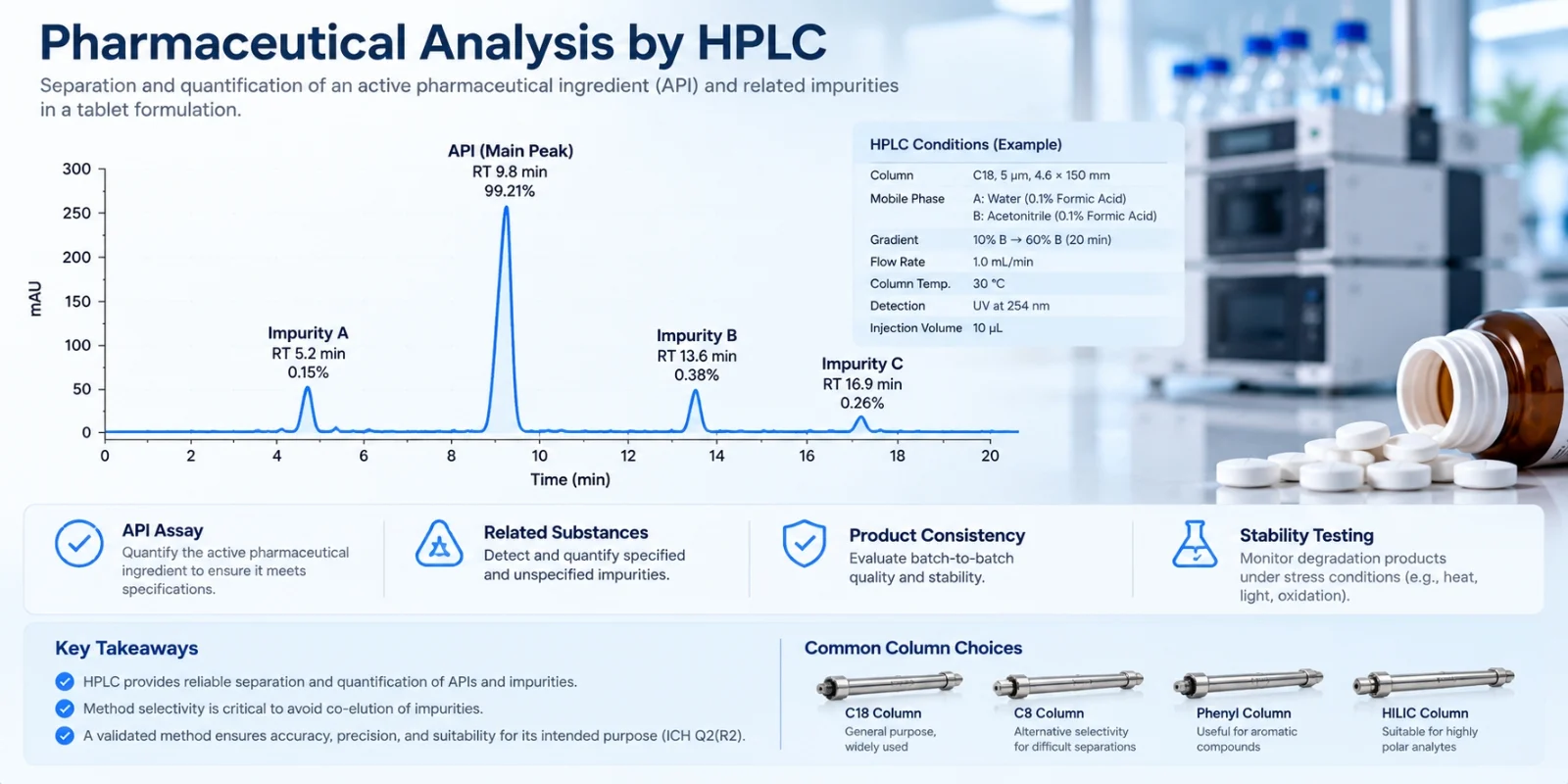
In pharmaceutical manufacturing, chromatographic results help establish whether a drug substance or finished product meets its quality specifications. A prominent API peak may be easy to quantify; smaller impurity peaks can be much harder to resolve and integrate correctly.
- API assay: measure the active pharmaceutical ingredient.
- Related substances: evaluate specified and unspecified impurities as required.
- Batch consistency: compare relevant quality attributes.
- Stability testing: track degradation-related changes.
Consider a tablet assay with a major API peak and two related-substance peaks. If one impurity overlaps the API, peak area alone cannot establish an accurate impurity profile. Selectivity and system suitability are therefore essential.
| Parameter | Why it matters |
|---|---|
| Resolution (Rs) | Separation of neighboring peaks |
| Specificity | Measurement in the presence of relevant components |
| Precision | Repeatability of quantitative results |
| Peak shape | Reliable integration and method performance |
The ICH Q2(R2) guideline addresses analytical validation. A suitable HPLC guard column can help protect an analytical column from particulates and certain strongly retained contaminants.
2. Drug Development and Stability Testing: Understanding What Changes Over Time
A compound that appears stable in a freshly prepared solution may behave differently after exposure to heat, light, moisture, or oxidative stress. Stability-indicating methods aim to distinguish the parent compound from relevant degradation products—even when those products were not obvious during early method development.
| Stress condition | Question investigated |
|---|---|
| Acid/base hydrolysis | Does the compound degrade under pH stress? |
| Oxidation | Are oxidative degradation pathways significant? |
| Heat | What changes under thermal stress? |
| Light | Is the compound susceptible to photolysis? |
If new peaks overlap the parent compound, extending the run may not be enough. A change in stationary-phase selectivity can be more useful than a longer gradient. The ICH Q14 guideline provides a framework for science-based analytical procedure development.
3. Biopharmaceutical and Peptide Analysis: Small Differences, Difficult Separations
A crude synthetic peptide can contain deletion sequences, truncated peptides, oxidation products, and other related species. These compounds may differ only slightly in structure, making chromatographic selectivity central to the analysis.
| Mode | Typical analytical question |
|---|---|
| RP-HPLC | How pure is the peptide and what related impurities are present? |
| SEC | Are protein size variants or aggregates present? |
| IEX | Are charge variants adequately resolved? |
| LC-MS | What complementary mass information is available? |
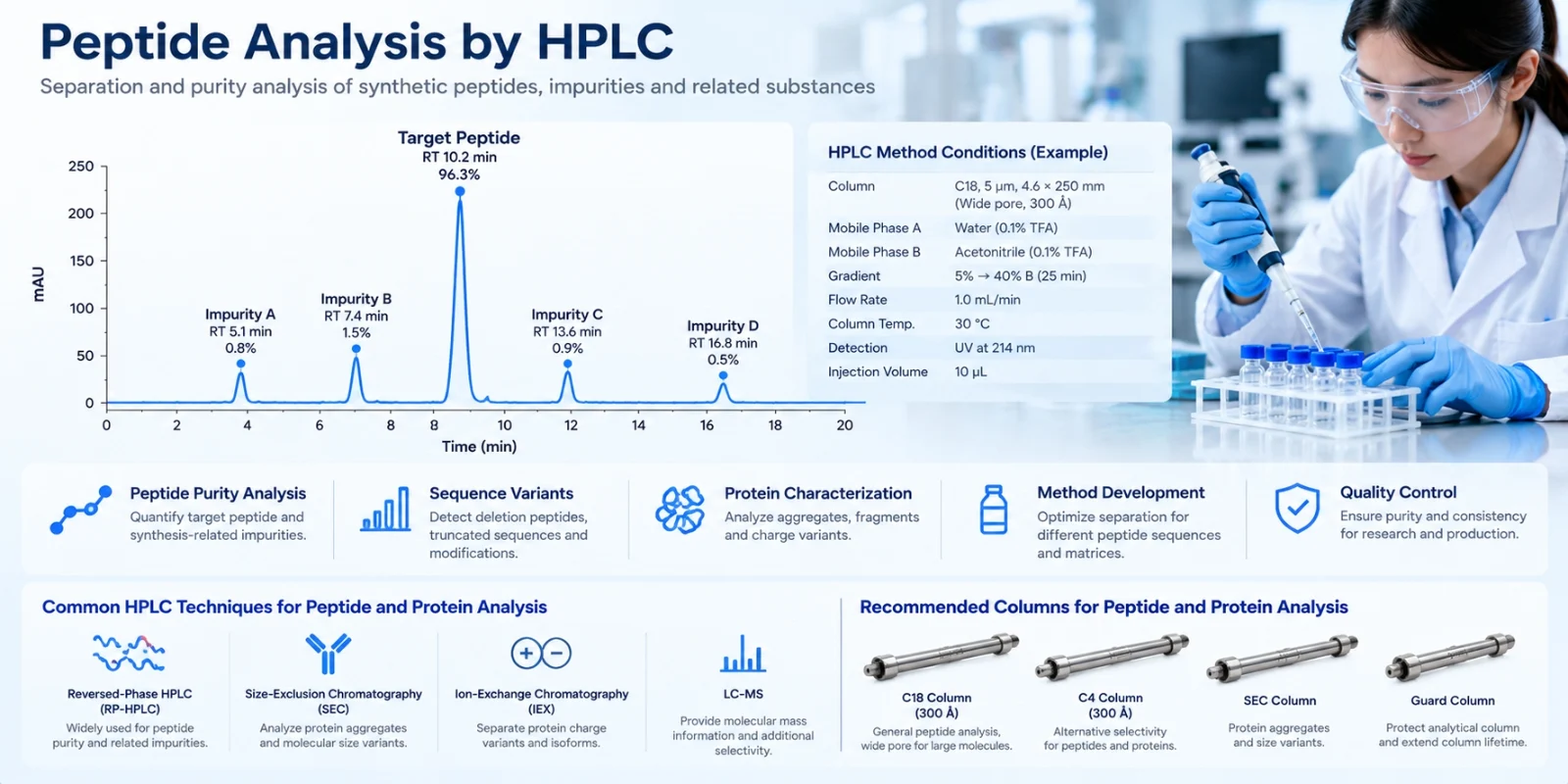
Column pore size, recovery, mobile-phase conditions, and detector compatibility all matter. Wide-pore phases, including nominal 300 Å materials, are often considered for suitable peptide and protein applications, but no pore size is universally correct. Read more about HPLC applications in the biopharmaceutical industry.
4. Food Safety Testing: The Matrix Is Often Half the Problem
A food sample may contain sugars, fats, proteins, pigments, and additives alongside the analyte of interest. That makes sample preparation as important as chromatographic resolution.
- Preservative determination, including benzoic and sorbic acids.
- Selected colorant and additive analysis.
- Mycotoxin analysis using suitable detection methods.
- Selected contaminants and pesticide residues.
For preservative analysis, an RP-HPLC-UV method may be suitable after appropriate extraction or dilution. For more complex trace contaminants, LC-MS/MS may be preferable. UHPLCs food and beverage application resources provide related examples.
A well-resolved peak cannot compensate for poor analyte recovery during sample preparation.
5. Beverage and Nutritional Analysis: Routine Does Not Mean Simple
Caffeine is a familiar HPLC analyte, but even a routine beverage assay depends on calibration, sample dilution, stability, and interference control. A method developed for caffeine will not necessarily be appropriate for polar vitamins or organic acids.
| Compound group | Examples | Key consideration |
|---|---|---|
| Stimulants | Caffeine | UV response and matrix effects |
| Vitamins | Selected B vitamins, vitamin C | Extraction and stability |
| Sweeteners | Selected high-intensity sweeteners | Retention and detection |
| Polyphenols | Selected phenolic compounds | Complex mixture selectivity |
- Is the sample within the validated calibration range?
- Could another ingredient co-elute with the target peak?
- Will the analyte remain stable during preparation and storage?
6. Environmental Monitoring: Measuring What Cannot Be Seen
Environmental analysis often combines trace-level targets with complex matrices and demanding quality-control requirements. Liquid chromatography is used for selected pesticides, pharmaceutical residues, industrial contaminants, and PFAS.
For example, U.S. EPA Method 533 uses solid-phase extraction and LC-MS/MS for specified PFAS in drinking water. Background contamination from solvents, sample containers, and flow-path materials can affect trace measurements.
- Select suitable sample collection and storage materials.
- Evaluate extraction recovery and matrix effects.
- Control background contamination and carryover.
- Follow method-specific calibration and quality-control criteria.
7. Clinical and Bioanalytical Testing: Reliable Results Across Complex Samples
Plasma and serum contain endogenous substances that may interfere with extraction or mass spectrometric response. LC-MS/MS is widely used to quantify drugs and metabolites in pharmaceutical bioanalysis, including pharmacokinetic studies.
| Parameter | Meaning |
|---|---|
| Cmax | Maximum observed drug concentration |
| Tmax | Time of maximum observed concentration |
| AUC | Area under the concentration–time curve |
| t½ | Elimination half-life, when estimable |
The ICH M10 guideline addresses relevant bioanalytical validation and study-sample analysis considerations. Reproducible chromatography reduces avoidable reinjections and investigations in large sample sequences.
8. Forensic and Toxicology Analysis: Identification Requires More Than Retention Time
Forensic samples can contain multiple drugs, metabolites, and endogenous interferents. Chromatographic retention is useful, but retention time alone is generally insufficient for definitive identification in complex samples.
- Prepare the sample using a suitable validated workflow.
- Perform screening where appropriate.
- Use confirmatory analysis when required.
- Evaluate identification criteria and quality controls.
- Review and report results within the applicable standards.
LC-MS/MS can provide complementary precursor/product ion information and additional selectivity, but the required criteria depend on the forensic application.
9. Natural Products and Herbal Research: Separating Complex Chemistry
Botanical extracts can contain many flavonoids, alkaloids, phenolic acids, and other components. HPLC-DAD supports selected profiling and quantification tasks, while LC-MS may provide complementary mass information.
- Herbal extract fingerprinting.
- Marker-compound quantification.
- Plant metabolite profiling.
- Isolation of selected target compounds.
A gradient adjustment may help with co-elution, but sometimes the real limitation is stationary-phase selectivity. When the objective changes from measurement to recovery, preparative HPLC becomes relevant.
10. Industrial Chemical Analysis: Following a Reaction, Not Just Testing the Product
Reaction monitoring can reveal changes in starting materials, intermediates, desired products, and by-products. HPLC is especially useful when compounds are suitable for liquid chromatographic analysis.
| Chromatographic observation | Possible interpretation |
|---|---|
| Starting-material peak decreases | Reactant consumption |
| Product peak increases | Product formation |
| New peak appears | Potential side reaction |
| Several peaks change together | Complex reaction behavior |
Important: Peak-area percentage does not automatically equal mass percentage or molar composition. Different compounds may have different detector response factors; quantitative interpretation may require appropriate calibration.
11. Preparative HPLC: When Separation Is Only the Beginning
Analytical HPLC asks what is present. Preparative HPLC asks whether the target can be isolated at the required purity, recovery, and scale. Loading a larger sample can change peak shape and resolution, so analytical success does not guarantee preparative success.
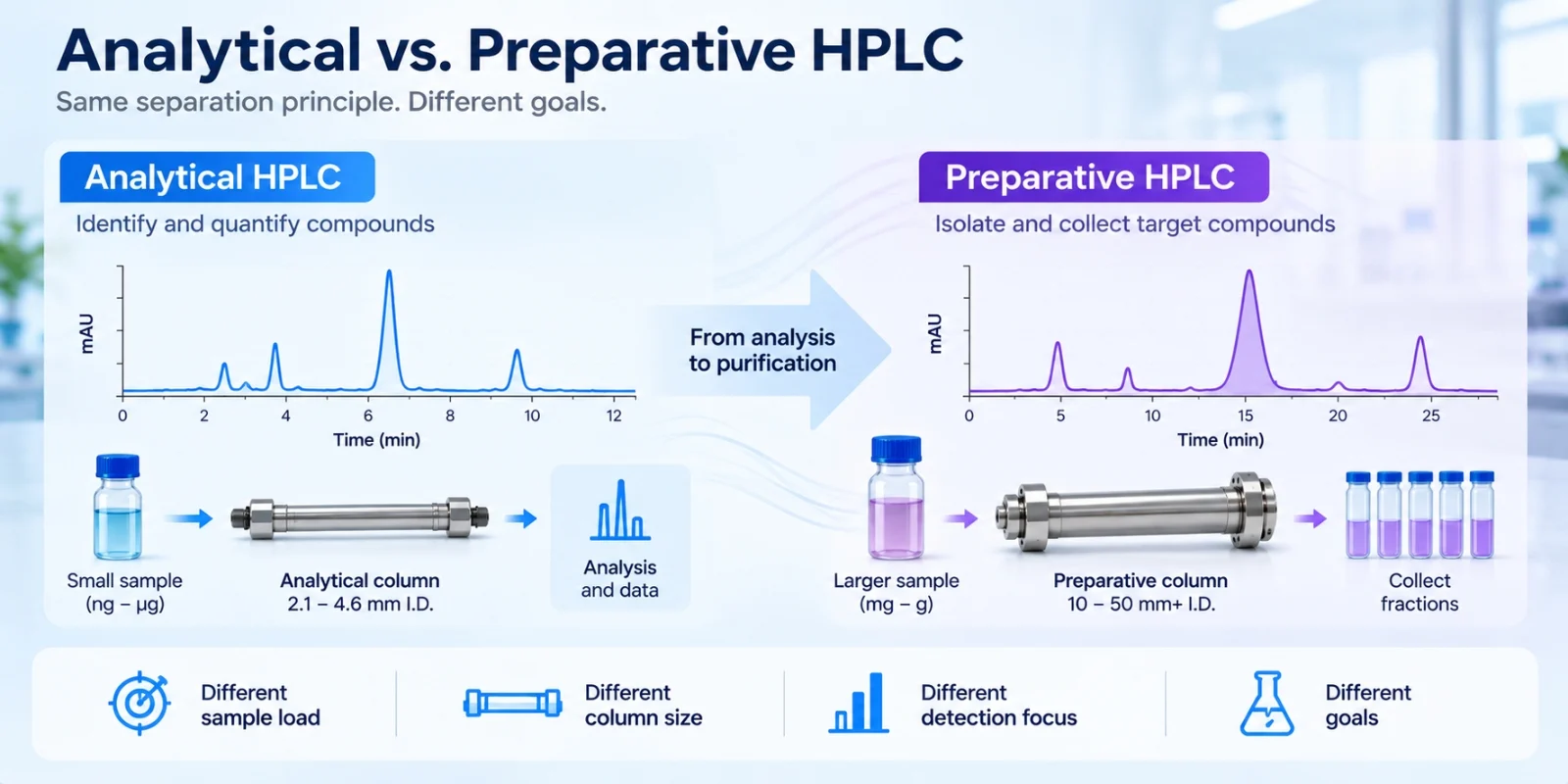
| Consideration | Analytical HPLC | Preparative HPLC |
|---|---|---|
| Primary goal | Characterize or quantify | Isolate and collect |
| Loading | Generally lower | Generally higher |
| Critical outcomes | Resolution and quantitative reliability | Purity, recovery and throughput |
| Fraction collection | Usually not required | Commonly required |
Before scale-up, assess sample solubility, stationary-phase chemistry, loading capacity, gradient conditions, and fraction strategy. UHPLCs offers preparative guard column configurations and related chromatography product families.
12. Academic and Scientific Research: Where New Methods Begin
Research laboratories often study compounds with no established chromatographic procedure. Method development becomes part of the discovery process: select a separation mode, screen columns and mobile phases, optimize detection, then evaluate performance for the intended purpose.
- Define the analytical question and sample composition.
- Choose an initial separation mode.
- Screen suitable stationary phases.
- Optimize pH, solvent composition, gradient, and temperature.
- Evaluate detector suitability and method performance.
The objective is not the most complicated method—it is the method that answers the research question reliably.
How to Choose the Right HPLC Column for Your Application
Start with the separation problem rather than a familiar column specification. Insufficient retention, overlapping impurities, protein recovery, and rising backpressure require different solutions.
| Challenge | What to evaluate | Possible direction |
|---|---|---|
| Small-molecule impurity resolution | Selectivity and pH | C18, C8, phenyl or another phase |
| Polar analytes | Retention mechanism | HILIC or other suitable mode |
| Peptides and proteins | Pore access and recovery | Appropriate wide-pore or bio-focused phase |
| Protein aggregates | Molecular size | SEC |
| Charged biomolecules | Electrostatic interactions | IEX |
| Frequent column contamination | Matrix and flow path | Sample preparation, guard column, inline filter |
Why Column Protection Deserves More Attention
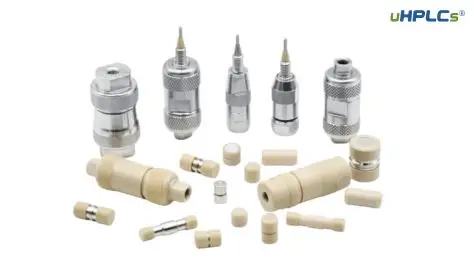
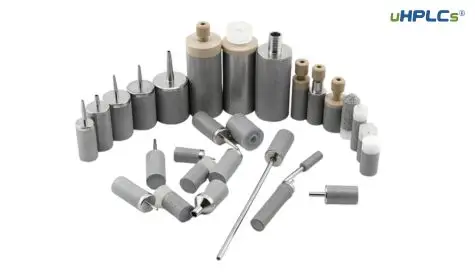
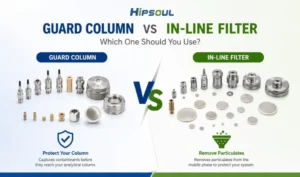
Performance after repeated injections matters as much as the first chromatogram. Complex matrices can introduce particulates and strongly retained contaminants. A correctly matched guard column or guard cartridge provides a replaceable protective stage; an inline filter primarily addresses particulate protection. Neither replaces suitable sample preparation.
Explore the UHPLCs technical resources for selection guidance and consumables information.
HPLC vs. UHPLC: Does Faster Always Mean Better?
UHPLC systems often use smaller particles, higher pressure capabilities, and lower-dispersion flow paths to support efficient separations. Yet faster analysis is not automatically better analysis; method transfer must consider pressure limits, extra-column dispersion, injection volume, and method equivalence.
| Factor | Conventional HPLC | UHPLC |
|---|---|---|
| Typical particle sizes | Often 3–5 µm | Often below 2 µm |
| Operating pressure | Generally lower | Often higher |
| Run time | Method dependent | Can be shorter |
| Method transfer | Established system conditions | Pressure and dispersion checks important |
Common HPLC Problems: A Quick Troubleshooting Guide
| Problem | Possible cause | Initial investigation |
|---|---|---|
| Poor resolution | Insufficient selectivity | Stationary phase, pH, gradient |
| Peak tailing | Overload or secondary interactions | Sample load and mobile phase |
| High backpressure | Particulates or precipitation | Filter, guard, and flow path |
| Retention drift | Equilibration or temperature variation | Mobile phase and temperature |
| Ghost peaks | Contamination or carryover | Blank injections and solvent path |
| Poor reproducibility | Injection or sample variability | System suitability and preparation |
Ghost peaks can arise from solvent impurities, carryover, or contamination accumulating in the flow path. Specialized traps may be useful in compatible methods, but first identify the source. UHPLCs lists ghost-peak traps and other system-protection components among its consumables.
The Hidden Cost of Unstable Chromatography
A poorly performing chromatographic method can lead to repeat injections, investigations, interrupted sequences, and delayed reporting. Consider a hypothetical laboratory running 200 samples a day: if 5% require reinjection, that is 10 repeats per day or 200 repeats across 20 working days.
At 15 minutes per injection, those repeats consume about 50 hours of instrument time, excluding sample preparation and review. This is an illustrative calculation, not a measured industry benchmark.
Improving chromatographic stability is not just about better-looking peaks. It can also protect instrument time, sample capacity, and confidence in the result.
Frequently Asked Questions About HPLC Applications
What are the most common applications of HPLC?
Pharmaceutical quality control, impurity analysis, stability testing, peptide characterization, food testing, environmental monitoring, clinical bioanalysis, and chemical research are common applications. Preparative HPLC is also used for compound isolation.
Why is HPLC important in pharmaceutical analysis?
HPLC supports the separation and measurement of APIs, impurities, and degradation products. Appropriate development and validation allow laboratories to use methods for defined quality-control and stability-testing purposes.
Can HPLC analyze proteins and peptides?
Yes. RP-HPLC is often used for peptide analysis; SEC and IEX can support selected protein size-variant and charge-variant investigations. Column chemistry, pore size, and method conditions depend on the biomolecule.
Is C18 always the best HPLC column?
No. C18 is versatile, but C8, phenyl, HILIC, SEC, IEX, and other phases may provide more suitable retention or selectivity for specific compounds.
What is the difference between HPLC and LC-MS?
HPLC provides liquid chromatographic separation. LC-MS combines that separation with mass spectrometric detection, supplying additional mass-to-charge information.
How does analytical HPLC differ from preparative HPLC?
Analytical HPLC primarily characterizes or quantifies compounds. Preparative HPLC is designed to isolate and collect target compounds, emphasizing loading, purity, recovery, and throughput.
Better Chromatography Starts With Better Questions
A pharmaceutical impurity assay, a peptide purity method, and an environmental trace analysis may all rely on liquid chromatography, yet their challenges are different. Better decisions start with the sample, the analytical objective, and the variables that control separation and measurement.
UHPLCs / HIPSOUL provides chromatography columns, guard systems, filters, and related consumables for analytical and preparative workflows. Explore UHPLCs chromatography products, guard column solutions, or technical resources to identify a suitable starting point.
Discuss your application: [email protected] | www.uhplcs.com