
12 Applications of HPLC in Industry & Research
Twelve HPLC application areas where chromatograms drive release, safety, and research decisions—from pharmaceuticals and food to environmental and clinical work.
HPLC use cases across pharma, food, environmental, and industrial analysis.
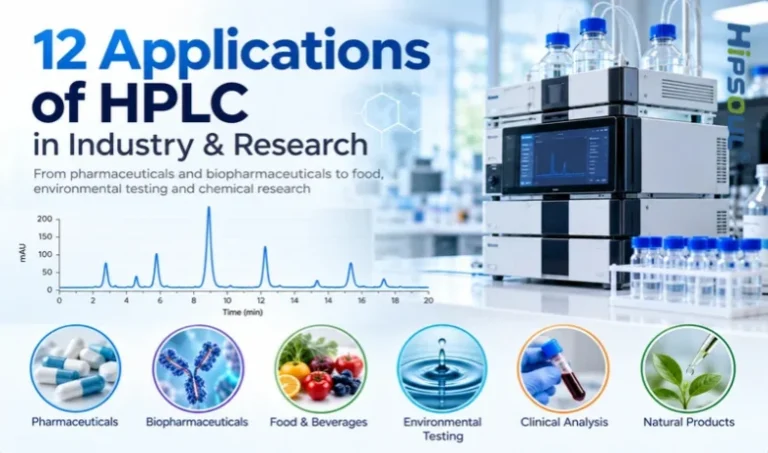
Twelve HPLC application areas where chromatograms drive release, safety, and research decisions—from pharmaceuticals and food to environmental and clinical work.
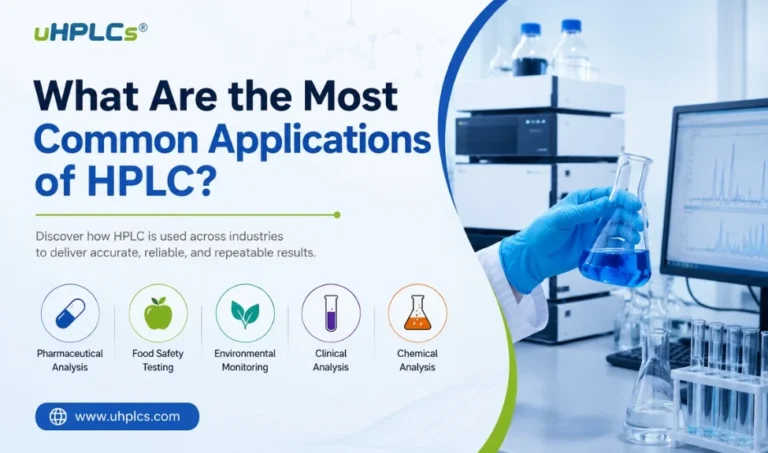
The most common HPLC applications across modern industries, with where each workflow typically starts.
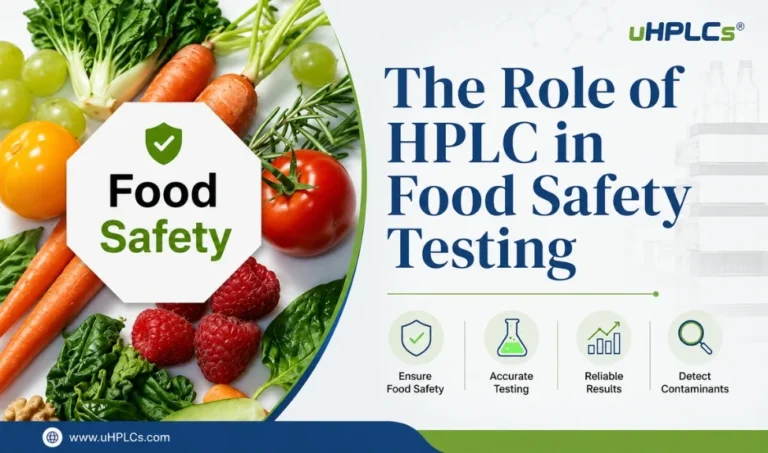
How HPLC supports food safety testing—from additives and contaminants to method choices labs rely on daily.
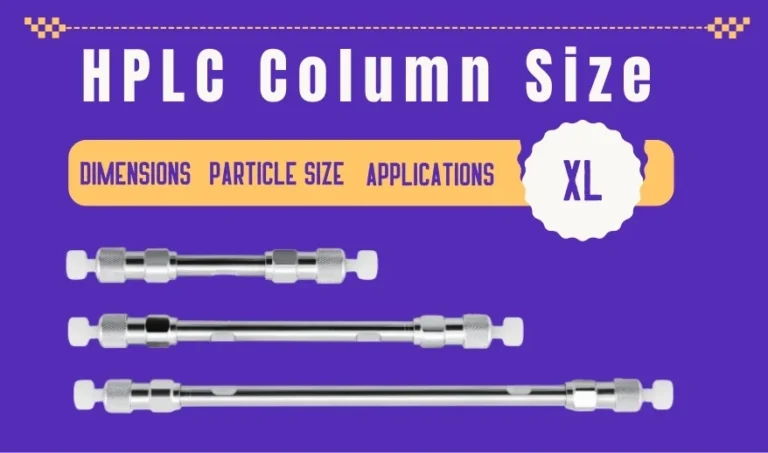
1. Introduction to HPLC Column Size High-Performance Liquid Chromatography (HPLC) is a cornerstone of modern analysis across pharmaceuticals, biotechnology, food safety, and environmental testing. At the heart of every separation is the HPLC column, and its size—length, internal diameter (ID), particle size, and pore size—directly affects resolution, sensitivity, speed, and backpressure (What is the meaning…
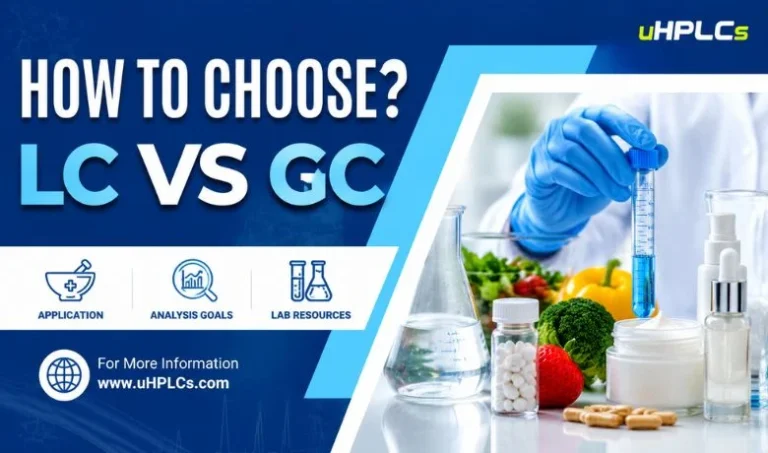
In the world of analytical chemistry, chromatography plays a vital role in separating, identifying, and quantifying components in complex mixtures. Among the most widely used chromatographic techniques are Liquid Chromatography (LC) and Gas Chromatography (GC). While both aim to achieve separation and analysis, they operate on different principles and are suited for different types of…
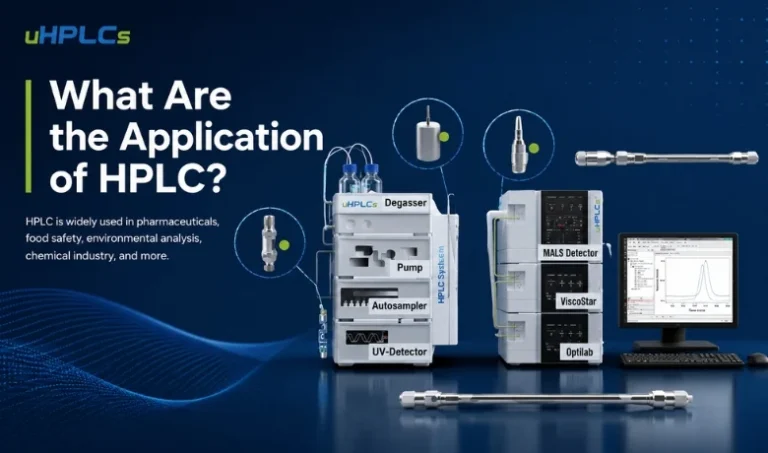
High-Performance Liquid Chromatography (HPLC) has become an indispensable analytical technique in laboratories worldwide. Known for its precision, reproducibility, and ability to handle complex mixtures, HPLC plays a crucial role in ensuring the quality, safety, and consistency of products across a wide range of industries. But what exactly is HPLC used for, and why is it…
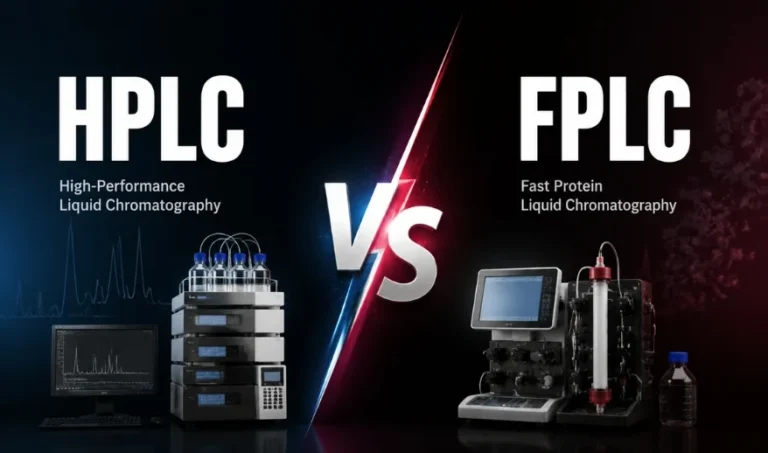
Chromatography is a fundamental technique used widely in analytical chemistry for separating and analyzing mixtures of compounds. Choosing the right chromatographic method can significantly impact the effectiveness of your analysis. Two popular methods, FPLC (Fast Protein Liquid Chromatography) and HPLC (High-Performance Liquid Chromatography), are often considered for different analytical tasks. This guide will explain the…

A range of methods can detect petroleum composition and its products. Still, comparing many methods has led to the conclusion that high-performance liquid chromatography separation and mass spectrometry detection is currently the most effective analytical method and representative of the composition of the structural families of petroleum and its products. Unraveling the Complexity of Petroleum:…
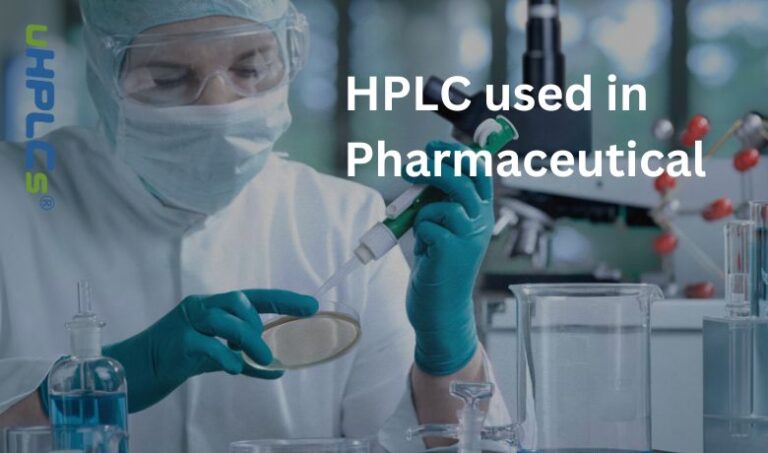
Exploring the Role of HPLC in the Pharmaceutical Industry In the intricate world of pharmaceutical development and manufacturing, high-performance liquid chromatography (HPLC) stands as an indispensable tool, playing a pivotal role in ensuring the safety, efficacy, and consistency of drugs. This powerful analytical technique has revolutionized the pharmaceutical industry, providing scientists with a sophisticated method…
What is Analysis of condition filtering method ? Condition filtering methods are a class of data preprocessing techniques that are used to identify and remove noise from data. They are commonly used in a variety of applications, including signal processing, image processing, and machine learning. Condition filtering methods work by identifying and removing data points…
WhatsApp us